Get in touch
* Your personal information is securely protected and will only be used for business communication purposes.

A stacker that feels efficient in a short replenishment lane can become tiring and slow on a longer route, and that is why operator position matters more than many buyers expect. The walkie versus stand-on decision is not mainly about which format is more modern. It is about whether the route demands tight maneuvering and close-control work or whether the truck must cover enough distance and enough cycles that operator fatigue and travel speed start to shape throughput every day.
This guide is written for warehouse supervisors and buyers choosing between walkie and stand-on electric stackers for replenishment, transfer, and rack work. The right answer depends on aisle width, travel length, blind corners, traffic density, shift duration, and how often the operator repeats the same move. A practical comparison should measure those route conditions directly instead of assuming one stacker format fits every warehouse equally well.
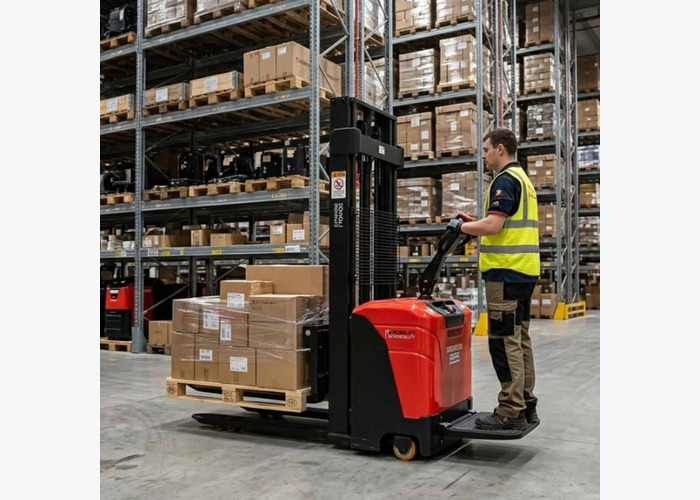
Walkie stackers often make the most sense where travel distance is limited and the route is built around close pallet handling in compact aisles. Guidance such as HSE lift trucks guidance is useful because it keeps the review tied to real operating control rather than to vague habit. In a working warehouse or yard, the checklist should reflect the actual route, load, charger routine, or placement task the machine will face. The main risk is that buyers may overcomplicate a short controlled route by choosing a larger operating format that does not add meaningful productivity. That is why the check should be explained in terms the operator and supervisor can both act on immediately.
A practical next step is to review whether the operator spends most of the shift making short movements, exact pallet entries, and controlled rack placements rather than long transfer runs. Keep the observation concrete instead of relying on memory, because specific notes make maintenance and supervision faster. The relevant Stacker category can also help turn the observation into a product or application discussion that fits the site more cleanly. As a decision rule, keep the walkie format when the route rewards precision and compact movement more than travel speed. That keeps the inspection connected to the daily task instead of turning it into a generic routine.
A stand-on stacker becomes easier to justify when the operator repeatedly covers longer warehouse distances and needs to reduce walking effort across the shift. Guidance such as HSE managing lift trucks is useful because it keeps the review tied to real operating control rather than to vague habit. In a working warehouse or yard, the checklist should reflect the actual route, load, charger routine, or placement task the machine will face. The main risk is that a site may accept operator fatigue and slower replenishment because it never recognized how much distance the stacker actually covers. That is why the check should be explained in terms the operator and supervisor can both act on immediately.
A practical next step is to measure how often the route moves beyond one compact storage zone and how much operator travel happens between pick, staging, and rack points. Keep the observation concrete instead of relying on memory, because specific notes make maintenance and supervision faster. The relevant Walkie Type Fully Electric Stacker CDD-15 can also help turn the observation into a product or application discussion that fits the site more cleanly. As a decision rule, move toward a stand-on format when route length and cycle repetition begin to drive throughput losses. That keeps the inspection connected to the daily task instead of turning it into a generic routine.
Comparing stacker formats by a simple speed impression can be misleading because throughput is shaped by turning points, queueing, lift frequency, and staging discipline. Guidance such as CCOHS maintaining truck control is useful because it keeps the review tied to real operating control rather than to vague habit. In a working warehouse or yard, the checklist should reflect the actual route, load, charger routine, or placement task the machine will face. The main risk is that buyers may assume the faster-looking truck will automatically raise throughput even when the route itself is limiting movement. That is why the check should be explained in terms the operator and supervisor can both act on immediately.
A practical next step is to observe where pallets are picked, where the truck waits, and how often the operator must reposition in the aisle before deciding which format is truly faster. Keep the observation concrete instead of relying on memory, because specific notes make maintenance and supervision faster. The relevant Walkie Type Fully Electric Stacker CDD-20 can also help turn the observation into a product or application discussion that fits the site more cleanly. As a decision rule, judge stacker performance against the whole replenishment loop instead of against a headline speed claim. That keeps the inspection connected to the daily task instead of turning it into a generic routine.
Fatigue is one of the most practical reasons to compare walkie and stand-on designs because physical strain affects pace, focus, and consistency over long shifts. Guidance such as HSE pedestrians is useful because it keeps the review tied to real operating control rather than to vague habit. In a working warehouse or yard, the checklist should reflect the actual route, load, charger routine, or placement task the machine will face. The main risk is that a route may look acceptable in a short demo while creating clear fatigue costs after several hours of repeated movement. That is why the check should be explained in terms the operator and supervisor can both act on immediately.
A practical next step is to track whether operators slow down, take extra recovery pauses, or avoid certain routes because the current stacker format becomes tiring later in the shift. Keep the observation concrete instead of relying on memory, because specific notes make maintenance and supervision faster. The relevant Stand-On Fully Electric Stacker CZD-15 can also help turn the observation into a product or application discussion that fits the site more cleanly. As a decision rule, choose the format that the operator can repeat safely and consistently across the real shift rather than across a short test only. That keeps the inspection connected to the daily task instead of turning it into a generic routine.
A stacker format that supports better travel comfort still has to fit the physical aisle, turning point, and rack approach pattern without forcing repeated corrections. Guidance such as HSE separating pedestrians and vehicles is useful because it keeps the review tied to real operating control rather than to vague habit. In a working warehouse or yard, the checklist should reflect the actual route, load, charger routine, or placement task the machine will face. The main risk is that buyers may choose for route length and then discover the truck is awkward where the aisle actually constrains movement. That is why the check should be explained in terms the operator and supervisor can both act on immediately.
A practical next step is to measure the narrowest working aisle, rack-end turn, and pallet entry angle before assuming a stand-on model will move as cleanly as a walkie in the same zone. Keep the observation concrete instead of relying on memory, because specific notes make maintenance and supervision faster. The relevant Stand-On Fully Electric Stacker CZD-20 can also help turn the observation into a product or application discussion that fits the site more cleanly. As a decision rule, treat aisle fit as a hard operating condition that must be checked before the format decision is finalized. That keeps the inspection connected to the daily task instead of turning it into a generic routine.
The safer stacker choice can change when the route includes blind crossings, pedestrian traffic, dock entries, or mixed truck activity. Guidance such as CCOHS load handling is useful because it keeps the review tied to real operating control rather than to vague habit. In a working warehouse or yard, the checklist should reflect the actual route, load, charger routine, or placement task the machine will face. The main risk is that a route may reward travel efficiency but still become unsafe if the stacker format does not support predictable visibility and control at crossings. That is why the check should be explained in terms the operator and supervisor can both act on immediately.
A practical next step is to review visibility, horn habits, mirror placement, and whether operators need to enter shared spaces where body position and sightline matter greatly. Keep the observation concrete instead of relying on memory, because specific notes make maintenance and supervision faster. The relevant Pallet Stacker Aisle Width Guide can also help turn the observation into a product or application discussion that fits the site more cleanly. As a decision rule, prefer the format that keeps the operator’s awareness and route control strongest at the busiest conflict points. That keeps the inspection connected to the daily task instead of turning it into a generic routine.
The walkie versus stand-on decision should also include how each format fits charging access, spare equipment planning, and the actual length of each shift. Guidance such as HSE lift trucks guidance is useful because it keeps the review tied to real operating control rather than to vague habit. In a working warehouse or yard, the checklist should reflect the actual route, load, charger routine, or placement task the machine will face. The main risk is that teams may choose the right route format and still create downtime because battery routine was never considered as part of the comparison. That is why the check should be explained in terms the operator and supervisor can both act on immediately.
A practical next step is to compare battery-use rhythm, charging windows, and whether one format spends more of the day traveling, lifting, or waiting in a way that changes energy planning. Keep the observation concrete instead of relying on memory, because specific notes make maintenance and supervision faster. The relevant Walkie Pallet Stacker Guide can also help turn the observation into a product or application discussion that fits the site more cleanly. As a decision rule, review operating format and battery plan together so the chosen stacker remains productive throughout the shift. That keeps the inspection connected to the daily task instead of turning it into a generic routine.
Operator position is important, but the route still has to be reviewed alongside lift height, pallet quality, and how stable the load remains during travel and placement. Guidance such as HSE managing lift trucks is useful because it keeps the review tied to real operating control rather than to vague habit. In a working warehouse or yard, the checklist should reflect the actual route, load, charger routine, or placement task the machine will face. The main risk is that buyers may fixate on travel style and overlook the lift behavior that actually dominates the route’s risk and pace. That is why the check should be explained in terms the operator and supervisor can both act on immediately.
A practical next step is to compare whether the truck will mostly replenish low levels, support repetitive rack work, or handle taller lifts where visibility and placement accuracy become more important. Keep the observation concrete instead of relying on memory, because specific notes make maintenance and supervision faster. The relevant contact VARYON for stacker planning can also help turn the observation into a product or application discussion that fits the site more cleanly. As a decision rule, match the operating format to both the travel pattern and the lift task instead of treating them as separate purchases. That keeps the inspection connected to the daily task instead of turning it into a generic routine.
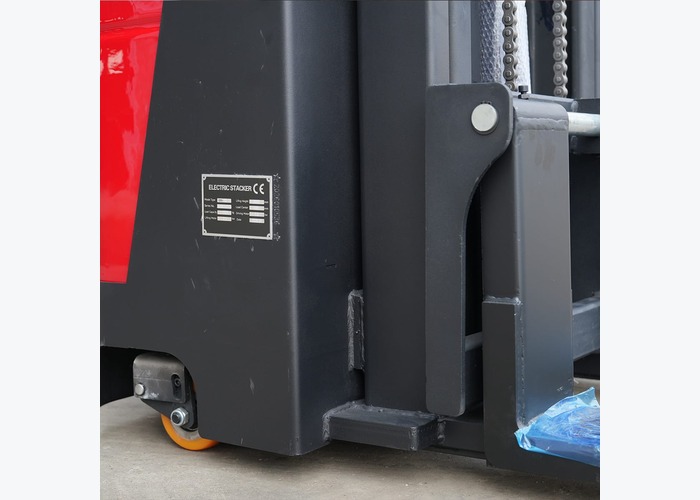
A short warehouse trial often reveals more than a specification sheet because operators immediately feel whether the route suits a walkie or stand-on design. Guidance such as CCOHS maintaining truck control is useful because it keeps the review tied to real operating control rather than to vague habit. In a working warehouse or yard, the checklist should reflect the actual route, load, charger routine, or placement task the machine will face. The main risk is that a desk comparison may miss the exact fatigue, visibility, and turning issues that become obvious within one practical route trial. That is why the check should be explained in terms the operator and supervisor can both act on immediately.
A practical next step is to test the candidate stacker on the real route with normal pallets, shift timing, and the operators who will actually use the truck every day. Keep the observation concrete instead of relying on memory, because specific notes make maintenance and supervision faster. The relevant Stacker category can also help turn the observation into a product or application discussion that fits the site more cleanly. As a decision rule, treat the trial as required evidence when the site is deciding between two viable stacker formats. That keeps the inspection connected to the daily task instead of turning it into a generic routine.
Suppliers can recommend the right stacker type more accurately when the warehouse explains how the route behaves instead of only asking for capacity and lift height. Guidance such as HSE pedestrians is useful because it keeps the review tied to real operating control rather than to vague habit. In a working warehouse or yard, the checklist should reflect the actual route, load, charger routine, or placement task the machine will face. The main risk is that buyers may receive a generic answer because they described the truck need too loosely for the supplier to model the route correctly. That is why the check should be explained in terms the operator and supervisor can both act on immediately.
A practical next step is to send aisle width, travel distance, lift height, pallet count, crossing points, and shift structure when requesting walkie versus stand-on guidance. Keep the observation concrete instead of relying on memory, because specific notes make maintenance and supervision faster. The relevant Walkie Type Fully Electric Stacker CDD-15 can also help turn the observation into a product or application discussion that fits the site more cleanly. As a decision rule, turn the comparison into a route-based equipment request instead of a generic stacker-category question. That keeps the inspection connected to the daily task instead of turning it into a generic routine.
Is a stand-on stacker always faster than a walkie stacker? No. It often helps on longer routes, but short controlled aisles and frequent precision placement can still favor a walkie format.
Which stacker type is better for narrow aisles? That depends on the exact aisle and approach pattern. Walkie models often fit compact zones well, but the decision should be confirmed against the real turning and placement task.
How do I decide between walkie and stand-on models for a mixed route? Map travel distance, lift frequency, blind corners, pedestrian interaction, and operator fatigue over a full shift, then test the candidate trucks on the real route before ordering.
Watch a related stacker video here: https://www.youtube.com/watch?v=ROqFgDITLnw.
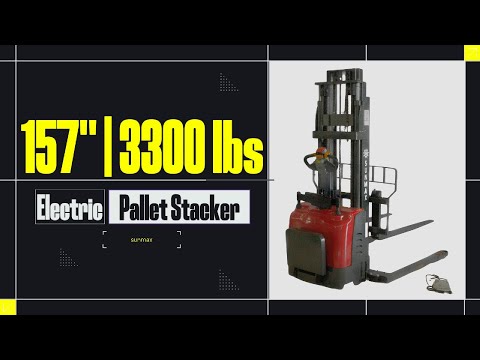
Walkie versus stand-on electric stacker is really a route decision. The right format depends on how far the truck travels, how tightly it must turn, how often it lifts, and how much operator fatigue shapes throughput by the end of the shift.
Short, controlled routes often keep the walkie format attractive. Longer, repetitive transfer work can justify the stand-on format quickly once walking effort and sustained pace are reviewed honestly. The cleanest answer usually comes from a real route trial, not from assumptions.
If you want VARYON to review the choice, send aisle width, travel distance, lift height, pallet flow, crossing points, and shift length so the recommendation reflects the actual warehouse route.