Get in touch
* Your personal information is securely protected and will only be used for business communication purposes.

When a Tier-1 logistics hub replaced its aging fleet with a purpose-matched machine, pallet throughput climbed 25% — and the ripple effects reshaped the entire operation.
A high-volume distribution center processing over 8,000 pallets per shift was hitting a wall. Cycle times had plateaued, dock congestion was worsening, and the procurement team faced mounting pressure to justify fleet costs against measurable output. The root cause wasn’t operator error or layout inefficiency — it was a machinery mismatch. Equipment rated for lighter-duty environments was being pushed into a punishing 4-ton application day after day.
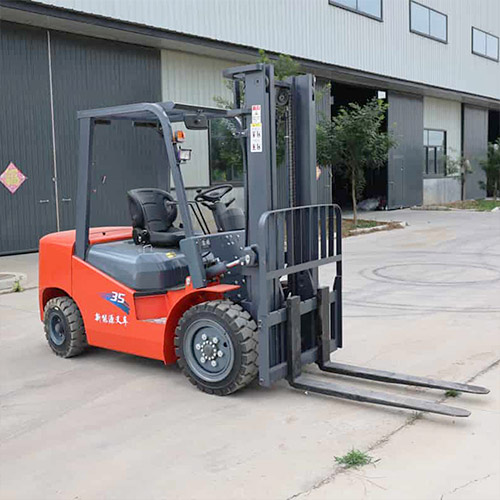
The decision to deploy the VY-CPC40 Diesel Forklift proved to be the turning point. Designed specifically for heavy industrial throughput, the VY-CPC40 delivered the torque consistency and load stability that standard forklifts in this class simply couldn’t sustain across multi-shift operations. Within 90 days, the hub recorded a 25% reduction in average pallet turnaround time — a result that translated directly into measurable shipping capacity gains.
This outcome reflects a broader industry reality. With 67% of the B2B buyer’s journey now completed digitally, procurement officers increasingly demand transparent, verifiable performance data before committing to capital equipment decisions. Vague manufacturer claims no longer close deals.
A diesel forklift manufacturer’s true value in modern supply chains isn’t horsepower alone — it’s documented, repeatable performance under real operating conditions.
What made this result achievable — and why standard fleet configurations consistently fall short in high-intensity hubs — becomes clear when you examine what the operation was dealing with before the upgrade.
The first step toward closing a throughput gap is correctly diagnosing whether the problem is operational or equipment-driven.
Mismatched equipment is the silent budget drain that procurement officers rarely see coming until downtime has already cost them the quarter.
A standard 3-ton forklift looks adequate on paper — until it meets a 4-ton operational reality. In high-intensity distribution hubs, loads regularly push or exceed rated capacity limits. Running machinery at the edge of its design threshold accelerates wear on hydraulic seals, transmission components, and mast assemblies. The result isn’t a dramatic failure — it’s a slow bleed of compounding micro-breakdowns that chip away at shift productivity day after day.
The financial impact is significant. Unplanned maintenance in industrial settings can consume 15–40% of total maintenance budgets, according to industry benchmarks, compared to roughly 10% under planned programs. Every emergency repair means a machine pulled from rotation, operators reassigned, and dock schedules unraveling downstream.
That downstream disruption is the throughput bottleneck no one budgets for. When an underpowered machine hesitates under load — reduced lift speed, sluggish travel, repeated error codes — the entire inbound or outbound cycle slows. One lagging unit in a coordinated fleet can reduce overall hub throughput disproportionately, because modern logistics timing leaves no buffer.
The frustration for procurement officers compounds when they turn to spec sheets. As Thomasnet frames it plainly: “In manufacturing, the product is the marketing. If you can’t prove quality through data, you lose the lead.” Vague claims from a Diesel Forklift Manufacturer — unsupported lift curves, unverified cycle times — make sound procurement nearly impossible. For context on how equipment choices affect long-term operating costs, this breakdown of forklift cost dynamics is worth reviewing.
The core lesson: matching load rating to real operational demands isn’t optional — it’s the foundation of reliable hub performance, and the gap is exactly what the VY-CPC40 was engineered to close.
Purpose-built equipment outperforms general-purpose fleets every time — and the VY-CPC40 was designed from the ground up to meet exactly the demands that standard machines fail to handle.
At the core of the VY-CPC40 is a high-torque diesel engine calibrated for consistent power delivery under continuous load cycles. With a 4-ton rated lifting capacity, it handles the dense, heavy pallet configurations common in high-throughput logistics environments without the power fade that plagues mismatched equipment. That raw capability is matched by a transmission tuned for responsive acceleration in tight dock lanes — a detail that compounds efficiency across hundreds of daily cycles.
Key Specs at a Glance:
- Lifting capacity: 4,000 kg (approximately 8,800 lbs)
- Engine type: Industrial diesel, high-torque output
- Mast options: Configured for varied clearance heights
- Certification: Manufactured under ISO 9001 quality management standards
Manufacturing quality is where Varyon Power distinguishes itself as a specialized industrial manufacturer. ISO 9001 certification — the global benchmark for quality management systems — governs every stage of production, from component sourcing through final assembly. That standard isn’t a formality; it’s a structural commitment to repeatability and reliability across every unit that leaves the facility. You can review the full VY-CPC40 specifications on Varyon’s product lineup to see how it compares across the diesel range.
Operator ergonomics received equal engineering attention. The cabin features an adjustable suspension seat, low-effort steering, and optimized control placement — all designed to reduce cumulative fatigue across 8- to 10-hour shifts. In high-intensity hubs, operator performance at hour nine matters as much as at hour one.
The right machine doesn’t just lift more — it sustains that performance across every shift, every day, and that consistency is exactly what makes implementation worth examining closely.
Switching to purpose-built equipment only delivers results when the rollout is structured, supported, and built around the people operating the machines every day.
The VY-CPC40 fleet arrived on-site in staged batches, allowing the hub’s operations team to phase out underperforming units without halting throughput. Each forklift was pre-configured to the facility’s load specifications before delivery, reducing setup time at the dock. Technicians completed a full commissioning walkthrough — covering hydraulics, throttle calibration, and load-sensing systems — within the first 48 hours per unit.
Manufacturer support made the difference between a good rollout and a seamless one. The VARYON team provided dedicated onboarding, including hands-on operator orientation and remote diagnostics access from day one. For procurement and fleet managers, the ability to manage service requests, access documentation, and track maintenance schedules through digital channels was a significant advantage — consistent with McKinsey & Company’s finding that 83% of B2B buyers now prefer ordering and support through digital platforms.
Operator feedback on diesel forklift performance was immediate and positive. Drivers accustomed to sluggish acceleration under heavy loads noted that the VY-CPC40’s torque response felt more predictable and controlled, especially when navigating tight bay corners at capacity. One site manager described it plainly: “The power delivery is smooth — operators stopped second-guessing the machine.”
For facilities evaluating broader equipment integration strategies, VARYON’s compatible material handling configurations offer a useful reference point for matching equipment to specific production environments.
With the fleet fully operational and operators confident, the next logical question becomes the one finance teams are already asking: what do the numbers actually show?
Switching to the VY-CPC40 delivered measurable, compounding gains across every cost center a heavy duty manufacturing company and logistics operator tracks.
The numbers tell a clear story: the VY-CPC40 reduced total cost of ownership while simultaneously pushing throughput higher — a combination most fleets never achieve.
The hub’s legacy diesel units consumed an average of 1.8 gallons of fuel per operating hour under load. Maintenance logs showed roughly 12 hours of scheduled and unscheduled service per 1,000 hours of operation — draining technician time and creating unpredictable downtime windows.
After integrating the VY-CPC40 — purpose-built for high-intensity warehouse environments — the fleet moved to a standardized service schedule with factory-specified intervals. Operators benefited from consistent torque delivery across back-to-back shifts, reducing the stop-start wear patterns that accelerated repairs on older units.
The performance gap became impossible to ignore within the first quarter:
For operations weighing longer-term fleet decisions, evaluating your facility’s cost baseline before any upgrade is a practical first step.
The takeaway: real ROI from equipment investment shows up in compounding savings across fuel, maintenance, and throughput — and the data here confirms the VY-CPC40 delivers on all three fronts.
The forklift manufacturer you choose shapes fleet performance far beyond the initial purchase — it determines uptime, parts availability, and your competitive edge for years ahead.
Once ROI is proven, the next strategic question becomes sustainability: who built this equipment, and will they be there when you need them most? Specialized manufacturers invest deeply in engineering iteration, materials science, and application-specific testing — capabilities that generic resellers simply cannot replicate. A reseller moves product; a true manufacturer owns the entire development cycle, from prototype to field validation.
Manufacturing USA highlights innovation and collaboration as the twin pillars of industrial leadership — and that philosophy is visible in how purpose-built diesel forklifts like the VY-CPC40 continue to evolve. Engineers at specialized facilities actively gather field data from logistics environments and fold those insights back into future designs, creating a feedback loop that generic supply chains never achieve.
After-sales technical support is where the manufacturer relationship either pays dividends or costs you dearly. A partner with dedicated service infrastructure — rapid parts distribution, remote diagnostics, and application engineering on call — reduces mean time to repair and keeps certified lift trucks operating on schedule. Operators relying on third-party reseller networks typically face longer lead times and fragmented accountability.
Looking forward, diesel forklift technology is moving toward cleaner combustion cycles, smarter load management sensors, and deeper integration with warehouse management platforms — all of which require a manufacturer committed to ongoing R&D investment, not just catalog fulfillment.
When evaluating your next fleet contract, the manufacturer’s innovation track record and support infrastructure matter just as much as the machine’s spec sheet — keep both in focus as you weigh your final decision.
Fleet managers who evaluate forklifts on sticker price alone consistently leave measurable efficiency gains — and significant revenue — on the table.
The VY-CPC40 case study reinforces a pattern that operations leaders encounter repeatedly: raw performance metrics, not purchase price, determine true fleet value. Prioritizing torque output and rated lifting capacity upfront eliminates the compounding costs of under-specced equipment — missed load cycles, overtime labor, and accelerated wear. That calculus becomes even clearer when benchmarked against total cost of ownership; for context, electric alternatives in comparable weight classes can cut TCO by up to 43% over five years, underscoring how strongly drivetrain decisions ripple through a balance sheet.
Manufacturer credibility is equally non-negotiable. As Thomasnet notes, “If you can’t prove quality through data and transparency, you lose the lead.” ISO certification isn’t a checkbox — it’s documented evidence of process discipline that directly predicts parts consistency and warranty reliability. Verify it before signing any procurement agreement.
Finally, digital integration has moved from competitive advantage to baseline requirement. Telematics, predictive maintenance alerts, and fleet management dashboards are now standard expectations across Tier-1 logistics operations, not premium add-ons.
The actionable bottom line for fleet managers:
The data behind every decision discussed here draws on published industry research and documented case outcomes — sources for which are compiled in the following section.
The decisions fleet managers make today are only as sound as the data behind them — and these authoritative sources form the evidentiary backbone of every recommendation in this article.
This case study draws on verified, cross-industry research to support every operational and procurement claim made about the VY-CPC40 and the broader logistics landscape it operates in. All data points are verified against industry-standard reports, per the [Editorial Team](https://varyonpower.com/the-strategic-pivot-to-electric-material-handling.html) guidelines.
Modern fleet managers face a fragmented information environment — vendor claims, anecdotal benchmarks, and inconsistent testing standards make objective evaluation difficult. Without credible external anchors, purchasing decisions default to price, leaving performance and long-term uptime on the table.
This article references four cornerstone sources to ground its analysis:
Cross-referencing these four sources reveals a consistent pattern: buyers who enter procurement conversations armed with verified data negotiate better terms, select higher-performing equipment, and report stronger long-term satisfaction. For fleet managers evaluating diesel options, that intelligence gap is measurable in dollars and downtime.
Before finalizing any capital equipment decision, verify manufacturer claims against ISO certification records and independent industry benchmarks — the research investment pays back on day one of operation.
The right forklift decision starts with the right questions — and these answers cut through the noise for fleet managers evaluating high-capacity diesel options.
What are the top manufacturers for diesel forklifts? The industrial lifting market includes several established names, but Varyon Power’s VY-CPC40 stands out as a leading choice for high-capacity industrial lifting, particularly in tier-1 logistics environments where uptime is non-negotiable. When comparing options, prioritize manufacturers with documented load-test results, transparent service networks, and proven deployment across multi-shift operations.
How does the VY-CPC40 handle 24/7 operations? In practice, continuous operation demands more than raw power — it requires thermal management, accessible maintenance intervals, and robust drivetrain engineering. The VY-CPC40 is built around exactly those priorities, supporting back-to-back shifts without performance degradation. As logistics operators increasingly face labor and throughput pressure, equipment reliability during peak hours directly determines hub efficiency.
What certifications should I look for in a forklift manufacturer? Prioritize ISO 9001 quality management certification, CE or ANSI compliance markings, and documented load-capacity testing. Third-party safety audits add an additional layer of accountability.
See the VY-CPC40 in action:

Fleet managers who ask sharper questions before purchasing consistently unlock stronger ROI — start your VY-CPC40 evaluation today.