Get in touch
* Your personal information is securely protected and will only be used for business communication purposes.

When raw lifting power meets unforgiving terrain, the diesel forklift remains the undisputed standard for serious industrial work.
Electric forklifts have carved out a legitimate role in climate-controlled warehouses and light-duty indoor applications — but they hit a ceiling fast. Outdoor yards, construction sites, lumber operations, and port facilities demand something fundamentally different: sustained torque, all-weather reliability, and lifting capacity that scales to the task. Diesel doesn’t just meet that demand; it defines it. With capacities reaching up to 40,000 pounds, diesel-powered units operate in a weight class that current battery technology cannot match.
In rough terrain and high-tonnage environments, diesel’s energy density and continuous-duty performance make it the only practical choice.
What keeps diesel central to heavy logistics isn’t nostalgia — it’s engineering reality. Internal combustion engines deliver consistent output regardless of ambient temperature, charge state, or shift length. That reliability has also evolved considerably. Modern units used across heavy-duty material handling applications now incorporate sophisticated engine management systems that would be unrecognizable to operators from two decades ago. Understanding that technical evolution — the terminology, the systems, the standards — starts with the language engineers and fleet managers use every day.
Mastering the language of diesel forklift engineering helps buyers, operators, and fleet managers make sharper decisions and communicate clearly with any diesel forklift manufacturer or service provider.
Understanding these foundational terms is essential before evaluating any IC-powered machine:
Internal Combustion (IC)
A power system in which fuel combusts inside a cylinder to drive pistons, converting chemical energy into mechanical force — the core principle behind every diesel forklift engine.
Tier 4 Final / Stage V
The current EPA and EU emission benchmarks requiring diesel engines to cut particulate matter and NOx by up to 99% compared to earlier standards, according to Clark MHC and Mitsubishi Logisnext Americas data.
Hydraulic Flow
The volume of pressurized fluid — measured in gallons per minute — delivered by the engine-driven pump to control mast lifting, tilting, and steering with precision.
Torque
The rotational force an engine produces at low RPM, directly determining a forklift’s ability to accelerate under full load, climb ramps, and start smoothly on uneven terrain.
These variables collectively define how a diesel unit performs under real industrial pressure — not just on a spec sheet. Whether you’re evaluating machines for heavy-duty facility operations or outdoor container yards, fluency in this terminology separates informed procurement from guesswork. The next section explores exactly how the diesel engine and hydraulic system integrate at an engineering level.
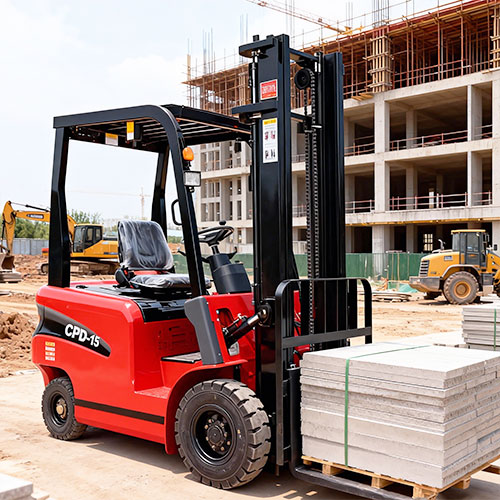
The diesel engine and hydraulic system in a modern IC forklift aren’t separate assemblies — they’re a tightly coupled power circuit engineered for precision under load.
At the heart of every diesel forklift, the engine continuously drives a high-pressure hydraulic pump, typically operating between 2,500 and 3,500 PSI. This direct mechanical coupling means lifting force responds almost instantaneously to throttle input — a critical advantage when handling heavy loads across demanding environments. Fuel combustion energy converts to hydraulic pressure in a single fluid motion, eliminating the power conversion losses common in battery-dependent alternatives.
Thermal management is where continuous-duty performance is either protected or lost. During extended shifts, hydraulic fluid absorbs heat from pump friction and valve resistance. Leading forklift manufacturers address this through dedicated hydraulic oil coolers — separate from the engine cooling circuit — that maintain fluid viscosity within the narrow operating range required for consistent cylinder response. Without adequate cooling, degraded fluid viscosity causes sluggish lift cycles and accelerated seal wear.
Load-sensing hydraulic valves add a further layer of precision. Rather than delivering fixed pump output regardless of demand, these valves modulate flow based on actual load pressure. The result is reduced energy waste during light-duty cycles and stable, proportional control when lifting near rated capacity. As noted by industry research, IC forklift hydraulic systems are specifically optimized for high-load scenarios where consistent pressure is vital.
These integrated systems lay the foundation for the raw torque and traction performance that the next section examines in detail.
Diesel forklifts deliver unmatched physical capability in demanding outdoor environments — and the underlying physics explain exactly why no alternative matches them on unpaved terrain.
On gravel lots, muddy construction sites, and uneven ground, traction becomes the defining variable. Electric alternatives depend on consistent surface contact to transfer torque smoothly, but loose or unstable substrates interrupt that contact unpredictably. Diesel-powered machines, by contrast, generate their peak torque at low RPM — meaning the engine doesn’t need to rev hard to push through resistance. As noted by industry analysts, the high torque of diesel engines allows forklifts to maintain consistent power when pushing heavy loads up inclines — a physics advantage that mechanical drivetrain design simply reinforces.
On steep ramps, torque is everything. Speed bleeds off when a loaded machine fights gravity, and the engine must compensate instantly. Diesel’s torque curve handles that demand without thermal throttling or voltage drop. Every heavy-duty diesel model built for outdoor logistics reflects this engineering priority.
Terrain Advantages of Diesel Forklifts:
Even a well-spec’d forklift made in China for export markets is engineered to these outdoor performance thresholds — a testament to how universal the torque demand is across global industrial environments. These physical capabilities translate directly into uptime advantages, which becomes even clearer when you examine how refueling time factors into real-world fleet productivity.
Downtime is lost revenue — and diesel’s refueling speed is one of its most decisive operational advantages over electric alternatives.
Every internal combustion forklift truck hydraulic system depends on continuous power delivery to maintain productivity. Refueling a diesel forklift takes only 5 to 10 minutes, compared to 6–8 hours for a standard electric charge — a difference that compounds dramatically across multi-shift operations.
| Factor | Diesel Refuel | Electric Charge |
|---|---|---|
| Time required | 5–10 minutes | 6–8 hours |
| Downtime per shift | Negligible | Significant |
| Infrastructure cost | Fuel tank/pump | Charging stations + wiring |
| 24/7 suitability | Yes | Requires battery rotation |
A diesel forklift never waits for a charge — it gets back to work. This matters most in high-volume logistics hubs running round-the-clock operations where a single idle machine creates a bottleneck.
Electric fleets also require substantial upfront investment in charging infrastructure — dedicated stations, upgraded electrical panels, and managed battery rotation schedules. Diesel eliminates that overhead entirely, keeping capital free for other operational priorities.
For operations exploring reliable, high-cycle equipment, compact diesel options demonstrate how practical refueling efficiency scales even in smaller tonnage applications. The manufacturing side of this equation — particularly where these machines are built and customized — is equally worth examining.
China’s diesel forklift manufacturing sector has evolved from cost-competitive production into a sophisticated engineering ecosystem capable of supplying worldwide wholesale forklifts at enterprise scale.
Advanced manufacturing hubs now deploy intelligent factory systems for precision assembly — automated welding cells, laser-guided quality inspection, and real-time torque monitoring ensure consistency across production runs. This technology-forward approach directly addresses a concern that historically gave buyers pause: whether offshore-sourced equipment could meet the reliability standards demanded by North American and European operations.
Quality control for international export typically involves several verification layers:
Customization depth is where leading Chinese manufacturers now genuinely differentiate themselves. Buyers can specify configurations across a broad tonnage range — commonly 3-ton models for warehouse environments up to 10-ton heavy-lift variants for ports and steel yards. Mast height, cab configuration, tire type, and hydraulic flow rates are all adjustable at the factory level rather than through costly field modifications.
For procurement teams evaluating suppliers, a manufacturer offering comprehensive product categories — from compact yard trucks through heavy-duty units — signals both engineering breadth and supply chain stability. Exploring a capable 3-ton option alongside wider product lines helps verify that range. The latest industry insights can also clarify how emissions compliance fits into sourcing decisions — a topic the next section addresses directly.
Modern diesel forklifts are not the smoke-belching machines of decades past — advanced exhaust after-treatment has fundamentally redefined what “diesel” means for emissions compliance.
The “dirty diesel” label no longer holds up to scrutiny. Two core technologies drive this shift:
Together, these systems allow diesel forklifts to operate in crossover environments — facilities that combine outdoor yard work with covered loading docks — without triggering indoor air quality violations.
Emission Compliance Callout: Modern diesel units utilize advanced exhaust after-treatment to achieve near-zero tailpipe emissions, satisfying both EPA and EU Stage V thresholds that govern fleet operations today.
For operations spanning warehousing and logistics environments, understanding which emission tier your equipment meets is critical before procurement — regulations vary by region and facility classification. The performance gains from these technologies set the stage for appreciating exactly how they appear in real-world operation.
Watching a diesel forklift under real load conditions reveals engineering details no spec sheet can fully capture — from mast rigidity under stress to how smoothly the hydraulics respond at full extension.

When reviewing footage like LTMG’s diesel forklift demonstrations, focus on these key visual indicators of build quality:
Ergonomic cabin design is equally telling. High-quality operator compartments feature adjustable suspension seats, logically grouped controls within natural reach, and unobstructed sightlines through the mast uprights. A well-laid-out cabin reduces operator fatigue during long shifts — directly impacting productivity and safety. For operations weighing lighter counterbalance alternatives alongside diesel, cabin ergonomics often become a deciding factor.
Together, chassis integrity, mast engineering, and cabin design form the visual signature of a machine built to perform — qualities that reinforce every performance advantage covered throughout this guide.
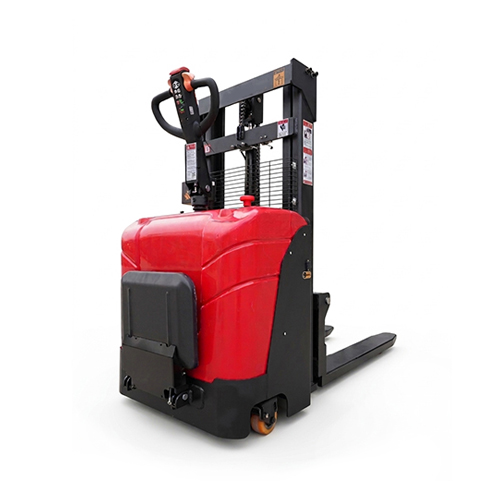
Diesel forklifts remain the industrial standard because no competing power source matches their combination of raw torque, operational continuity, regulatory compliance, and total cost of ownership at scale.
As covered throughout this guide — from engine architecture to emissions systems — the case for diesel converges around four core strengths:
The bottom line: diesel’s dominance in heavy industry isn’t nostalgia — it’s engineering logic. Remaining questions about indoor use, engine longevity, and maintenance specifics are addressed directly in the FAQ section ahead.
Diesel forklifts are powerful, long-lived machines — but operators and fleet managers consistently return to the same practical questions before committing to one.
Can diesel forklifts be used indoors?
With conditions. Diesel forklifts manufactured after 2015 use Diesel Particulate Filter (DPF) technology, which significantly reduces exhaust particulates and makes operation viable in well-ventilated semi-indoor spaces like loading docks and large warehouses, according to Mitsubishi Logisnext Americas. Fully enclosed, poorly ventilated spaces still require electric alternatives — for narrow indoor aisles, battery-powered options are often the safer fit.
What is the average lifespan of a diesel forklift engine?
A well-maintained diesel forklift engine typically runs 15,000 to 20,000 hours before requiring a major overhaul. Consistent oil changes, coolant checks, and air filter replacements are the primary drivers of that longevity.
How do Chinese-made forklifts compare in durability?
Modern Chinese-manufactured diesel forklifts have closed the quality gap considerably, with leading manufacturers now meeting ISO 9001 and CE certification standards. Component sourcing and after-sales support remain the key differentiators to evaluate before purchasing.
What maintenance is required for hydraulic systems?Hydraulic fluid replacement every 1,000–2,000 hours, combined with regular inspection of hoses, seals, and cylinder rods, keeps systems performing reliably. Contaminated fluid is the leading cause of hydraulic failure, so clean fluid and tight fittings are non-negotiable priorities per Clark’s operational guidelines and industry standards.