Get in touch
* Your personal information is securely protected and will only be used for business communication purposes.

The industrial forklift is undergoing its most significant transformation in decades — and the shift to electric power is no longer a trend. It is the new standard.
The numbers are striking: the global electric forklift market is projected to grow from $56.12 billion in 2023 to $118.91 billion by 2030, representing a compound annual growth rate of 11.3%, according to Fortune Business Insights. That trajectory reflects something fundamental changing across warehousing, logistics, and manufacturing worldwide.
At the centre of this transformation sits the 2.5-tonne capacity class — the VY-CPD25. This segment has become the workhorse of modern distribution, capable of handling the widest range of palletised loads without the footprint of heavier equipment. It is versatile enough for narrow-aisle work and powerful enough for loading docks, making it the preferred choice for any serious electric forklift suppliers looking to meet real operational demands.
Meanwhile, the limitations of traditional lead-acid batteries and diesel engines are becoming harder to justify — rising fuel costs, battery maintenance overheads, and tightening indoor air quality regulations are pushing facilities to rethink their power strategy entirely.
To understand what makes modern electric forklifts genuinely superior, it helps to start with the architecture and terminology that underpin them.
Evaluating any industrial electric forklift properly requires a firm grasp of the technical language that separates genuine innovation from marketing noise.
Before exploring specific machinery, it helps to establish a shared vocabulary. The following definitions underpin every performance claim and procurement decision in modern material handling:
**Lithium-Ion (Li-ion) Battery**
A rechargeable power source using lithium chemistry that delivers higher energy density, faster charging, and a longer cycle life than traditional lead-acid alternatives — typically lasting 2,000–3,000 full charge cycles.
**Lead-Acid Battery**
The older, heavier battery technology still found in legacy fleets, requiring dedicated charging rooms, regular watering, and full discharge cycles before recharging to avoid degradation.
**Opportunity Charging**
The practice of topping up a battery during short operational breaks; as [Logistics Management Magazine notes](https://varyonpower.com/why-the-stacker-is-outpacing-the-forklift.html), this is possible with lithium-ion technology “without damaging the battery life cycle,” eliminating costly shift downtime.
**Zero Tailpipe Emissions**
The operating standard achieved by fully electric machinery, ensuring compliance with indoor air quality regulations and removing combustion gases from enclosed warehouse environments.
**Total Cost of Ownership (TCO)**
A financial metric encompassing purchase price, energy costs, maintenance, downtime, and battery replacement — the figure that [most accurately reflects](https://varyonpower.com/why-stand-on-electric-stackers-outperform-traditional-forklifts.html) long-term fleet value over headline acquisition cost.
TCO is the number that truly matters — operators who focus solely on upfront pricing routinely underestimate the savings that modern lithium-ion architecture delivers across a three-to-five-year horizon. With these fundamentals established, it becomes far easier to assess precisely how a machine’s engineering translates into real-world performance gains.
The VY-CPD25 sets a new benchmark in electric forklift specifications and features, combining a 2.5-ton lifting capacity with precision lithium power architecture built for demanding industrial environments.
| Specification | Detail |
|---|---|
| Lifting Capacity | 2,500 kg |
| Power Source | High-efficiency lithium-ion |
| Operating Environment | Indoor & outdoor |
| Navigation | Precision narrow-aisle control |
Capacity and control working in tandem define the VY-CPD25’s core engineering philosophy. The 2.5-ton capacity is deliberately aligned with standard Euro pallet configurations, meaning operators aren’t carrying unnecessary overhead — every kilogram of rated load translates directly into real-world utility. The energy-efficient motor design further supports extended shift life, sustaining consistent torque output without the performance fade that typically affects lead-acid alternatives as discharge deepens. In practice, this means fewer mid-shift interruptions and more predictable throughput across long operating windows.
Precision matters as much as raw power in modern warehouse layouts. The VY-CPD25 incorporates refined control systems that allow confident manoeuvring in narrow-aisle environments where margins are tight and errors are costly. As material handling trends for 2025 confirm, warehouse density is increasing — making nimble, responsive machines essential rather than optional. Operators requiring detailed performance comparisons across power configurations may also find value in understanding how power density shapes industrial outcomes before committing to a specification.
These engineering advantages translate directly into financial outcomes — a subject worth examining closely.
Electric forklifts deliver a compelling TCO advantage — fewer parts, no fuel dependency, and longer-lasting batteries create savings that compound year after year.
The financial case for switching starts with engineering simplicity. According to the OSHA Technical Manual, electric forklifts have approximately 25% fewer moving parts than internal combustion alternatives — a structural advantage that directly translates into lower failure rates, reduced downtime, and fewer costly repairs. Less mechanical complexity means electric forklift maintenance practices demands are significantly lighter from day one.
Key cost-saving factors include:
When you run a genuine TCO comparison across a five-year ownership window, the numbers consistently favour electric — often by a substantial margin.
The VY-CPD25 isn’t just a cleaner machine; it’s a more economical one. Naturally, the reduced complexity that drives these savings also reshapes how operators approach day-to-day upkeep — which is worth exploring in its own right.
Electric forklifts fundamentally change the maintenance equation — fewer moving parts mean fewer failure points, lower labour costs, and significantly less downtime.
The VY-CPD25 Electric Forklift eliminates entire categories of maintenance tasks that burden conventional internal combustion machines. As the OSHA Technical Manual confirms, fewer moving parts lead to lower maintenance requirements, reduced downtime, and the elimination of costs associated with engine tuning. No spark plugs to replace, no oil changes to schedule, no exhaust systems to service — the workload simply disappears.
Battery Management System (BMS) The onboard BMS automates health monitoring, tracking cell temperature, charge cycles, and state of charge in real time. Operators receive alerts before minor issues escalate into costly replacements.
Electric Motor The brushless motor requires minimal intervention beyond periodic inspection. What typically happens is that dust accumulation around motor housings is the primary concern.
Hydraulic System Hydraulic lines and fluid levels still warrant routine attention, even in electric configurations.
This leaner maintenance profile not only protects your operational budget — it also supports broader environmental goals, a point worth exploring as we consider how the VY-CPD25 aligns with modern sustainability and indoor air quality standards.
Zero-emission lithium-ion technology for forklifts doesn’t just cut costs — it directly supports ESG commitments, regulatory compliance, and healthier working environments.
For businesses under increasing pressure to demonstrate genuine environmental responsibility, the shift to electric material handling equipment is one of the most tangible actions available. According to the U.S. Environmental Protection Agency, switching to electric forklifts can reduce warehouse carbon emissions by up to 100% at the point of use, producing zero tailpipe emissions. That figure carries real weight when reporting against Scope 1 emissions targets or satisfying investor ESG frameworks.
Beyond headline carbon figures, the benefits extend into highly regulated sectors. Food processing and pharmaceutical warehouses face strict indoor air quality standards — environments where combustion engine emissions are simply incompatible with product safety or compliance requirements. Electric forklifts eliminate exhaust fumes entirely, removing a significant source of airborne contaminants at the point of operation.
Noise reduction is another frequently underestimated advantage. In practice, electric forklifts operate considerably more quietly than their diesel or LPG counterparts, reducing operator fatigue during long shifts and supporting compliance with workplace noise exposure limits under UK health and safety legislation.
Sustainability here is not a trade-off — it’s an operational upgrade.
With the environmental and compliance case firmly established, attention naturally turns to whether electric forklifts can match — or exceed — the raw performance demands of modern warehousing.
Electric forklifts deliver instant, full torque from the moment of activation — a capability diesel engines simply cannot match at low RPM.
This fundamental characteristic reshapes what’s possible in heavy-duty material handling. Where diesel-powered alternatives build torque gradually, the VY-CPD25’s electric drivetrain responds instantaneously, giving operators precise control when lifting loads up to 2,500 kg. Modern 2.5-ton electric forklifts are now exported globally from China to meet exactly this kind of heavy-duty industrial demand — a clear signal the technology has matured well beyond light-duty applications.
Bold claim worth highlighting: electric does not mean underpowered — it means differently powerful, and in most warehouse scenarios, more effectively so.
The comparison speaks for itself:
| Performance Factor | Electric (VY-CPD25) | Diesel Alternative |
|---|---|---|
| Torque Delivery | Instant, full torque from standstill | Builds gradually with RPM |
| Uptime | Rapid lithium charging; multi-shift capable | Refuelling downtime; longer service intervals |
| Indoor Suitability | Zero emissions; fully compliant | Restricted or prohibited indoors |
Beyond raw torque, the VY-CPD25 maintains stable performance across varying temperature ranges — a practical advantage in cold-store environments or unheated loading bays. Lithium-ion chemistry resists capacity degradation far better than lead-acid alternatives in these conditions.
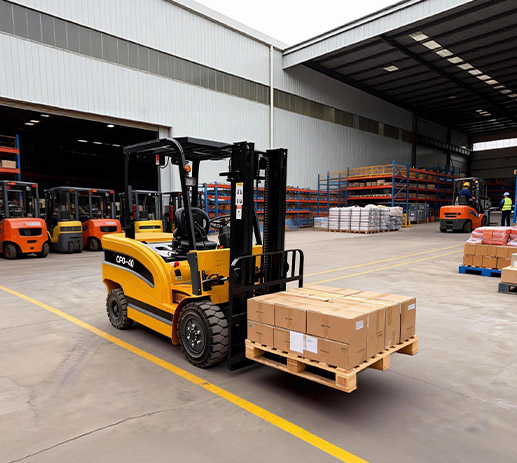
Multi-shift capability rounds out the operational picture. Rapid opportunity charging means batteries can be topped up during breaks rather than swapped out, keeping productivity continuous throughout demanding production cycles. To see precisely how these capabilities translate in practice, the next section offers a closer look at the machine itself.
Seeing the VY-CPD25 perform in a live environment removes any doubt about its capability — real-world footage reveals what spec sheets alone cannot communicate.
Visual demonstrations shared via @varyonpower on Instagram consistently showcase three standout qualities that operators notice immediately.
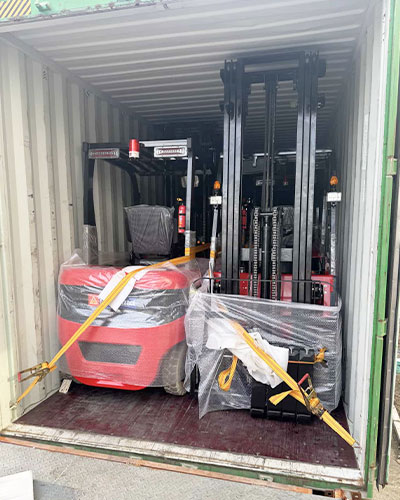
Turning radius and spatial agility are the first things that impress. Export-grade warehouse footage shows the VY-CPD25 navigating tight bays with a composure that larger counterbalance machines simply cannot replicate. The compact footprint translates directly into faster cycle times in constrained loading areas.
The charging interface appears deceptively straightforward in visual walkthroughs — a deliberate design choice. The lithium-ion connection point is positioned for single-handed engagement, reducing the time an operator spends at the charging station and minimising the opportunity for connector wear. What the footage makes plain is that charging feels like plugging in a mobile rather than managing heavy industrial cabling.
The operator cockpit draws consistent attention in demonstration content. Ergonomic positioning of the controls, clear sightlines to the forks, and a well-considered instrument cluster all communicate a machine designed around the person using it — not just the load being moved.
Taken together, these visual takeaways reinforce every performance claim made in earlier sections. As the following key takeaways will draw together, the VY-CPD25 makes a compelling case that electric material handling has decisively moved beyond compromise.
The shift to electric material handling is no longer a forward-looking aspiration — it is the defining commercial and regulatory reality of modern warehousing.
As explored throughout this article, the case for electric forklifts rests on compounding advantages rather than a single benefit. Here are the essential conclusions:
On the other hand, selecting the right electric forklift still requires careful consideration of your specific environment, duty cycles, and charging infrastructure. The fundamentals covered here provide a strong foundation — but practical questions inevitably remain. Those are addressed directly in the next section.
The most common questions about electric forklifts reveal a clear pattern: operators want confidence in runtime, durability, and workflow compatibility before committing.
How long does a lithium battery last on a single charge?
Runtime varies by load weight and duty cycle, but most lithium-powered electric forklifts deliver 6–10 hours of continuous operation on a full charge. Lighter, intermittent tasks typically push performance toward the higher end of that range.
Can the VY-CPD25 be used outdoors or in wet conditions?
The VY-CPD25 is engineered for demanding industrial environments, including exposure to moisture common in loading bays and covered yards. However, prolonged operation in heavy rain or fully exposed outdoor conditions is not recommended without confirming the unit’s IP rating with the supplier.
What is the typical lifespan of an industrial electric forklift?
According to Logistics Management Magazine, lithium-ion batteries in forklifts typically last 5–7 years depending on cycle usage, while the mechanical chassis often outlasts two battery generations with proper maintenance.
How does opportunity charging affect daily workflow?Opportunity charging eliminates the need for dedicated battery swap windows, allowing operators to top up during natural breaks such as shift handovers or loading pauses. In practice, this keeps utilisation rates high without requiring additional battery stock or extended downtime.