Get in touch
* Your personal information is securely protected and will only be used for business communication purposes.

Picture a container port at 3 a.m. Cranes swing, trucks idle, and forklifts run without pause — moving steel coils, lumber bundles, and machinery crates that would crush a standard warehouse lift. In this world, stopping to charge isn’t an inconvenience. It’s a crisis.
This is precisely where the diesel forklift proves it belongs. Far from being a relic of an dirtier industrial past, today’s diesel-powered machines are engineering achievements shaped by decades of refinement and regulatory pressure. Tier 4 Final and Stage V compliance has reduced particulate matter and NOx emissions by over 90% compared to older models, according to the Association of Equipment Manufacturers — effectively dismantling the “dirty engine” argument that once defined the debate.
Diesel isn’t legacy technology. It’s optimized technology — purpose-built for environments where power density, runtime, and raw torque are non-negotiable.
Defining high-intensity material handling in 2024 means acknowledging operations where lift cycles run continuously across three shifts, outdoor terrain is unpredictable, and loads routinely exceed what battery-electric systems can physically sustain. Diesel forklifts reach capacities of up to 50 tons, making them the only practical solution for steel mills, shipyards, and large-scale construction yards. The physics are straightforward: combustion engines deliver peak torque instantly and sustain it under load — a mechanical reality that battery chemistry hasn’t yet matched at the highest weight thresholds.
Then there’s the refuel-and-go advantage. A diesel tank refills in minutes, returning a machine to full operational capacity without downtime calculations or shift scheduling conflicts. For multi-shift manufacturing and logistics hubs running around the clock, that simplicity is a genuine competitive edge.
What happens, though, when you place these two technologies side-by-side in real operational conditions? The differences become even more pronounced.
The conversation around electrification is loud — and often oversimplified. When companies weigh a diesel forklift vs. electric forklift, the decision rarely comes down to torque alone. Infrastructure, uptime, and environmental conditions all shape the real-world outcome. Here’s a clear-eyed look at what that comparison actually reveals.
| Metric | Diesel | Electric |
|---|---|---|
| Refuel/Recharge Time | ~5 minutes | 8–10+ hours (standard charging) |
| Cold Weather Performance | Consistent | Significant battery degradation |
| Infrastructure Cost | Fuel tank + pump | Charging stations, electrical upgrades |
| Ideal Environment | Outdoor, rough terrain | Indoor, climate-controlled |
| Multi-Shift Suitability | High | Limited without battery swapping |
As the Forklift Action News / Industrial Truck Association notes, diesel forklifts offer the lowest downtime for multi-shift operations because refueling takes minutes, whereas battery charging or swapping requires significant infrastructure and time. In a 24-hour manufacturing hub, that gap is operationally devastating. A diesel unit running three shifts needs a few minutes at the fuel tank. An electric unit needs either a costly battery-swap program or accepts a hard stop mid-cycle — what operators increasingly call the “Charging Trap.”
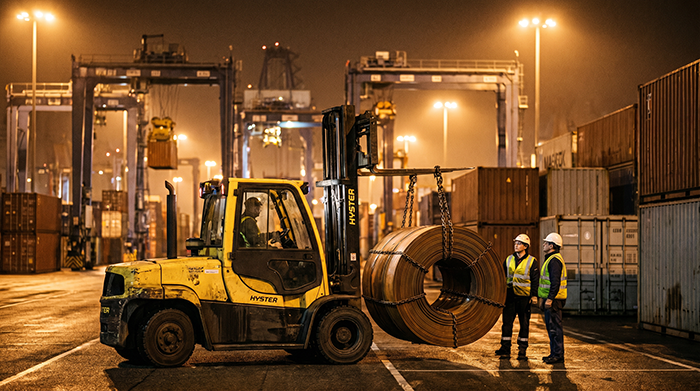
Battery performance degrades sharply in cold environments. Lithium-ion and lead-acid batteries lose meaningful capacity below 32°F, slowing travel speeds and reducing lift capacity. Diesel engines, by contrast, perform with reliable consistency across temperature ranges. For lumber yards, cold-storage facilities, and outdoor freight terminals, that consistency isn’t a preference — it’s a requirement.
Installing adequate charging infrastructure isn’t plug-and-play. Electrical panel upgrades, dedicated circuits, and floor space for charging bays add significant upfront costs that often surprise buyers. A diesel setup, in comparison, typically requires only a fuel storage tank and basic safety compliance. For operations already stretched thin on capital, that difference matters.
Understanding why diesel sustains this operational edge ultimately comes down to mechanics — and that’s precisely where the next section digs in.
Understanding the mechanical edge diesel forklifts hold requires a look under the hood — literally. The performance gap between diesel and alternative power sources isn’t marketing; it’s physics.
Diesel engines don’t use spark plugs. Instead, they compress air so intensely — typically at ratios between 14:1 and 25:1 — that fuel ignites on contact. This compression ignition process generates peak torque at low RPMs, which is precisely the operating range where forklifts spend most of their working lives. The result is immediate, sustained pulling force — exactly what’s needed when a load weighs 15,000 lbs and it isn’t moving on its own.
Diesel’s torque curve doesn’t climb gradually — it arrives early and stays there, giving operators the power reserve that heavy loads demand from the first inch of movement.
A diesel counterbalance forklift leverages the engine’s own weight as a structural asset. The heavy IC engine, mounted at the rear, acts as a natural counterweight to the load carried at the front forks. This design principle allows these machines to handle significantly greater capacities without requiring additional ballast systems — keeping the platform simpler, more reliable, and easier to service.
Diesel engines power the hydraulic pumps that control fork lift, tilt, and attachment functions. Because diesel produces consistent high-output torque under load, hydraulic pressure remains stable even during simultaneous operations — lifting while traveling on an incline, for example. That consistency is harder to replicate with battery-dependent systems under stress.
Scenario-based performance advantages include:
According to Grand View Research, the global diesel forklift market is projected to maintain a steady CAGR of 4.5% through 2030 — a signal that industries relying on heavy-duty performance aren’t walking away from IC power anytime soon. Operators looking to explore equipment options can browse current industrial equipment categories to see how diesel models compare within a broader fleet context.
The mechanics explain the power. But equally important is how that power is delivered to the operator — which means ergonomics, cabin design, and machine control all deserve the same level of engineering attention.
Raw power only delivers results when the operator can harness it effectively. A heavy duty diesel forklift isn’t just a mechanical workhorse — it’s a workspace where skilled operators spend entire shifts making precision decisions under real pressure. Modern engineering increasingly treats the cabin as mission-critical hardware.
Operator fatigue is a productivity killer that rarely shows up on balance sheets. Prolonged exposure to vibration and noise directly impacts reaction time and decision accuracy. Today’s diesel engines address this through advanced engine mounts, counterbalanced crankshafts, and sound-dampening cab insulation. The result is a dramatically quieter, smoother ride compared to older diesel generations — and it’s worth noting that, according to the Association of Equipment Manufacturers, modern diesel engines have shed their “dirty machine” reputation through advanced filtration and refined combustion technology.
In large-scale operations, what the operator can’t see is often more dangerous than what they can. Contemporary diesel forklift cabins prioritize wide-angle sightlines, low-profile mast designs, and overhead guard configurations that maximize load visibility without compromising structural protection. Ergonomically contoured seating and adjustable controls reduce musculoskeletal strain during extended operation.
Precision handling of high-capacity loads demands controls that respond predictably. Modern units feature fingertip hydraulic levers, proportional controls, and load-sensing systems that adjust sensitivity based on weight. For outdoor and rugged terrain environments, essential safety features include:
Great ergonomics doesn’t soften a forklift — it makes every ton of its capacity more controllable and every shift safer for the operator.
Choosing a machine with the right ergonomic profile is inseparable from choosing the right manufacturer — a point that leads directly into what production capability and customization options actually look like at the sourcing level.
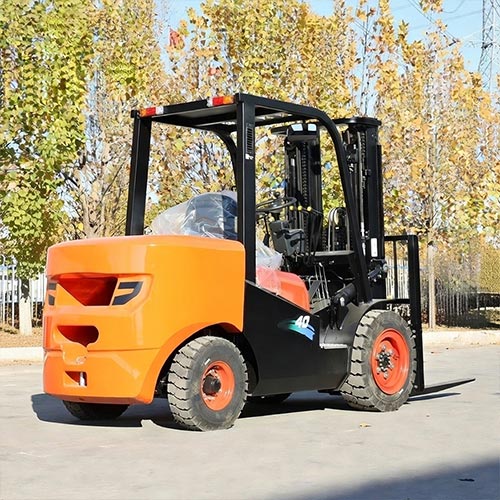
Choosing the right diesel forklift is only half the equation. The manufacturer behind it determines everything from build consistency to what happens when a hydraulic line fails at 2 a.m. on a deadline-driven shift. In internal combustion forklift manufacturing, production scale and engineering depth aren’t just selling points — they’re performance guarantees.
What to Look for in a Manufacturer #1: Production Capacity A facility of 200,000 m² or more signals the kind of infrastructure where quality control isn’t aspirational — it’s structural. Larger production environments support dedicated testing lines, component traceability, and the volume consistency that fleet buyers depend on.
Scenario-based customization is where serious manufacturers separate themselves from catalog-only suppliers. A timber yard operates differently than a steel distribution center. Lift height requirements, mast configurations, cab climate controls, and attachment compatibility all vary by application. Off-the-shelf models often force operations to adapt around the equipment rather than the other way around. The better approach is working with an OEM or ODM partner who designs around your actual workflow from the start.
What to Look for in a Manufacturer #2: Customization Depth ODM partnerships allow businesses to specify load capacity ranges, fuel system configurations, and ergonomic features that match real operational conditions — not just industry averages.
Global after-sales support is the lifeline most buyers underestimate until they need it. Downtime on heavy machinery doesn’t wait for business hours. Shandong Varyon Machinery Co., Ltd. provides 24/7 technical support, ensuring that operators and fleet managers have access to expertise regardless of time zone or shift schedule.
What to Look for in a Manufacturer #3: After-Sales Reach Technical documentation, remote diagnostics, and on-call support networks define long-term ownership costs just as much as the initial purchase price.
For cost-conscious operations evaluating entry points into diesel lifting, the VY-CPC series offers a compelling balance of performance and value. Explore the full range of material handling solutions to understand how current product lines align with evolving operational demands. Keeping that investment running efficiently, though, comes down to something equally critical — a disciplined maintenance approach.
Diesel’s dominance in heavy industrial logistics isn’t just about raw power — it’s about staying power. As Logistics Management confirms, diesel remains the industry standard for high-capacity, outdoor, and rugged terrain tasks due to superior torque. But that standard only holds when maintenance practices match the machine’s demands.
A disciplined pre-shift routine separates a long-running asset from an expensive breakdown. Follow these numbered steps before every operation:
In practice, teams that complete this checklist consistently report fewer unplanned downtime events across high-throughput operations.
Diesel engine longevity is directly tied to fuel cleanliness. Contaminated fuel degrades injectors fast — and injector replacement is one of the costliest repairs in any service cycle. Dual-stage filtration systems and regular filter replacements (typically every 250–500 operating hours) are non-negotiable in dusty or high-humidity environments.
Battery degradation is real. In extreme temperature swings, battery capacity drops significantly over time, while a well-maintained diesel engine maintains consistent output for 10,000+ hours. This longevity advantage is exactly why large versatile diesel forklift truck suppliers invest heavily in robust engine platforms — the lifecycle math consistently favors diesel for outdoor and multi-shift operations.
If you’re evaluating options across power types, exploring a heavy-duty diesel option alongside an electric warehouse alternative helps clarify which solution fits your specific operating environment.
The most cost-effective forklift isn’t the cheapest to purchase — it’s the one that keeps running reliably when your operation can’t afford to stop.
📹 [Placeholder: Diesel Forklift Maintenance & Operation Video — embed recommended tutorial here]
Match your maintenance discipline to your machine’s capability, and diesel will continue delivering results long after alternatives have cycled out.