Get in touch
* Your personal information is securely protected and will only be used for business communication purposes.

The warehouse industry is facing a financial reckoning. Fuel costs spike, maintenance bills compound, and every hour an internal combustion forklift sits in service represents a slow drain on operational margins that today’s logistics operations simply can’t afford to ignore.
The numbers tell a striking story. The global electric forklift market is projected to surge from $92.77 billion in 2024 to $209.49 billion by 2030, representing a CAGR of 14.8%, according to Grand View Research. That growth isn’t driven by trends — it’s driven by math.
IC fleet operators face compounding hidden costs:
These costs quietly erode profitability in ways that upfront equipment pricing rarely reflects. In practice, electric alternatives can reduce total cost of ownership (TCO) by up to 43% over five years compared to IC models — a figure that fundamentally reframes the “too expensive” objection.
This is precisely where the VY-CPD20 counterbalance electric forklift changes the conversation. Sourced from proven OEM/ODM electric forklift manufacturers, it’s engineered to eliminate the TCO barrier without compromising capability.
Understanding how it achieves that starts with the engineering underneath — specifically, what three wheels can do that four can’t.
The financial pressures outlined above make one thing clear: equipment design choices aren’t just mechanical decisions — they’re operational ones. That’s where the geometry of a 3 wheel electric forklift becomes a genuine competitive advantage.
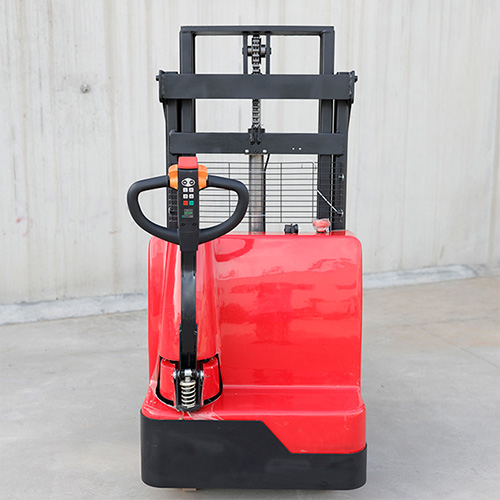
Warehouse layouts are rarely generous. Tight racking configurations, narrow picking aisles, and high-density storage zones demand equipment that can pivot quickly without sacrificing control. Three-wheel designs achieve a significantly tighter turning radius than their four-wheel counterparts — a practical edge that directly translates to faster cycle times and fewer aisle-width compromises. According to 3-wheel sit-down counterbalance forklift market analysis, demand for this format is accelerating precisely because modern distribution centers are being built denser, not wider.
The tighter the space, the sharper the performance gap between three- and four-wheel designs.
| Factor | 3-Wheel | 4-Wheel |
|---|---|---|
| Turning radius | Tighter | Wider |
| Indoor maneuverability | Superior | Moderate |
| Footprint | Compact | Larger |
| Best application | Narrow-aisle, high-density | Open yards, heavier loads |
The counterbalance design eliminates the need for outrigger arms, keeping the truck’s profile clean and its weight distribution centered over the load. This allows operators to handle substantial loads confidently — without the bulkier chassis a four-wheel model typically requires.
The VY-CPD20 series applies this principle precisely, pairing a refined counterbalance architecture with a turning radius optimized for real-world warehouse constraints. Understanding exactly how that translates into measurable performance metrics — including lift capacity and gradeability — is worth examining closely.
The engineering advantages explored in the previous section only deliver real-world value when paired with the right power system and customization framework. This is precisely where the VY-CPD20 separates itself from the field.
The VY-CPD20 is built around a fully integrated lithium-ion power system — a meaningful departure from the lead-acid batteries that still anchor many competing units. In practice, this translates to faster uptime, more consistent torque delivery, and zero gassing during charging cycles.
One of the most operationally significant advantages is opportunity charging. According to Flux Power’s analysis of counterbalance lift truck performance, lithium-ion technology enables a full charge in 90 minutes or less — meaning operators can top up power during standard breaks rather than swapping battery packs mid-shift. For high-throughput facilities, this alone can eliminate costly downtime.
Lithium-ion doesn’t just power the VY-CPD20 differently — it changes what the machine is capable of on a full shift.
The VY-CPD20 delivers a 2,000 kg (4,400 lb) lift capacity with gradeability that handles ramp transitions and uneven loading dock surfaces without hesitation. As industry footage of comparable electric units demonstrates, a well-engineered electric forklift can climb grades that many operators previously assumed required internal combustion power.
Whether you’re evaluating a long-term purchase or exploring an electric forklift rental arrangement to test fit before committing, these performance benchmarks hold up under real operational pressure — not just spec-sheet conditions.
Varyon Power’s OEM/ODM capability means the VY-CPD20 isn’t a fixed product — it’s a configurable platform. Operators can specify battery capacity, mast height, control system preferences, and load handling attachments. This level of customization, typically reserved for high-volume fleet contracts, is accessible across order sizes.
The financial case for this combination of performance and adaptability becomes even clearer when you factor in what happens after deployment — specifically, what you stop spending on maintenance and infrastructure. That’s where the next section focuses.
The VY-CPD20’s capabilities translate directly into financial returns — and the numbers are compelling. Transitioning to a battery electric forklift powered by lithium-ion technology isn’t just an environmental choice; it’s a structural cost decision with measurable payback across three key dimensions.
“Electric models see a 50–75% reduction in hourly operating expenses compared to diesel counterparts.” — ReliLift
Fewer moving parts mean dramatically lower maintenance bills. Lithium-ion electric drivetrains eliminate oil changes, exhaust system repairs, fuel filter replacements, and transmission servicing. In practice, this translates to approximately 60% lower maintenance costs over a comparable gas-powered unit’s lifecycle — a figure that compounds significantly across a multi-unit fleet.
“Switching to electric can prevent 5–7 metric tons of CO2 emissions annually per vehicle, reaching up to 21 tons in three-shift operations.” — TAPPI / Linde Material Handling
Space recovery is another underrated advantage. Traditional lead-acid battery systems require a dedicated charging room — ventilation equipment, acid-resistant flooring, eyewash stations, and fire suppression. Lithium-ion opportunity charging eliminates all of that, reclaiming hundreds of square feet for productive storage.
| Cost Category | Diesel/Lead-Acid Unit | VY-CPD20 (Lithium-Ion) |
|---|---|---|
| Annual Maintenance | ~$4,500 | ~$1,800 |
| Fuel/Energy Cost | ~$6,200 | ~$1,400 |
| Battery Room Overhead | ~$2,000 | $0 |
| Estimated Annual Savings | — | ~$9,500 per unit |
For ESG-focused operations, the emissions reduction also supports corporate sustainability reporting — a growing procurement requirement across retail, logistics, and food distribution sectors.
Achieving this ROI consistently, however, depends heavily on where and how the equipment is sourced — which raises an important question about manufacturer selection.
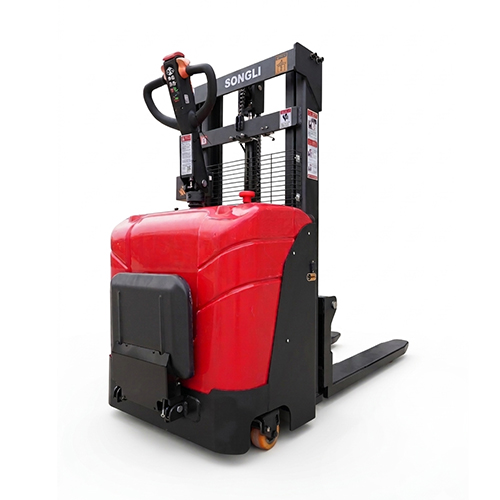
The financial returns outlined in the previous section are only achievable when procurement decisions are equally sound. Sourcing an electric warehouse forklift from a specialized Chinese manufacturer has become a legitimate strategic advantage — not a compromise. Leading Chinese manufacturers now dominate the lithium-ion forklift sector through advanced R&D and integrated supply chains, enabling competitive pricing without the quality concessions often assumed.
Specialized manufacturers deliver value through vertical integration. When a single supplier controls battery production, motor engineering, and chassis assembly, quality checkpoints multiply while costs stay lean. The result is a precision-built machine at a price point that broader industrial conglomerates simply can’t match.
Not every supplier offers the same standard. Use this checklist when assessing OEM/ODM candidates:
Spare parts availability deserves particular emphasis. A forklift that sits idle waiting for components erases every efficiency gain you’ve captured. Reliable partners maintain regional parts inventories and offer remote diagnostics to minimize downtime.
Buyers approaching this market for the first time often have practical questions — about pricing benchmarks, charge cycles, and whether rental makes sense for seasonal peaks. The next section addresses those directly.
What is the average price of a 3-ton electric forklift?
Pricing varies based on configuration, battery type, and supplier. A standard 3-ton electric counterbalance model typically ranges from $18,000 to $45,000, with lithium-ion variants commanding a premium that’s offset by long-term operational savings.
How long does a battery electric forklift last on a single charge?
Most lithium-ion electric forklifts deliver 6–8 hours of continuous operation per charge cycle. Opportunity charging during breaks can effectively extend runtime across multi-shift operations without full downtime.
Can the VY-CPD20 Electric Forklift be used for both indoor and outdoor applications?
Yes. Its compact 3-wheel counterbalance design handles tight indoor aisles while remaining capable on stable outdoor surfaces. However, rough terrain or unpaved lots may require additional consideration during site assessment.
Is electric forklift rental a viable option for seasonal peaks?
Rental is increasingly practical as fleet managers seek flexibility during high-demand periods. Short-term agreements allow operations to scale without capital expenditure commitments — a smart hedge against unpredictable demand cycles according to industry market data.