Get in touch
* Your personal information is securely protected and will only be used for business communication purposes.

As a core tool for material handling, forklifts have long transcended the single application scenario of traditional warehouses and gradually penetrated into manufacturing, cold chain logistics, port terminals, and other fields. With the continuous upgrading of material handling needs, scenario-specific forklift solutions have become the key to improving operational efficiency, reducing labor costs, and ensuring operational safety. The continuous innovation of forklift technology and the optimization of scenario adaptation capabilities are reshaping the material handling model of various industries.
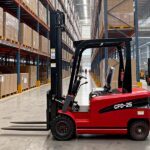
In the warehousing and logistics field, forklifts are the backbone of daily operations, adapting to different storage modes and space conditions with diversified models. For large-scale logistics hubs with high storage density, narrow-aisle forklifts and reach trucks have become the first choice. Their small turning radius and high lifting height can fully utilize vertical space, improving the storage capacity of warehouses by 30% compared with traditional models. Meanwhile, with the popularization of intelligent warehouses, automated guided forklifts (AGVs) and autonomous mobile robots (AMRs) are widely used, realizing seamless connection with warehouse management systems (WMS) for automatic warehousing, picking, and loading/unloading, greatly reducing manual intervention and error rates.
For small and medium-sized warehouses with limited space, electric pallet trucks and stackers with flexible operation are more favored. They are compact in size, low in noise, and suitable for indoor light-load and short-distance handling, meeting the daily material turnover needs of small-scale operations while complying with environmental protection requirements.
In the manufacturing sector, forklifts play a crucial role in linking production links, realizing the efficient turnover of raw materials, semi-finished products, and finished products. Different from warehousing scenarios, manufacturing workshops have higher requirements for forklift flexibility, stability, and environmental adaptability. For assembly lines with frequent material supply, electric forklifts with fast response and smooth operation are adopted to ensure timely material delivery without affecting the production rhythm.
In workshops with special requirements such as high cleanliness and anti-static, customized forklifts with dust-free and anti-static designs are used to avoid polluting products or causing safety hazards. For heavy-duty processing workshops, internal combustion forklifts and heavy-duty electric forklifts with strong load-bearing capacity are deployed to handle large workpieces and equipment components, ensuring the smooth progress of the production process.
In extreme and special working environments, scenario-adapted forklifts have become the key to breaking through handling bottlenecks. In cold chain logistics warehouses, where temperatures are often as low as -25℃, cold-resistant forklifts are specially designed. Their motors, batteries, and hydraulic systems are optimized for low-temperature resistance, ensuring stable operation without being affected by harsh environments, and providing reliable support for the turnover of frozen and refrigerated goods.
In outdoor scenarios such as port terminals and construction sites, forklifts with strong environmental adaptability are widely used. Equipped with puncture-proof solid tires and reinforced body structures, they can cope with uneven ground and complex weather conditions. For outdoor heavy-load handling, container forklifts and rough-terrain forklifts are adopted, which can efficiently complete the loading, unloading, and stacking of containers and bulk materials, improving the operational efficiency of open-air yards.
With the rise of new industries such as new energy and e-commerce, forklift application scenarios are constantly expanding and innovating. In new energy battery production bases, forklifts with explosion-proof and anti-static functions are used to handle flammable and explosive materials safely. In e-commerce distribution centers with peak season pressure, forklifts equipped with intelligent scheduling systems can achieve efficient allocation of resources, coping with the surge in order handling volume during peak periods.
In the field of agricultural product circulation, forklifts adapted to farmyards and fruit and vegetable warehouses are gradually popularized. They are designed with anti-slip tires and protective devices to avoid damaging agricultural products during handling, helping to improve the efficiency of agricultural product sorting and distribution.
Conclusion: The wide application of forklifts in diversified scenarios is a vivid manifestation of the integration of material handling equipment and industrial development. With the continuous advancement of technology, forklifts will be more closely integrated with scenario needs, developing in the direction of intelligence, customization, and environmental protection. By accurately matching the characteristics of different scenarios, forklifts will continue to empower various industries to optimize material handling processes, reduce operational costs, and contribute to the high-quality development of the global industrial chain and supply chain.