Get in touch
* Your personal information is securely protected and will only be used for business communication purposes.

Every warehouse manager knows the feeling: a forklift goes down mid-shift, a parts order is pending, and a loading dock full of pallets isn’t moving. That downtime anxiety isn’t just stressful — it’s expensive, and it compounds quietly across every operational quarter.
Traditional internal combustion (IC) forklifts carry a financial burden that extends well beyond the sticker price. Diesel and fossil fuel costs have become increasingly volatile on a global scale, swinging with geopolitical pressures and supply chain disruptions that no facility budget can reliably absorb. When fuel prices spike, margin-thin operations feel it immediately.
Then there’s the maintenance reality. IC engines typically demand a service cycle every 250 to 500 operating hours — oil changes, filter replacements, exhaust system checks, and more. In a busy distribution center running two shifts, that cycle arrives fast and often. Labor and parts costs stack up before operators even factor in unplanned breakdowns.
The numbers are stark: according to ReliLift, electric forklifts reduce hourly operating expenses by 50% to 75% compared to diesel-powered alternatives.
Space inefficiency adds another layer of pressure. Large counterbalance forklifts require wide turning radii that simply don’t work in modern high-density racking environments. As facilities push toward tighter aisle configurations to maximize cubic storage capacity, oversized equipment becomes a liability rather than an asset. Flexible electric handling solutions are increasingly filling that gap.
Finally, regulatory momentum is accelerating. Zero-emission facility standards are no longer a distant requirement — they’re an active mandate in many states and logistics hubs nationwide.
The shift to the electric stacker format isn’t a trend. It’s a calculated response to these converging pressures — and the next question is which design actually delivers in real warehouse conditions.
The hidden costs explored in the previous section don’t exist in a vacuum — they’re largely products of equipment that was never designed for modern warehouse demands. The stand-on electric stacker represents a fundamentally different engineering philosophy, one built around how warehouses actually operate today rather than how they operated decades ago.
Narrow-aisle environments are the pressure test that exposes every weakness in traditional counterbalance forklifts. Seated units typically require aisle widths of 11 to 13 feet to operate safely. Stand-on stackers, by contrast, can navigate aisles as tight as 8 feet, which translates directly into usable storage space. In practice, reclaiming even two or three aisle feet across a mid-sized facility can unlock hundreds of additional pallet positions without expanding the building footprint.
Compact turning radius isn’t just a spec sheet advantage — it’s a throughput multiplier.
Seated counterbalance units place operators low and behind a mast assembly, creating persistent blind spots and requiring constant head rotation. Stand-on platforms elevate the operator’s sightline and position them closer to the load, dramatically reducing neck strain and cognitive fatigue across a full shift. Lower fatigue means faster decisions, fewer near-misses, and less turnover — all of which feed back into the total cost equation.
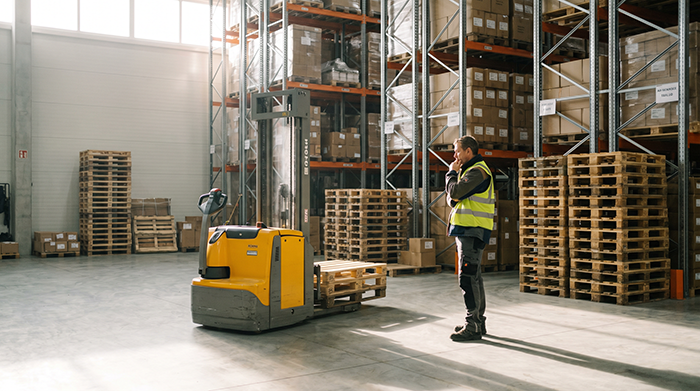
A common pattern in specialized manufacturing and cold-storage environments is that generic equipment creates costly workarounds. A food distribution center operates differently than an automotive parts warehouse. Purpose-built electric handling solutions that account for floor conditions, temperature ranges, and load types from the outset eliminate those workarounds before they become budget line items.
The CZD-15 addresses one of the most persistent trade-offs in material handling: load capacity versus footprint. It delivers a 1,500 kg rated capacity while maintaining a compact chassis designed for confined environments. Global Market Insights reports that electric forklifts surpassed 70% global market share in 2024 — a milestone that reflects precisely this kind of balanced, application-specific design winning over operators at scale.
That performance advantage goes deeper than the motor, though. The real story is what disappears when combustion engines leave the floor — and that’s exactly where the next section picks up.
Switching equipment types doesn’t just change how your team operates — it fundamentally changes what your maintenance budget looks like. Traditional forklift maintenance schedules are built around internal combustion complexity: dozens of wear-prone components that degrade, leak, and fail on their own timelines. Electric stackers break that cycle entirely. According to CLARK Material Handling Company, electric forklifts have a maintenance cycle two to three times longer than diesel models, often exceeding 1,000 hours between services. That’s not incremental improvement — that’s a structural shift.
Eliminating the internal combustion engine removes an entire category of recurring costs. In practice, that means your parts requisition list shrinks dramatically:
Every line item above represents not just parts costs, but labor hours pulled from productive work.
Electric motors don’t have conventional transmissions. That means the mechanical complexity that routinely sidelines combustion-powered equipment simply doesn’t exist. What disappears from your replacement schedule:
Electric motors are also inherently more durable under repetitive load cycling — exactly the kind of stop-start stress that warehouses inflict daily.
Modern electric stackers, particularly those designed for intensive warehouse use, simplify power system upkeep significantly compared to older wet-cell battery technology. The components you avoid include:
The simplified supply chain for electric components also means faster parts availability — fewer SKUs to stock, fewer specialty vendors to manage, and less downtime waiting on back-ordered parts. For operations already running narrow-aisle electric equipment, this streamlined parts ecosystem is a measurable operational advantage.
Of course, the power source itself still deserves serious evaluation — and the battery technology you choose determines much of your long-term cost picture. That’s where lithium-ion versus lead-acid becomes a critical decision.
The maintenance gains covered in the previous section only tell part of the story. Equally significant is what’s happening inside the machine — specifically, the shift from lead-acid to lithium-ion battery technology that’s reshaping how warehouses calculate energy costs and downtime.
“Breakthroughs in lithium-ion technology — offering higher energy density, rapid charging, and lower maintenance — have positioned electrification as the optimal choice.” — LTMG Forklift / Fact.MR
Traditional lead-acid batteries require dedicated charging rooms, ventilation systems, and mandatory cool-down periods. That infrastructure costs real money and floor space. Lithium-ion changes the equation entirely. Because it supports opportunity charging — short top-up charges during breaks, shift changes, or idle moments — the CZD-15 doesn’t need a dedicated swap station. Plug it in wherever you have an outlet, for however long you have.
In practice, the CZD-15’s lithium-ion pack reaches full charge in approximately 90 minutes, compared to 8+ hours for standard lead-acid alternatives. For operations running multiple shifts, that difference isn’t just convenient — it’s operationally transformative.
| Specification | Lead-Acid | Lithium-Ion (CZD-15) |
|---|---|---|
| Cycle Life | ~500 cycles | 2,000+ cycles |
| Charging Time | 6–8 hours | ~90 minutes |
| Maintenance Required | Watering, cleaning | Minimal |
| Battery Room Needed | Yes | No |
Over a 5-year ownership window, the TCO difference becomes substantial. Fewer battery replacements, no lead-acid disposal fees, and reduced energy waste add up quickly. Even facilities already invested in diesel-powered heavy lifting equipment — such as a counterbalance forklift handling heavier loads — are adopting lithium-ion electric stackers for lighter, high-frequency tasks to reduce their overall fleet energy spend.
Of course, battery performance is only valuable when operators can use the equipment safely and effectively — which is exactly what the next section addresses.
The performance and cost advantages covered in previous sections only translate into real returns when operators can use equipment safely and confidently. That’s where stand-on electric stackers genuinely separate themselves from traditional alternatives.
Simplified controls are one of the most underappreciated benefits for warehouse managers dealing with high operator turnover. The intuitive layout of a machine like the CZD-15 reduces the learning curve dramatically compared to seated counterbalance forklifts. New hires can reach operational proficiency faster — cutting onboarding costs and minimizing the risk of early-stage accidents.
Of course, simplified controls don’t replace structured training. OSHA’s powered industrial truck standard (29 CFR 1910.178) requires operators to be trained and evaluated before operating any forklift, regardless of design. Skipping this step is both a compliance risk and a safety hazard.
Well-maintained safety features protect people, not just equipment. The CZD-15 includes automatic speed reduction in curves and regenerative braking, directly limiting collision risk in congested warehouse environments. Better sightlines on a stand-on platform further improve operator awareness compared to seated cabins.
Choosing equipment with built-in safety intelligence is only one piece of the puzzle — the partner behind that equipment matters just as much.
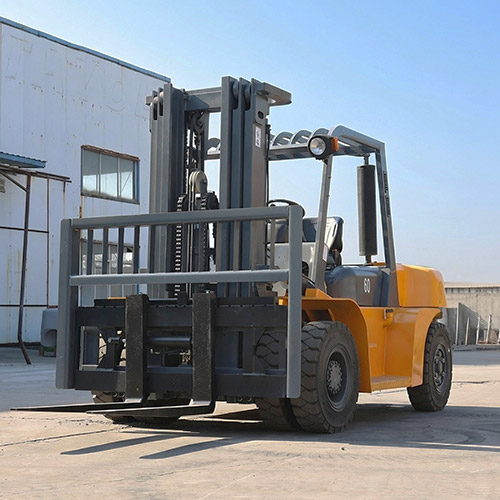
The right equipment decision is only as strong as the partnership behind it. Shandong Varyon Machinery Co., Ltd. has spent over a decade building the manufacturing infrastructure and global support network that international buyers need to feel confident long after the purchase order is signed.
Operating from a 200,000 m² production facility, Varyon produces high-performance material handling equipment at a scale that supports consistent quality across every unit. That facility capacity also enables genuine customization — adapting lift heights, load capacities, or control configurations to meet the specific requirements of industrial parks, cold-storage operations, and specialized distribution environments.
A reliable manufacturer should make equipment problems feel temporary, not permanent. Varyon backs its product line with 24/7 technical assistance for international buyers, meaning a team member in any time zone can access real guidance — not just a troubleshooting FAQ. This level of responsive forklift repair service support dramatically reduces unplanned downtime, which, as earlier sections outlined, is one of the largest hidden contributors to total cost of ownership.
Varyon also functions as a one-stop procurement partner, offering everything from entry-level pallet trucks to heavy-duty electric forklifts. That breadth simplifies vendor management, consolidates service relationships, and keeps fleet expansion straightforward as your operation grows.
Still have questions about whether an electric stacker fits your specific workflow? The next section tackles the most common buyer questions head-on.
What is the difference between a stacker and a forklift?
A stacker is a more compact form of material handling equipment designed for lighter loads — typically up to 3,300 lbs — in tighter spaces. Traditional forklifts are built for heavier-duty outdoor or loading dock work. Stackers excel in narrow warehouse aisles where a full-size forklift simply won’t fit.
How long does the CZD-15 battery last on a single charge?
In practice, a fully charged CZD-15 supports a full 8-hour shift under standard operating conditions. Actual runtime varies based on load weight, travel distance, and lift frequency.
Can electric stackers be used outdoors?
Electric stackers are optimized for indoor, smooth-surface environments. Outdoor use on uneven terrain or wet surfaces is generally not recommended and may void warranty coverage.
What are the typical maintenance requirements for electric stackers?
Routine maintenance is minimal — periodic checks of hydraulic fluid, brake wear, and battery health keep units running reliably. No engine oil changes, fuel filters, or exhaust system servicing are required, making upkeep straightforward and cost-effective.
The shift to electric isn’t just a trend — it’s a fundamental rethinking of how warehouses manage cost, safety, and long-term efficiency.
Evaluate your operation’s needs, request a demo, and let the numbers guide your next equipment decision.