Get in touch
* Your personal information is securely protected and will only be used for business communication purposes.

Downtime isn’t just an inconvenience in a high-volume logistics yard — it’s a direct hit to revenue, reputation, and shipping schedules that can ripple across an entire supply chain.
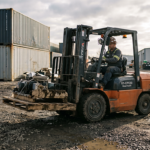
Picture a sprawling distribution yard: shifting gravel surfaces, rutted mud paths, steep loading ramps, and a relentless flow of heavy pallets that never stops between shifts. For operations running around the clock, equipment failure isn’t a minor setback. Every idle forklift is a bottleneck that delays outbound freight and erodes customer trust.
Before switching to the VY-CPC50 Diesel Forklift, many yards like this one faced a familiar — and costly — set of problems with their electric fleet:
According to research on forklift operational efficiency, unplanned downtime ranks among the most significant hidden costs in warehouse and yard operations. Diesel alternatives, by contrast, support 24/7 multi-shift operations with roughly 5-minute refueling — eliminating those punishing multi-hour charging windows entirely.
The terrain and the schedule demanded more than electric could deliver. Understanding why comes down to one fundamental engineering reality: torque.
If your yard runs on rough ground and tight deadlines, the physics of your powertrain choice matters more than you might expect.
Electric forklifts look compelling on paper — until the terrain gets rough, the loads get heavy, and the inclines get steep. That’s precisely the environment this logistics yard presented, and it’s where the torque gap becomes impossible to ignore.
Low-end torque is the deciding factor in rough-terrain lifting — and diesel engines deliver it where electric motors can’t sustain it under maximum load.
Diesel engines produce superior low-end torque, meaning they generate their peak pulling force at low RPMs — exactly when a 5-ton load is being accelerated from a dead stop on gravel or a muddy surface. In practice, this translates directly into traction control. When a forklift’s drive wheels lose grip on loose material, the engine needs to respond with measured, consistent power delivery rather than the sudden surge that causes wheel spin. Electric drivetrains, while capable of instant torque, can overwhelm traction at low speeds on unstable surfaces, causing slippage and load instability.
On steep gradients — a regular feature of this yard’s layout — the physics become even more critical. Maintaining load stability while climbing requires continuous torque output without hesitation. Many alternatives stall or throttle back to protect their systems. A reputable Diesel Forklift Manufacturer engineers around this exact failure point, calibrating engine response curves specifically for incline performance under full load.
When your yard combines heavy loads, uneven ground, and steep grades, diesel torque isn’t a preference — it’s a prerequisite.
The VY-CPC50 was built specifically for the conditions where other equipment quits — high-intensity yards, uneven ground, and relentless back-to-back shifts.
Varyon Power’s manufacturing standards center on industrial-grade durability rather than feature bloat. Every component is selected for load-cycle longevity, with tolerances designed to hold under daily abuse rather than controlled warehouse conditions. That philosophy becomes immediately apparent in how the VY-CPC50 handles its core job.
The hydraulic system is the machine’s defining advantage. Internal combustion forklift truck hydraulics, when properly engineered, deliver the kind of load precision and lifting force that electric systems struggle to replicate in demanding environments. The VY-CPC50’s hydraulic circuit maintains consistent pressure across the full lift range, which means operators aren’t fighting lag or pressure drop when positioning a load at height. In practice, this translates to fewer micro-corrections, faster cycle times, and significantly less operator fatigue across a 10-hour shift.
The chassis is purpose-built for 5-ton heavy-duty lifting. Reinforced steel construction distributes load stress across the frame rather than concentrating it at pivot points — a common failure pattern in lighter-duty units pushed beyond their design spec. As a rough terrain diesel forklift, the VY-CPC50’s wide-stance undercarriage keeps the center of gravity stable on compacted gravel, uneven concrete seams, and inclined loading areas. It’s worth noting that electric alternatives handle smooth indoor surfaces well, but the outdoor yard is a different equation entirely.
Integrating the VY-CPC50 into an existing mixed fleet required minimal reconfiguration — standard fuel infrastructure and familiar controls reduced operator retraining time considerably.
Understanding the engineering case for the VY-CPC50 sets the stage for the equally compelling financial argument — which the numbers make hard to ignore.
Choosing diesel over electric isn’t just an operational decision — it’s a procurement strategy that directly reduces upfront capital outlay and accelerates fleet expansion.
According to Fairchild Equipment, diesel forklifts typically cost 15–25% less to purchase upfront than comparable electric models. For a fleet of five units, that gap can free up tens of thousands of dollars before a single pallet moves.
The comparison becomes even sharper when you factor in what electric procurement actually requires:
| Cost Component | Diesel | Electric |
|---|---|---|
| Unit purchase price | Lower | Higher |
| Charging infrastructure | None | $5,000–$15,000+ per station |
| Spare battery packs | None | $3,000–$10,000 per unit |
| Installation & wiring | None | Significant |
| Fuel source | On-site diesel | Grid-dependent |
Those “hidden” electric costs — charging stations, spare batteries, and electrical upgrades — routinely add 20–35% on top of the sticker price. The true CAPEX gap is often wider than buyers anticipate at the quotation stage.
For operations evaluating a 3.5-ton diesel forklift for sale, the ROI timeline is typically 18–24 months faster than an equivalent electric configuration when infrastructure costs are included. That matters when budgets are tight and throughput demands are immediate.
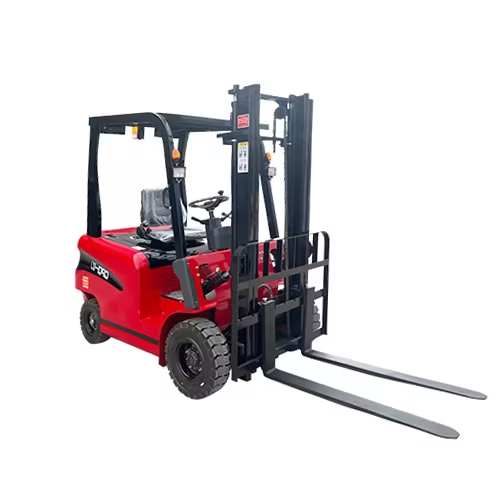
Budget freed from per-unit overspend also compounds: procuring additional units sooner means higher yard capacity without waiting for a new budget cycle. For operators curious about where lighter alternatives fit, the calculus is different — but in heavy-load yards, diesel’s financial case is difficult to argue against.
When building a high-capacity fleet, diesel’s lower CAPEX isn’t just a saving — it’s a reinvestment opportunity.
Diesel engines outlast alternatives in heavy industrial environments because they’re built to handle extreme internal pressures — and that durability directly translates to lower lifecycle costs.
The physics matter here. Diesel combustion generates significantly higher cylinder pressures than gasoline or LP gas alternatives, so diesel components are engineered with heavier-duty tolerances from the start. Thicker cylinder walls, reinforced crankshafts, and robust fuel delivery systems all contribute to a mechanical architecture that holds up under sustained, high-intensity workloads. What that means in practice: the drivetrain doesn’t degrade at the same rate as lighter-duty alternatives, even when diesel forklift fuel consumption is elevated during peak operations.
According to Clark Material Handling data cited by Conger Industries, a well-maintained diesel forklift can achieve 15,000 to 20,000 operational hours — with some high-tier units exceeding 50,000 hours.
Reaching those numbers isn’t accidental. A common pattern among high-hour fleets is strict adherence to preventive maintenance schedules, including:
Varyon Power units have built a reputation in the field precisely because the VY-CPC50’s powertrain is engineered to these tolerances. When yards commit to disciplined maintenance, the engine doesn’t just survive — it compounds value over years of operation.
Of course, raw durability is only part of the equation. How efficiently that engine consumes fuel during those thousands of hours is just as critical to long-term operating economics.
Choose a diesel forklift built to 20,000+ hour tolerances and back it with a structured maintenance schedule — the ROI extends far beyond the initial purchase price.
Diesel fuel efficiency isn’t a tradeoff against performance — with the right engineering, it’s a competitive advantage that keeps heavy yards running without interruption.
The VY-CPC50 uses advanced fuel injection timing and load-sensing hydraulics to actively regulate consumption based on demand. An internal combustion forklift truck hydraulics system that adjusts pressure output in real time draws significantly less fuel during partial-load cycles — a common pattern in logistics yards where lift frequency varies throughout a shift. According to Varyon Power Technical Specs, modern diesel forklifts utilize advanced hydraulic and engine timing to minimize fuel consumption per hour even under maximum load.
Typical consumption figures break down as follows:
When those fuel costs are weighed against the productivity losses caused by multi-hour charging windows — a real constraint documented with electric alternatives in certain environments — diesel’s total hourly cost remains highly competitive. A yard running two full shifts loses zero productive hours to fueling; a five-minute diesel refill simply cannot be matched by an eight-hour charge cycle.
On balance, modern emission standards make today’s diesel equipment far cleaner than legacy engines, addressing a concern that once limited adoption in enclosed spaces.
When evaluating total fuel economics, factor in not just liters per hour, but the full cost of every hour your fleet isn’t moving.
Diesel forklifts consistently outperform alternatives across every dimension that matters in heavy logistics — cost, speed, terrain capability, and load precision.
When evaluating a heavy logistics fleet, diesel’s combination of fast refueling, raw torque, and lower entry cost makes it the most operationally sound choice available today — and the data backs that up.
Credible sourcing separates informed procurement decisions from costly guesses — these references anchor every performance claim made throughout this article.
The research and data points cited across this case study draw from a curated set of industry-recognized sources. Each one contributes a distinct layer of technical or financial insight:
Authoritative sourcing isn’t optional in heavy equipment evaluation — it’s the standard that protects capital investment decisions.
Each source above represents a distinct expertise domain: financial modeling, operational logistics, fleet longevity, and mechanical engineering. Cross-referencing these perspectives produces a complete picture rather than a single vendor’s narrative.
When researching diesel forklifts for heavy-duty applications, consult sources across cost, lifespan, and specification categories to build a defensible procurement case.
The most common procurement questions — from fuel consumption per shift to rough terrain performance — are addressed directly in the FAQ section that follows.
The right diesel forklift answers every tough question before procurement day — here’s what heavy logistics operators need to know.
How much fuel does a 3.5-ton diesel forklift consume?
In practice, a 3.5-ton diesel forklift burns roughly 1.5–2.5 gallons per hour under typical yard loads. Heavy continuous cycles push consumption toward the higher end, though modern common-rail engines have meaningfully improved efficiency compared to older units.
Can a rough terrain diesel forklift handle mud where an electric model can’t?
Absolutely. Electric models carry battery weight low but lack the torque delivery and sealed drivetrain durability to sustain traction in deep mud or saturated ground. A diesel rough terrain unit maintains consistent power output regardless of surface conditions — no range anxiety, no ground-level moisture risk to electrical components.
What maintenance does a diesel forklift need to reach 20,000 hours?
Consistent oil and filter changes every 250–500 hours, coolant flushes, fuel filter replacements, and annual drivetrain inspections form the foundation. As LiftOne notes, scheduled preventive maintenance is the single most reliable path to maximizing uptime across a machine’s service life.
As Varyon Power puts it — “not just a forklift… a powerhouse on the yard.”
Watch the VY-CPC50 in action:

Ready to cut downtime in your own yard? Contact Varyon Power today to spec the VY-CPC50 for your operation.
If this case study proves one thing, it’s that the right diesel forklift doesn’t just move loads — it transforms logistics performance from the ground up.