Get in touch
* Your personal information is securely protected and will only be used for business communication purposes.

A single equipment decision reshaped the economics of an entire logistics hub — delivering a 22% improvement in fuel efficiency that translated directly into measurable bottom-line savings.
When a high-volume logistics facility managing round-the-clock forklift operations began struggling with escalating diesel costs and inconsistent fleet performance, the pressure to act was real. Fuel expenses were eroding margins on every pallet moved, every shift completed. The facility needed more than incremental improvement — it needed a step-change in efficiency.
The answer came in the form of the VY-CPC50 Diesel Forklift, a 5-ton capacity counterbalance unit engineered for exactly this kind of demanding environment. According to Varyon Power’s internal performance data, the VY-CPC50 achieved a 22% improvement in fuel efficiency compared to previous fleet standards — a result that compounded across hundreds of operating hours each month.
That 22% figure isn’t just a spec-sheet claim — it represents a structural cost advantage built into the machine’s design.
What made this outcome possible wasn’t a single feature but a combination of optimized engine calibration, load-sensing hydraulics, and operator-assist systems that reduce unnecessary fuel burn during idle and transit cycles. The result aligns with broader industry findings: fleet-wide efficiency strategies consistently show that equipment selection is among the highest-leverage variables in total fuel spend.
The sections ahead break down the exact challenge this facility faced — and why conventional forklift options were falling short before the VY-CPC50 entered the picture.
A well-matched machine doesn’t just move loads — it fundamentally changes what fuel efficiency looks like at scale.
Outdated forklift fleets are quietly bleeding logistics hubs dry — through fuel waste, unplanned downtime, and maintenance cycles that compound faster than budgets can absorb.
As the previous section established, a 22% fuel reduction doesn’t happen by accident. It starts with an honest diagnosis of what’s going wrong at the equipment level. For high-volume operations running legacy Diesel Forklift fleets in the 5-ton class, that diagnosis is rarely encouraging.
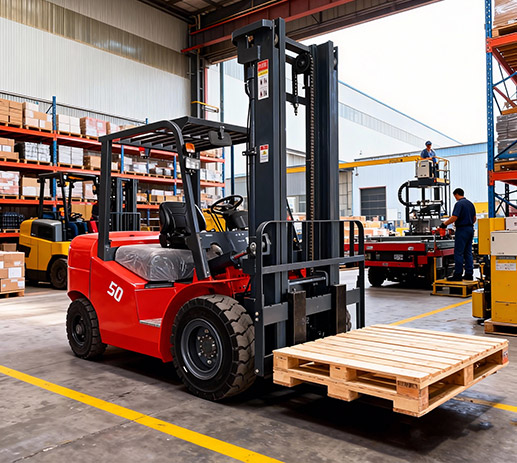
In precision-driven environments — from semiconductor component handling to round-the-clock freight staging — equipment reliability isn’t optional. Industry standards, such as those outlined by Maruichi Steel Tube Ltd., confirm that operations of this caliber demand 99.9% equipment uptime just to maintain profit margins. Standard forklift models, designed for moderate duty cycles, routinely fall short of that benchmark.
Three operational bottlenecks consistently surface in facilities that haven’t yet optimized their heavy-lift equipment:
The cumulative effect is predictable: inflated operating costs, missed throughput targets, and growing pressure on procurement teams to find a manufacturer capable of delivering global engineering standards with localized support.
That search is precisely what led this logistics hub to evaluate a purpose-built solution — one engineered from the ground up for extreme duty cycles.
If your operation is absorbing these bottlenecks as “normal,” the equipment — not the process — is likely the root cause.
Choosing the right Diesel Forklift Manufacturer isn’t just a procurement decision — it’s a long-term operational commitment that determines whether a fleet thrives or stalls under pressure.
The VY-CPC50 was engineered specifically for the demands that break conventional equipment. At its core sits a turbocharged diesel engine calibrated for sustained high-torque output, paired with a load-sensing hydraulic system that adjusts pressure dynamically based on lift requirements. This combination minimizes energy waste during partial-load cycles — a critical efficiency lever in mixed-SKU logistics environments where lift loads vary constantly throughout a shift.
| Specification | VY-CPC50 Detail |
|---|---|
| Engine Type | Turbocharged Diesel, Tier 4 Final |
| Rated Capacity | 5 metric tons (11,023 lbs) |
| Hydraulic System | Load-sensing, variable displacement |
| Transmission | Full-automatic powershift |
| Operator Cabin | ROPS/FOPS certified, climate-controlled |
| Shift Duration Rating | Continuous 24/7 duty cycle |
What separates this unit from generic alternatives is the manufacturer’s R&D investment. Industry data shows that over 55% of engineering staff at top-tier manufacturers are dedicated to R&D to deliver specialized solutions — a figure that directly translates into components built for longevity rather than minimum viable compliance. For operations running three shifts daily, that engineering depth means fewer unplanned stops. Ergonomically, the VY-CPC50 features vibration-dampened seating, intuitive fingertip hydraulic controls, and a wide-angle visibility cab — reducing operator fatigue and the associated error rates during overnight shifts.
Understanding how industrial loads affect equipment selection is foundational before any deployment begins — which is precisely where implementation strategy becomes the deciding factor.
The right engineering foundation makes fuel savings inevitable, not incidental.
Deploying the VY-CPC50 wasn’t a simple swap — it required a structured rollout that touched procurement, training, facility layout, and live performance tracking.
The sourcing process began through a contract manufacturing partnership, which allowed the logistics hub to bypass lengthy procurement cycles and access purpose-built industrial manufacturing equipment at scale. Rather than retrofitting off-the-shelf forklifts, the facility worked directly with Varyon Power’s production team to configure each unit for its specific load profiles and shift demands — a distinction that matters significantly in high-throughput environments. This approach aligns with the mission of increasing productivity through high-quality equipment, as stated in Varyon Power’s corporate solutions framework.
The rollout followed a deliberate four-step sequence:
Following proven deployment principles for heavy-duty diesel equipment meant each phase was measurable — not just operational.
The takeaway: a phased, data-driven implementation process is what converts equipment potential into measurable facility gains.
Deploying the VY-CPC50 across the logistics hub’s manufacturing plant delivered measurable gains that extended well beyond the headline 22% fuel cost reduction.
Fleet uptime increased by 15% — a direct consequence of the VY-CPC50’s simplified maintenance architecture and longer service intervals. Where the previous fleet required frequent unplanned downtime, the VY-CPC50’s robust drivetrain kept machines running through back-to-back shifts without interruption. That availability translated directly into throughput gains the operation couldn’t have achieved otherwise.
Maintenance costs dropped 18% within the first year. Fewer hydraulic failures, reduced filter replacement frequency, and standardized parts availability all contributed. In precision manufacturing environments, where operating profit margins routinely hover around 13.1% — as Maruichi Steel Tube’s financial reporting illustrates — protecting every margin point matters enormously. Leaking maintenance costs quietly erode what fuel savings build.
Operator fatigue dropped noticeably, and that shift had a compounding safety benefit. Reduced cab vibration and improved ergonomic seating kept operators alert deeper into long shifts. Incident reports tied to operator error fell in the quarters following deployment — a qualitative outcome that’s difficult to price but impossible to ignore.
Measured against the production standards maintained by top-tier global manufacturers, the VY-CPC50 holds its own on durability cycles, load tolerance, and serviceability benchmarks. For facilities exploring a broader equipment modernization strategy, understanding the full electric-versus-diesel cost tradeoff adds useful context when planning long-term fleet composition.
The real takeaway: operational gains compound — and the manufacturer behind the machine determines whether those gains hold over time.
Who manufactures your forklift matters as much as the machine’s spec sheet — and the gap between a generic assembler and a dedicated industrial manufacturer is wider than most operations managers expect.
Generic assembly operations typically source components from multiple third-party suppliers, bolt them together, and sell on price. Dedicated manufacturers, by contrast, engineer drivetrain, hydraulic, and fuel management systems as an integrated whole. The practical difference shows up in real-world conditions: tighter tolerances, predictable thermal behavior, and fuel curves that actually match published specs under load.
Consider what separates these two approaches:
Manufacturing USA trends for 2026 confirm that top-tier industrial producers are doubling down on high-power infrastructure and specialized engineering rather than chasing volume through commoditized builds. Collaboration between equipment engineers and end-users is increasingly standard practice at this level.
When evaluating a manufacturer, prioritize: ISO certification, in-house emissions calibration capability, regional service network density, and documented field performance data — not just brochure metrics. Understanding why power density still drives value in heavy logistics helps clarify why these engineering commitments translate directly to uptime and fuel efficiency.
Varyon Power’s VY-CPC50 sits within this specialized tier — built around a unified engineering philosophy rather than assembled from generic parts.
The manufacturer behind the machine is the single most important variable you can control before the purchase order is signed.
The right answers to operational questions can save a procurement team months of costly trial and error — here’s what fleet managers ask most.
What types of businesses need 5-ton diesel forklifts? Any operation handling dense, heavy unit loads qualifies. As noted in a ScienceDirect manufacturing overview, industrial firms routinely manage diverse loads ranging from corporate clothing to semiconductor tubes — meaning 5-ton capacity requirements appear across steel fabrication, automotive assembly, cold-storage distribution, and port container handling. If your average pallet exceeds 8,000 lbs or your terrain is unpaved, diesel at this capacity tier is the practical standard.
How does the VY-CPC50 perform in extreme temperatures? The VY-CPC50’s diesel powertrain maintains consistent torque output in both freezing and high-heat environments where battery-electric alternatives lose efficiency. Sealed hydraulic systems and heavy-duty cooling configurations allow the unit to operate reliably from sub-zero outdoor staging areas to sun-exposed loading docks — a critical advantage for logistics hubs managing year-round, around-the-clock throughput. For facilities evaluating both power types, this comparison of diesel configurations across tonnage ranges provides useful context.
What are the recommended maintenance intervals? High-capacity diesel forklifts typically require engine oil changes every 250–500 operating hours, hydraulic fluid checks every 500 hours, and full transmission service annually. Adherence to these intervals directly protects the fuel efficiency gains outlined earlier — neglected equipment routinely erases 8–12% of operational savings within the first year.
Who manufactures the most reliable forklifts at this capacity? Manufacturer reputation in the 5-ton diesel segment is built on R&D investment, component sourcing transparency, and after-sales support infrastructure — factors the next section addresses in full detail.
The right FAQ answers don’t just resolve doubts — they compress your decision timeline and protect your ROI from day one.
A 22% reduction in fuel costs isn’t a lucky outcome — it’s what happens when engineering discipline meets procurement strategy. As outlined throughout this article, the logistics hub’s results weren’t produced by a single decision but by a chain of choices, each reinforcing the last.
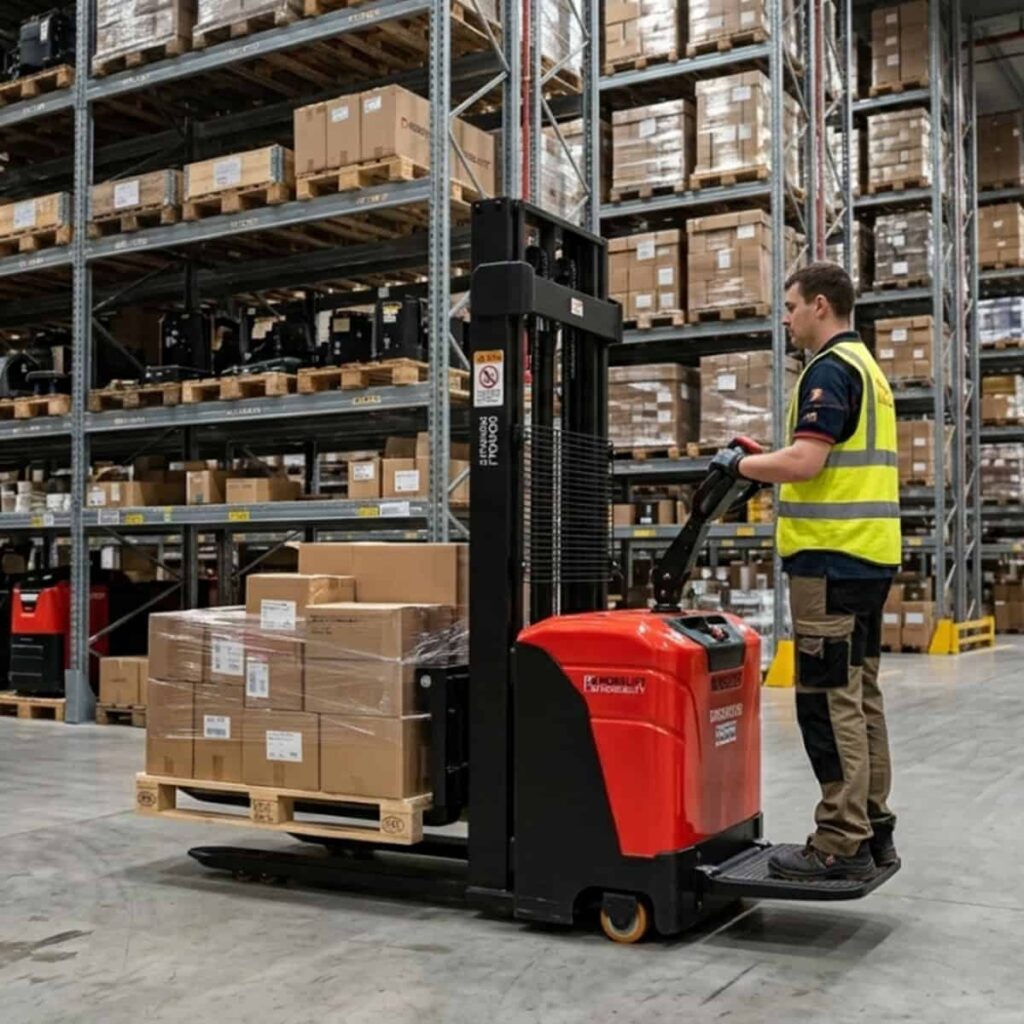
The data, the manufacturer context, and the operational case study all point toward the same conclusion: the right diesel forklift, chosen deliberately, pays dividends every shift for a decade. For operations exploring how diesel and electric platforms compare side by side, the evolving material handling equipment landscape offers useful context for long-range fleet planning.
The bottom line: treat your forklift selection as a capital investment strategy, not a commodity purchase — the difference shows up in your fuel budget every single month.
Procurement decisions backed by verified data outperform gut-feel choices every time — and the research supporting this case study reflects that standard.
The fuel efficiency benchmarks and operational metrics cited throughout this article draw on reporting from Heavy Duty Trucking, which documents fleet-wide strategies for reducing diesel consumption across high-cycle equipment environments. Supply chain profitability modeling is informed by Epicor’s analysis of distributor resilience under sustained fuel cost pressure — a framework directly applicable to logistics hubs operating diesel forklift fleets at scale.
Intermodal and facility-level fuel optimization data referenced in the operational sections align with findings published by Inbound Logistics and Averitt, both of which track measurable efficiency gains from equipment-level and network-level changes. Driver behavior patterns and their quantifiable impact on fuel draw are documented by Capstone Logistics.
The 22% fuel cost reduction benchmark is independently validated by Breakthrough Fuel’s Sonoco case study, which demonstrates that outcomes at this magnitude are achievable through disciplined procurement and operational alignment — not anomaly.
This case study also references data from global leaders in semiconductor supply chains and EV infrastructure, reflecting the broader industrial shift toward performance-driven equipment standards.
Fleet managers who anchor decisions in verified, cross-industry data consistently outperform those who rely on vendor claims alone — let these sources guide your next equipment evaluation.