Get in touch
* Your personal information is securely protected and will only be used for business communication purposes.

Efficient material handling isn’t a logistics detail — it’s a direct lever on total manufacturing output. With the U.S. manufacturing sector contributing $2.3 trillion to GDP in 2023, representing 10.3% of total economic output, the operational decisions made on the factory floor carry macro-level consequences. Every stalled pallet, every delayed load, every forklift sitting in maintenance adds friction to a system built on throughput.
The stakes have climbed even higher as supply chains regionalize. As McKinsey & Company notes, “the shift toward regionalized supply chains is no longer a trend but a necessity for resilience in a volatile global market.” Contract manufacturers bearing the weight of reshoring demand can’t afford to absorb inefficiency — their customers won’t wait.
That context makes the question of who manufactures your equipment critically important. Origin, engineering standards, and parts availability all determine whether a fleet performs consistently under 24/7 production pressure or becomes a bottleneck. Understanding what separates industrial diesel equipment at the engineering level is no longer optional for operations leaders — it’s part of fleet strategy.
This is the story of how a top 10 U.S. manufacturing partner confronted that exact challenge. Facing strained capacity and mounting inefficiency, they deployed the VY-CPC30 Diesel Forklift across their loading operations — and achieved a 20% gain in production output. But before the solution, there was a problem that had been quietly compounding for months.
Takeaway: In a reshoring-focused economy, your material handling fleet is as strategic as your production line.
Aging, underpowered equipment doesn’t just slow a loading bay — it creates a cascade of failures that quietly erodes total manufacturing output across every shift.
For one mid-sized contract manufacturer operating across two facilities in the Midwest, that cascade had become impossible to ignore. Floor managers were tracking preventable delays, mounting repair invoices, and growing pressure from clients demanding faster fulfillment cycles.
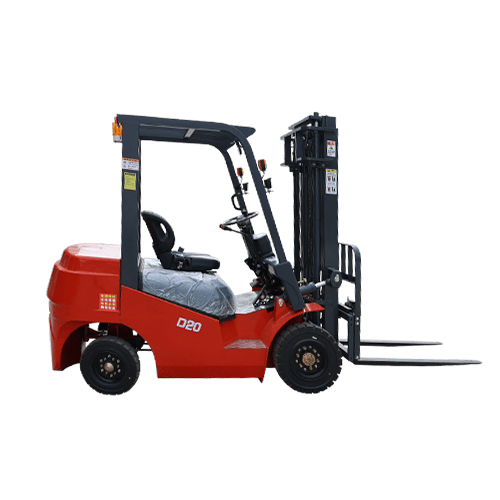
The facility ran continuous 24/7 production schedules, yet its mixed outdated fleet — sourced from multiple vendors without a unified Diesel Forklift Manufacturer standard — created compounding inefficiencies at every stage of the material flow. The operational pain points were significant:
Understanding the right approach to [evaluating equipment for demanding load profiles](https://varyonpower.com/how-to-select-and-deploy-a-heavy-duty-diesel-forklift.html) becomes urgent when operational gaps are costing real dollars. A single underperforming forklift in a high-cycle environment can stall output worth tens of thousands of dollars weekly — and this facility had several.
The takeaway: when material handling equipment becomes the weakest link in production, no amount of process optimization upstream can compensate — the right equipment specification is the only real fix.
The VY-CPC30 was selected precisely because it was engineered to solve the compounding inefficiencies that any high-volume industrial manufacturing company can no longer afford to absorb.
The right equipment doesn’t just fill a gap — it restructures throughput from the ground up.
At the core of the VY-CPC30’s value is its diesel powertrain, calibrated for sustained heavy-duty cycles without performance degradation. Key specifications include a 3-ton rated capacity, a high-torque engine optimized for continuous shift operation, and a mast design engineered to minimize load-cycle time in confined warehouse lanes. For facilities running multi-shift schedules, these aren’t luxury features — they’re operational baselines.
Partnering with a specialized diesel forklift manufacturer also delivers measurable OEM support advantages. Proprietary parts availability, factory-certified technicians, and standardized maintenance protocols all reduce unplanned downtime — a critical factor given that fleet repair delays were identified in the previous section as a leading cause of stalled production capacity. For a deeper look at sourcing considerations, equipment deployment best practices outline what to verify before committing to a fleet investment.
On the integration side, the VY-CPC30’s compatibility with Industry 4.0 workflows is a standout differentiator. Its architecture supports edge AI fleet monitoring and real-time load telemetry, enabling production managers to close the data gap between warehouse operations and plant-floor scheduling. According to research from Deloitte and the Manufacturers Alliance, smart manufacturing technologies can increase production capacity by up to 20% while reducing material waste — a benchmark the VY-CPC30’s integration profile is built to reach.
Durability features reinforce the unit’s case in high-cycle environments: reinforced chassis components, sealed hydraulic systems, and extended service intervals all translate directly to higher uptime percentages over a 12-month operating cycle.
The lesson here is clear: equipment selection is a strategic decision, and the VY-CPC30’s specifications were purpose-built to convert uptime into measurable production capacity gains — which the next section quantifies in detail.
Integrating the VY-CPC30 into a high-volume contract manufacturing environment delivered a measurable 20% increase in production capacity — driven primarily by faster cycle times and dramatically improved equipment uptime.
Before the upgrade, loading delays averaged 18–22 minutes per cycle due to underpowered equipment and frequent maintenance interruptions. After deploying the VY-CPC30 fleet, cycle times dropped to under 12 minutes — a reduction of nearly 40%. Faster cycles mean more loads completed per shift, and in a high-throughput facility, that compounds quickly into significant daily output gains.
Reliable uptime played an equally critical role. In practice, every hour of unplanned downtime ripples through a production schedule, stalling downstream processes and forcing supervisors to redistribute labor. The VY-CPC30’s robust diesel engine and reduced service intervals kept machines running across all three shifts, eliminating the bottlenecks that had previously capped daily targets. Facilities managing heavy-duty operational demands around the clock consistently report that dependable uptime is the single highest-leverage variable in capacity planning.
The numbers align with broader industry findings. According to Deloitte, IoT and AI-enabled manufacturing environments see up to 20% capacity increases when paired with modern hardware — a figure this facility effectively replicated through upgraded forklift infrastructure alone.
Put simply, forklift speed directly governs plant-wide throughput. When material moves faster and more predictably, every station upstream and downstream operates closer to its designed capacity.
The core takeaway: modernizing your forklift fleet isn’t a support function decision — it’s a production capacity decision.
Precision handling isn’t just a safety feature — it’s a direct line to cost reduction, and the VY-CPC30 delivers on both fronts.
Beyond the 20% production capacity gain covered earlier, the VY-CPC30 generated a second, equally compelling layer of value: a measurable reduction in material waste and day-to-day operational overhead. According to NAM-derived data, inefficiencies consume roughly 10.3% of total manufacturing output — and modernizing equipment is one of the most direct ways to reclaim that lost value.
The VY-CPC30’s precision mast control and load-sensing hydraulics dramatically reduced product damage during internal transit. In high-throughput environments, even a 1–2% reduction in damaged goods translates to thousands of dollars recovered per month.
“Damaged inventory during internal moves had been a silent cost center. Better handling precision changed that equation entirely.”
Fuel efficiency compounds those savings further. The VY-CPC30’s engine management system consistently outperforms older diesel models, with lower fuel consumption per operating hour and extended service intervals that reduce maintenance downtime. When asking who manufactures the technology behind these gains, the answer matters — engineering discipline at the production level shapes long-term reliability in the field.
“Lower maintenance frequency means fewer unplanned stops — and in contract manufacturing, every unplanned stop has a dollar value.”
The long-term ROI picture is strong. Reduced consumables, fewer replacement parts, and lower repair labor collectively shorten the payback window on the initial capital investment. For facilities evaluating their total equipment lifecycle costs, the VY-CPC30 represents a premium investment that earns back its price through operational discipline.
“Premium diesel forklift technology pays for itself — not all at once, but steadily, across every shift.”
Understanding where these performance gains originate — and who engineers them — is the critical next question for any serious procurement decision.
Choosing your equipment partner is as consequential as choosing the equipment itself — and top-tier manufacturing companies understand this distinction better than anyone.
The gap between a generic reseller and a dedicated diesel forklift manufacturer is significant. Resellers move inventory; manufacturers engineer solutions. A true OEM partner provides factory-backed technical support, guaranteed parts availability across the equipment lifecycle, and continuous product refinement informed by real operational data. When a critical component fails mid-shift, that distinction stops being theoretical.
Top 10 manufacturing companies follow a rigorous vendor selection process that goes well beyond upfront price comparisons. They evaluate supplier certifications, regional service infrastructure, and documented innovation roadmaps. As America’s leading lift truck analysts note, the manufacturers that consistently earn preferred-partner status are those combining engineering depth with responsive after-sales ecosystems. They’re not just selling machines — they’re securing operational continuity.
The right manufacturer doesn’t just deliver a forklift; they deliver confidence in every load cycle, year after year.
This philosophy aligns directly with the Manufacturing USA initiative’s core principle: innovation and collaboration are the twin pillars securing domestic supply chains. OEM partnerships that prioritize shared problem-solving — rather than transactional sales — mirror that national model at the facility level. For operations demanding reliable heavy-load performance across demanding environments, this relationship becomes a genuine competitive advantage.
Long-term parts availability is non-negotiable. Operators who overlook this during procurement often face costly downtime and unsupported equipment within five to seven years.
Before signing any equipment agreement, verify your manufacturer’s parts warranty horizon, local service coverage, and published innovation pipeline — these three factors will define your total cost of ownership more than the sticker price ever will.
Smart procurement decisions start with the right questions — and in heavy industrial settings, those questions almost always circle back to power, durability, and the supplier behind the machine.
What are top manufacturing companies using for heavy lifting? Enterprises operating at the scale of GE Aerospace and Lockheed Martin demand equipment that meets what industry insiders call “Ahead of Ready” standards — zero tolerance for downtime, maximum throughput per shift. According to Modern Materials Handling, leading facilities consistently favor diesel-powered counterbalance forklifts for loads exceeding 5 tons, particularly in mixed indoor/outdoor environments where electric alternatives face infrastructure limitations.
Why choose diesel over electric for 24/7 industrial manufacturing? Diesel eliminates the charging window entirely. In continuous production cycles, a battery-dependent unit costs roughly two to four operational hours per charge event. For true around-the-clock throughput, diesel isn’t a preference — it’s a prerequisite. That said, if your operation involves controlled indoor environments, it’s worth reviewing whether electric alternatives fit your footprint before committing.
How does the VY-CPC30 handle high-capacity loads in outdoor yards? The VY-CPC30’s reinforced mast, wide-stance axle geometry, and heavy-duty pneumatic tires distribute load stress evenly across uneven terrain — a critical factor in outdoor staging yards where ground conditions vary.
What should I look for in a diesel forklift manufacturer? Prioritize direct OEM manufacturing relationships. A true OEM partner controls component quality from casting to final assembly, which directly impacts parts availability, warranty fulfillment, and long-term service costs.
When evaluating procurement options, the manufacturer’s production model matters as much as the machine’s spec sheet.
Fleet modernization isn’t a capital expense — it’s the operational foundation that makes every other production target achievable.
As covered throughout this article, the path from stagnant throughput to a 20% capacity gain runs directly through reliable material handling. When a facility’s lift equipment can’t keep pace with production demand, every upstream and downstream process suffers. The VY-CPC30 case study demonstrates that removing that bottleneck creates compounding gains across the entire operation.
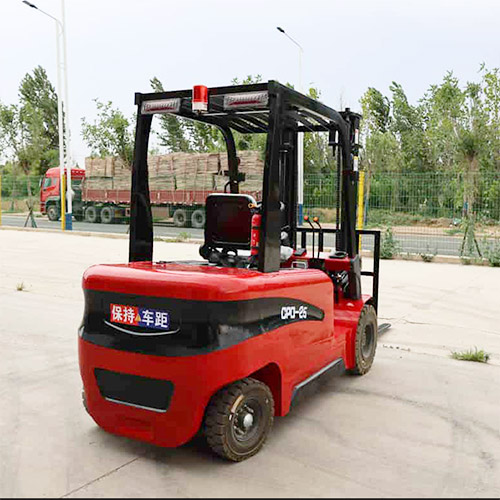
Reshoring continues to accelerate, and the equipment investment decisions made today will define competitiveness for the next decade. According to Thomasnet, 83% of manufacturers are moving toward the resilience provided by modern, local equipment fleets — a signal that durable, high-output machinery isn’t optional in a post-reshoring industrial landscape. For operations weighing alternatives to diesel for certain applications, the underlying principle remains the same: equipment quality drives output quality.
Partnering directly with the manufacturer — rather than sourcing through intermediaries — consistently delivers better long-term ROI through tighter spec alignment, faster parts availability, and lower total cost of ownership. That purchasing discipline matters as much as the machine itself.
The data and decisions detailed in this article are grounded in authoritative industry research — the sources behind every claim are worth reviewing in full.
Every data point cited in this case study reflects verified 2023–2024 industry research — ensuring the production gains, cost benchmarks, and fleet modernization conclusions presented here rest on authoritative foundations.
The following sources shaped the analytical framework behind this article’s core findings:
All figures are cross-referenced against 2023–2024 reporting cycles per editorial standards. Forklift market data draws from industry supplier rankings and verified procurement benchmarks. For facilities evaluating alternatives to diesel — including high-density applications — the VY-CPD30 electric platform offers a complementary pathway worth reviewing.
When procurement decisions are grounded in verified data, every capital investment carries measurably lower risk — start there.