Get in touch
* Your personal information is securely protected and will only be used for business communication purposes.

Modern manufacturing has fundamentally transformed — today’s leading manufacturers doesn’t simply make products; it engineers solutions to complex social and industrial challenges. From clean energy infrastructure to precision medical devices, production facilities now operate as innovation ecosystems rather than assembly lines. This shift is redefining what competitive advantage looks like across every sector of global industry.
The companies winning in modern production are those treating R&D as a core business function, not an overhead cost.
The data supports this reality. Circontrol, a specialist in EV charging infrastructure, structures its 250+ person workforce so that 55% of all employees are engineers dedicated to R&D and innovation — a staffing model that reflects how seriously technology-forward manufacturerss treat continuous development. This approach isn’t exceptional anymore; it’s becoming the baseline expectation across high-performance production sectors, from advanced material handling equipment to semiconductor fabrication.
AI and IoT integration are accelerating this evolution at a pace few anticipated even five years ago. According to Deloitte’s 2026 Manufacturing Industry Outlook, smart factory adoption is no longer a long-term roadmap item — manufacturerss are actively deploying connected sensors, predictive maintenance systems, and AI-driven quality control on production floors right now. Specialized producers adapting to these tools early are compressing development cycles and reducing defect rates simultaneously.
Critically, direct manufacturing control remains a strategic differentiator. Companies that own their production processes — rather than outsourcing them entirely — retain the flexibility to iterate quickly, enforce quality standards, and protect intellectual property. This control becomes especially valuable as product complexity increases. Understanding how different types of producers are structured to achieve this is where the conversation starts — beginning with the core terminology that defines the modern manufacturing hierarchy.
Navigating the manufacturing sector requires a shared vocabulary — without it, the distinctions between company types, production models, and innovation strategies collapse into noise.
The terminology you use to describe a manufacturers directly shapes how you evaluate its capabilities, partnerships, and competitive position. The four categories below form the foundational hierarchy that industry analysts, procurement teams, and investors rely on daily.
Original Equipment Manufacturer (OEM)
A company that designs and produces components or finished goods — often sold under its own brand or integrated into another company’s end product — making it the primary driver of product specification and intellectual property.
Contract Manufacturer
A production partner that fabricates goods to another brand’s exact specifications, assuming manufacturing responsibility without owning the underlying product design or brand identity.
Industrial Manufacturer
A business focused on producing heavy machinery, infrastructure equipment, and B2B capital goods — such as the [heavy-duty material handling equipment](https://varyonpower.com/how-to-select-and-deploy-a-heavy-duty-diesel-forklift.html) used in large-scale logistics and construction operations.
Smart Production
A manufacturing approach that leverages proprietary internal equipment design to compress development timelines and reduce per-unit costs — a strategy exemplified by the [JTEKT Corporation](https://www.lightguidesys.com/resource-center/blog/your-guide-to-smart-factories-and-industry-4-0/), whose “No. 1 & Only One” framework transforms it from a parts supplier into a full-scale solution provider.
In practice, these categories rarely exist in pure form. A single enterprise may operate as an original equipment manufacturers for its flagship product line while simultaneously acting as a contract manufacturers for strategic partners — a dual model increasingly common among the world’s largest industrial conglomerates.
Understanding where a company sits within this hierarchy reveals its margin structure, R&D exposure, and supply chain leverage. With that framework in place, it becomes far easier to assess the titans of American industry — which is exactly what the next section examines.
The most influential industrial manufacturers operations in the United States share one defining trait: they don’t just build products — they shape entire industries. From aerospace propulsion to advanced energy systems, the companies leading American manufacturing in 2024 operate at a scale and complexity that sets the benchmark globally.
The aerospace and defense segment dominates the upper tier of US manufacturing. Three names consistently anchor that conversation:
What separates today’s top-tier players from traditional heavy industry is their pivot toward diversification and sustainabilityty. GE, for instance, has restructured around aerospace, energy, and healthcare verticals — each feeding proprietary technology back into the others. The push toward sustainable aviation fuels and hybrid-electric propulsion is no longer a research footnote; it’s a capital priority backed by emerging industry trends that are reshaping procurement and R&D timelines alike.
In practice, the logistics infrastructure supporting these manufacturerss is just as critical as the technology itself — reliable heavy-load material handling on the production floor directly affects output quality and delivery schedules. Understanding how these giants coordinate production, supply chain, and innovation leads naturally into the network of hubs designed to accelerate exactly that collaboration.
Public-private partnerships are now the primary engine driving American industrial competitiveness — and no initiative illustrates this better than Manufacturing USA.
Manufacturing USA transforms research into real-world production capability by connecting federal agencies, universities, and private industry inside a national network of innovation hubs. Each hub focuses on a specific technology domain — from advanced robotics to biofabrication — ensuring that breakthroughs developed in university labs reach factory floors within years rather than decades. Manufacturing USA focuses on innovation and collaboration to maintain industrial competitiveness, giving the U.S. a structured framework that competing economies have struggled to replicate.
Collaborative technology areas driving hub activity include:
One practical pattern emerging from these hubs is that smaller manufacturerss — including every contract manufacturers operating below enterprise scale — gain outsized benefit. Rather than funding costly in-house R&D, a mid-size OEM can license hub-developed processes, access shared equipment, and tap a talent pipeline shaped by hub-affiliated training programs. As innovation clusters continue reshaping U.S. manufacturing geography, regional economic impact follows: hub cities consistently report job growth in both production and technical support roles.
Regional clusters also concentrate supply chains, reducing logistics friction and cutting equipment downtime across interconnected facilities. What this geographic clustering ultimately produces is a tiered ecosystem — large OEMs at the center, smaller specialists orbiting them — that sets the stage for understanding why highly specialized manufacturerss occupy such a critical position, which the next section addresses directly.
Specialized original equipment manufacturerss (OEMs) are the unsung backbone of industrial productivity — delivering precision-engineered machinery that general-purpose suppliers simply cannot match. Understanding who manufactures the critical tools behind warehouse logistics, construction, and port operations reveals a clear pattern: purpose-built beats generic every time.
Why specialization matters comes down to application complexity. Heavy industrial environments impose demands — extreme load cycles, temperature variance, rough terrain — that require purpose-designed engineering from the ground up. Specialized OEMs invest deeply in application research, materials science, and component sourcing specific to one equipment category. That focused investment translates directly into reliability where failure is not an option.
Heavy-duty diesel forklift manufacturing sits at the sharp end of this engineering challenge. These machines must sustain multi-ton lift capacities across continuous shift cycles, often in outdoor or semi-outdoor environments where electric alternatives face real limitations. The technical requirements stack quickly:
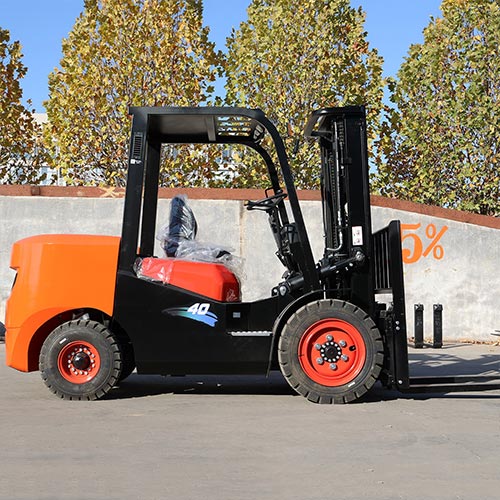
Varyon Power illustrates this OEM model effectively. The VY-CPC100 Diesel Forklift is engineered with a focus on technical expertise and long-term durability — characteristics that define a machine built for demanding industrial applications rather than adapted from a lighter-duty platform. Direct manufacturing control means Varyon Power oversees quality at every production stage, enabling tighter tolerances and faster customization responses than third-party assembled alternatives typically allow.
Direct manufacturing also unlocks application-specific configuration. When an OEM controls its own production floor, specification changes — whether load capacity, mast height, or attachment compatibility — can be executed without the delays or quality compromises that come from multi-tier supply chains. For facilities evaluating whether diesel still fits their operational profile, assessing infrastructure readiness before any equipment decision is a practical first step.
As industrial operations push toward sustainabilityty goals, the pressure on heavy equipment manufacturerss is intensifying — a challenge the next section examines directly.
Direct manufacturerss face uniquely compounded sustainabilityty challenges — every production step, logistics movement, and energy input must be decarbonized simultaneously.
As Samsung Electronics acknowledged, “We are a company that manufactures directly… so there are various, layered challenges regarding carbon neutrality.” That statement captures a reality shared across the industrial sector: OEMs and direct producers can’t simply purchase offsets and call it done. Their emissions are embedded in physical processes — heat, combustion, material handling — that resist easy substitution.
The layered nature of these challenges breaks down across three distinct scopes of emissions. Scope 1 covers direct combustion on-site (furnaces, diesel fleets). Scope 2 covers purchased electricity. Scope 3 — the most difficult — covers upstream suppliers and downstream product use. Heavy manufacturerss typically carry significant exposure across all three, which is why the Deloitte 2026 Manufacturing Outlook consistently flags decarbonization as a top strategic priority rather than a compliance checkbox.
Investment strategies are evolving in response. Leading manufacturerss are funding greenhouse gas filtration systems, retrofitting facilities with high-efficiency HVAC and LED lighting, and deploying renewable energy contracts to reduce Scope 2 exposure. On the fleet side, the transition is equally deliberate. Equipment like the VY-CPC100 Diesel Forklift now incorporates more efficient engine architectures that lower fuel burn per ton lifted — a meaningful incremental gain when fleets operate across multi-shift schedules. For lighter-duty indoor applications, many facilities are moving toward electric alternatives to eliminate tailpipe emissions entirely where ventilation constraints make diesel impractical.
Long-term, the industry has broadly aligned around 2050 net-zero targets, with interim milestones at 2030 and 2040. Meeting those targets requires not just cleaner equipment but redesigned supply chains, low-carbon energy sourcing, and the kind of regional manufacturing concentration that reduces transportation-related emissions — a point that connects directly to where production facilities choose to locate, and why geography matters more than ever.
Geographic positioning remains one of the most decisive — and often underestimated — factors in manufacturing competitiveness. Where a facility sits determines access to talent, ports, suppliers, and the logistics infrastructure that keeps production moving.
California exemplifies this tension better than any other state. Despite elevated labor costs and stringent regulations, it retains a place among the top 15 manufacturing states, driven by proximity to Pacific ports, a dense high-tech talent pool, and deep aerospace and defense supply chains. Every major diesel forklift manufacturers operating in the state benefits directly from port adjacency — shorter import and export cycles translate into measurable cost advantages that offset California’s premium operating environment.
The link between manufacturing concentration and high-tech job creation is well-documented: regions with strong industrial bases consistently generate broader employment ecosystems, from logistics coordination to R&D roles. California’s manufacturing sector anchors thousands of adjacent positions in software, materials science, and advanced operations management. For facilities handling heavy loads at scale, matching lift capacity to site demands becomes as critical a location decision as zip code.
The center of gravity is shifting, however. Texas and Southeast states — Tennessee, South Carolina, and Georgia in particular — are attracting significant industrial investment, pulled by lower land costs, favorable tax structures, and expanding port capacity along the Gulf and Atlantic coasts. Innovation hubs across the U.S. show how these clusters compound: one anchor manufacturers draws suppliers, specialized equipment dealers, and workforce training programs into the same corridor.
| Region | Key Industry | Growth Driver |
|---|---|---|
| California | Aerospace, tech hardware | Pacific port access, STEM talent |
| Texas | Energy, defense, logistics | Low costs, Gulf port expansion |
| Southeast | Automotive, advanced materials | Incentive programs, labor availability |
What makes these regional shifts particularly significant is how legacy knowledge travels with them — a subject the next section explores in depth.
Institutional knowledge — built over decades of materials science research — is quietly becoming one of the most valuable assets in modern manufacturing. While startups race to disrupt production processes, legacy manufacturerss are proving that longevity and deep engineering expertise are irreplaceable competitive advantages.
Riken Corundum Co., Ltd. exemplifies this trajectory. Founded in 1935, the company spent nearly a century perfecting abrasive materials — grinding wheels, precision coatings, and surface-finishing compounds that underpin everything from aerospace components to semiconductor fabrication. Today, that same institutional expertise is being redirected toward EV battery manufacturing and IoT device production, where ultra-precise material tolerances are non-negotiable. A company that has refined its understanding of corundum-based abrasives for 90 years brings a depth of process knowledge that no greenfield operation can replicate overnight.
The adaptation of industrial abrasives for new-tech applications is more nuanced than it first appears. EV motors require micro-finished contact surfaces to maximize energy transfer efficiency. AI hardware demands polished substrates at tolerances measured in nanometers. Legacy manufacturerss with decades of materials science data — covering thermal behavior, wear rates, and surface chemistry — can apply that knowledge directly to these emerging requirements. In practice, this means legacy firms don’t start from scratch; they translate proven expertise into novel applications faster than competitors without that foundation. This positions them favorably among the top 10 manufacturing companies in the USA when evaluated on R&D depth and adaptability.
Digitizing legacy processes amplifies these advantages further. Smart factory frameworks — incorporating sensor-driven quality control and real-time process analytics — allow manufacturerss to encode decades of tribal knowledge into reproducible, scalable systems. The result is a production environment where historical expertise and modern automation reinforce each other rather than compete. Choosing a manufacturing partner with that combination of heritage and digital maturity, however, raises its own set of evaluation questions — which the next section addresses directly.
Choosing the right manufacturing partner is one of the highest-leverage decisions a procurement professional can make — and it deserves far more rigor than a simple price comparison.
Where earlier sections examined regional strengths and the blend of legacy expertise with advanced technology, those same dimensions should directly inform your vendor evaluation framework. The principles driving innovation and collaboration the manufacturing USA ecosystem has built don’t belong only in industry reports — they belong in your RFQ process.
Here is a practical five-point checklist for vetting any manufacturing partner:
These criteria set a clear foundation — and as manufacturing technology itself continues to evolve rapidly, the bar for what constitutes a capable partner will only rise.
The manufacturing sector is entering its most disruptive decade yet — driven by autonomous systems, decentralized production, and AI that can predict failure before it happens.
Automation: The Rise of Smart Factories and Autonomous Logistics
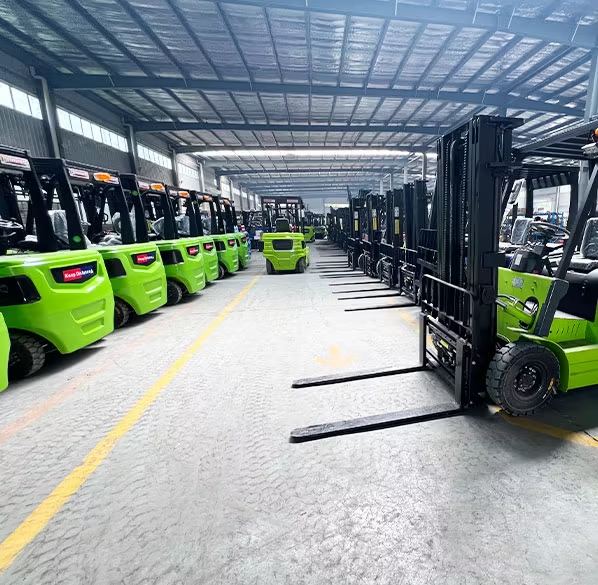
Smart factory adoption is accelerating well beyond pilot programs. According to Automation to Innovation in Modern Manufacturing, facilities that integrate connected sensors, real-time data pipelines, and autonomous material handling equipment are already reporting measurable gains in throughput and error reduction. Autonomous forklifts and guided vehicles are no longer novelties — they’re becoming standard infrastructure in high-volume distribution centers. What’s emerging is a layered intelligence model: AI handles micro-decisions on the floor while human operators manage strategic oversight, a division that dramatically reduces downtime and labor costs simultaneously.
Sustainability: Diesel Evolves, Carbon Targets Tighten
Stricter global emissions standards are reshaping propulsion technology across industrial equipment. JTEKT Corporation has publicly committed to carbon neutrality by 2050 through its Medium-Term Business Plan, anchored in smart production principles — a signal that even legacy heavy-industry players treat sustainabilityty as a core engineering priority, not a PR initiative. Diesel technology isn’t disappearing; it’s being re-engineered with cleaner combustion systems, hybrid configurations, and precision fuel management to meet Stage V and equivalent standards worldwide.
Localization: Decentralized Production as Competitive Strategy
Supply chain disruptions over recent years exposed the fragility of concentrated manufacturing. The response has been a structural shift toward local production hubs — smaller, agile facilities positioned closer to end markets. This decentralization reduces lead times, lowers logistics costs, and builds regional resilience against global shocks. In practice, this trend rewards manufacturerss who can deploy flexible, right-sized equipment across multiple facility types rather than optimizing for a single mega-plant.
These converging forces — automation, sustainabilityty mandates, and decentralization — define the operational reality that the next section’s key takeaways will help you navigate with clarity.
The modern manufacturing landscape rewards companies that combine R&D investment, specialized technical partnerships, and sustainabilityty commitments — not those that rely on legacy scale alone.
Across the full scope of this guide, several high-signal patterns emerge consistently. Use these distilled takeaways as a quick-reference framework:
These four pillars — R&D leadership, specialized OEM partnerships, sustainabilityty integration, and ecosystem participation — form the strategic backbone of any serious industrial operation entering 2026 and beyond. Whether you are sourcing equipment, evaluating partners, or planning facility upgrades, these benchmarks provide a reliable decision-making filter.
Still have questions about specific companies, industrial classifications, or equipment sourcing? The next section addresses the most common questions procurement professionals ask — answered directly.
The most searched manufacturing questions share a common thread: buyers and operators want clarity before committing resources, partnerships, or capital.
What are the top 5 manufacturing companies in the world?
The global leaders by revenue and output consistently include Toyota, Volkswagen, Samsung, Apple (by contract volume managed), and Foxconn. These companies span automotive, electronics, and precision components — reflecting the diversity that defines modern industrial production.
What businesses are considered “industrial manufacturing”?
Industrial manufacturing covers any business that transformraw materials into finished goods using machinery, labor, and process systems. This includes producers of aerospace components, automotive parts, and heavy industrial machinery, alongside chemical processors, steel mills, and heavy equipment fabricators. If a business operates production lines, manages supply chains, and sells physical goods at scale, it almost certainly qualifies.
How do I find a reliable diesel forklift manufacturers?
Start by evaluating load capacity ratings, service network coverage, and parts availability — three factors that directly affect total cost of ownership. Prioritize manufacturerss with documented after-sales support and verifiable industry certifications. A practical checklist:
Specialized resources on diesel forklift engineering and performance can sharpen your sourcing criteria significantly.
What is the difference between an OEM and a contract manufacturers?
An OEM (Original Equipment Manufacturer) designs and owns the product specification, then sells under its own brand. A contract manufacturers produces goods to a client’s specification without holding the brand — functioning purely as a production partner. In practice, many global supply chains blend both models, with OEMs outsourcing volume production while retaining design control.
Understanding these fundamentals positions your operation to make smarter sourcing, partnership, and investment decisions — the true foundation of competitive manufacturing in 2026 and beyond.