Get in touch
* Your personal information is securely protected and will only be used for business communication purposes.

Choosing the right diesel forklift for heavy industrial operations starts with a ruthless audit of your actual site demands — not a rough estimate. Underspecifying your equipment at this stage leads to mechanical failure, safety violations, and costly downtime.
Run through these four assessment areas before you contact a single dealer:
Capacity limits are non-negotiable. According to OSHA’s load-handling guidelines, exceeding a forklift’s rated capacity is a leading cause of tip-overs. For a deeper look at how raw power output drives industrial performance, see how power density shapes heavy logistics decisions. With your site requirements locked down, the next step is evaluating the hydraulic systems that make those heavy lifts possible.
Once you’ve mapped your site’s load requirements, the hydraulic system becomes your next critical evaluation point. According to YTO Corp, internal combustion forklift truck hydraulic systems systems are essential for maintaining precision during heavy load handling — and that precision matters most when you’re lifting near maximum capacity.
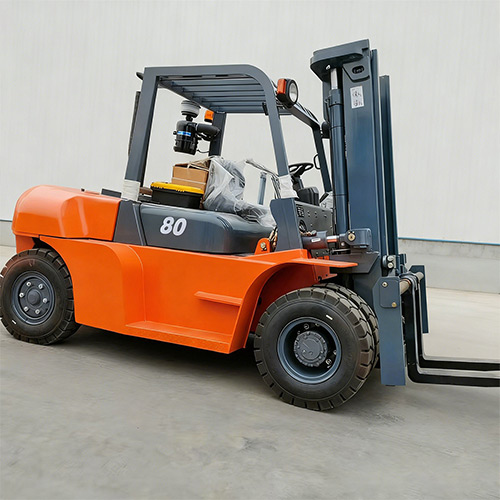
Hydraulic pressure directly determines lifting capability. For operations involving 8-ton loads, the system must sustain consistent pressure without drop-off mid-cycle. Reputable forklift manufacturers engineer hydraulic circuits rated well above the peak working pressure to provide a reliable safety margin. What typically happens on underpowered systems is gradual seal degradation, causing micro-losses that compound into dangerous load drift.
Four hydraulic criteria worth verifying before purchase:
Technical tip: Always request the hydraulic circuit diagram from the supplier and confirm that the relief valve setting matches your maximum lift specification.
For heavy-duty applications, consider reviewing options rated for industrial-scale lifting to benchmark hydraulic specs against your site demands.
With your hydraulic evaluation complete, the next logical step is examining what’s powering that system — and whether the engine itself meets current environmental and efficiency standards.
With hydraulic performance benchmarked, the engine’s emissions rating deserves equal scrutiny — particularly for operations subject to EPA or international environmental regulations.
Tier 4 Final Compliance is the current gold standard for off-road diesel engines sold in the U.S. market. According to Logisnext Americas Inc., modern Tier 4 Final engines reduce nitrogen oxide (NOx) and particulate matter emissions by 90% compared to Tier 3 — a reduction that directly extends engine longevity by decreasing combustion byproducts that degrade internal components over time.
Here’s how the two tiers compare at a glance:
Common-rail injection systems deserve particular attention. By pressurizing fuel delivery independenttly of engine speed, they optimize combustion timing across variable load cycles — a critical advantage in heavy industrial environments where lift cycles are rarely uniform.
DPF Maintenance, however, adds an operational variable. Active regeneration cycles require the engine to reach threshold temperatures, meaning short-cycle operations may need scheduled forced regeneration to prevent filter clogging.
Reputable diesel forklift truck manufacturers publish full engine compliance documentation. Always request EPA certification records before finalizing any procurement decision — and verify whether Euro Stage V equivalency applies for export deployments. That documentation will also become a key evaluation point when selecting a global wholesale manufacturer, which the next step covers in detail.
With engine compliance confirmed, your next move is identifying a manufacturer capable of delivering consistent quality at scale. Sourcing a forklift made in China, has become a strategically sound decision — the global diesel forklift market is projected to reach $10.40 billion by 2034, reflecting the manufacturing depth and export maturity that Chinese producers now command.
Follow this vetting process before committing to any supplier:
A critical caveat: certification documents should always be independenttly verified through the issuing body. Once your manufacturer is selected, the next step is tailoring the specific unit configuration to your facility’s unique demands.
Once you’ve identified a reliable worldwide wholesale forklifts partner, the next priority is tailoring the machine to your site’s exact demands. As LTMG Machinery notes, the 8-ton diesel forklift is purpose-built for heavy-duty scenarios where electric power falls short — but that advantage only compounds when the unit is properly configured.
Follow these four configuration steps:
With the machine dialed in, attention shifts to keeping it running continuously — which means establishing a disciplined refueling protocol.
Refueling speed is where diesel earns its operational edge. Unlike electric models that require an 8–12 hour charging cycle before returning to service, a diesel forklift—including any internal combustion forklift truck hydraulic systems system—can be fully refueled and back on the floor in 5 to 10 minutes. That gap has real consequences across multi-shift operations.
| Factor | Diesel Refueling | Electric Charging |
|---|---|---|
| Time required | 5–10 minutes | 8–12 hours |
| Shift interruption | Minimal | Full cycle downtime |
| Onsite infrastructure | Fuel storage tank | Charging station array |
| Mid-shift flexibility | Yes | No |
Onsite fuel storage must comply with local fire codes and OSHA guidelines. Designate a clearly marked fueling zone away from high-traffic aisles, with a spill containment berm and a fire extinguisher within reach.
Follow this three-step refueling safety guide:
Scheduling refueling during natural shift breaks—rather than mid-cycle—eliminates productivity gaps entirely. With the right protocol in place, your fleet’s mechanical condition becomes the primary driver of long-term performance, which is exactly what the next section on preventive maintenance addresses.
Proper maintenance of IC forklifts ensures they remain powerhouses on wheels for years of service — and that’s especially true for high-cycle machines like the VY-CPC80 diesel forklift. A structured upkeep routine protects your investment and keeps downtime to a minimum.
Daily pre-shift checklist:
⚠ WARNING — Hydraulic Contamination: Introducing dirty fluid into the hydraulic system is one of the fastest ways to destroy cylinder seals and control valves. Always use manufacturer-specified fluid and seal reservoirs between uses.
Scheduled service intervals should follow hour-meter readings, not calendar dates. In practice, engine oil and filter changes at every 250–500 operating hours prevent sludge buildup in high-load applications. Monitor the cooling system closely in outdoor environments where ambient heat accelerates thermal stress.
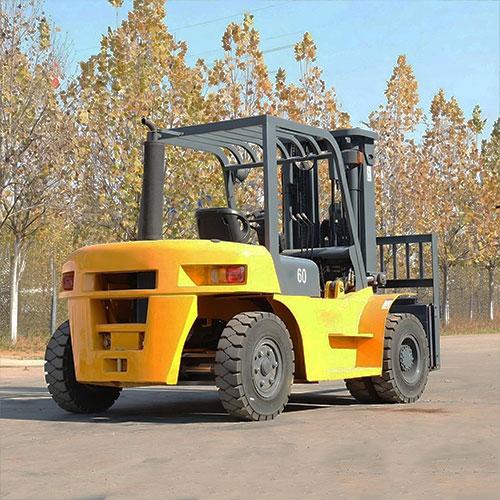
Maintenance log template: Record each service entry with the date, hour-meter reading, technician name, parts replaced, and next scheduled interval. Detailed logs satisfy warranty compliance requirements and significantly strengthen resale value — two factors worth keeping in mind as you approach the final procurement decisions ahead.
With maintenance best practices and multi-shift protocols covered, it’s worth consolidating the most actionable decisions into a fast reference before addressing the technical questions that come up most often in practice.
Diesel remains the practical default for continuous-duty applications where charging infrastructure is limited — especially when loads consistently exceed 6,000 lbs and downtime is not an option. Keep these four priorities front of mind:
These four pillars — torque capacity, emissions compliance, manufacturer credibility, and hydraulic reliability — form the evaluation framework that separates a sound procurement decision from a costly one. If lingering technical questions remain, the next section addresses the most common ones directly.
Can diesel forklifts be used indoors?
Only in well-ventilated industrial spaces — not standard enclosed warehouses. Diesel engines emit carbon monoxide and nitrogen oxides, so OSHA guidelines require adequate airflow, exhaust extraction systems, and air quality monitoring before any indoor operation is approved.
What is the lifespan of an 8-ton diesel forklift?
With consistent preventive maintenance — regular oil changes, filter replacements, and hydraulic inspections — an 8-ton diesel forklift typically delivers 10,000 to 20,000 operating hours. High-cycle environments can accelerate wear, but proper multi-shift protocols covered earlier in this guide help operators preserve drivetrain integrity over the long term.
How does the VY-CPC80 compare to other 8-ton models?
The VY-CPC80 is engineered around a Tier 4-compliant engine platform, and modern diesel powertrains meeting Tier 4 standards have improved fuel efficiency by up to 18% over older designs. That translates directly into lower operating costs and reduced emissions — a meaningful advantage in high-utilization deployments.
What are the main advantages of hydraulic IC systems?
Hydraulic IC systems deliver instantaneous lift response under full load, precise mast control at elevated heights, and resilience in extreme temperatures. Unlike battery-dependent alternatives, they maintain consistent force output throughout an entire shift without capacity degradation — a critical factor when handling heavy industrial loads reliably and safely.