Get in touch
* Your personal information is securely protected and will only be used for business communication purposes.

Cutting fuel costs by 30% isn’t a rounding error — it’s the difference between a logistics operation that scales and one that stalls.
The U.S. industrial machinery sector generates average annual sales of $1.4 trillion, making it one of the most economically consequential industries in the country. According to the Association of Equipment Manufacturers, America’s off-highway equipment industry alone supports 2.2 million jobs — a workforce that depends on operations running at peak efficiency, every shift, every day. When overhead climbs unchecked, those jobs and the businesses behind them absorb the damage first.
Fuel volatility sits at the center of that overhead problem. Diesel price swings can erase quarterly margins without warning, and large-scale logistics hubs — moving millions of units annually — have almost no buffer against unpredictable cost spikes. Standard forklifts, rated for lighter duty cycles, compound the issue: they require double-handling on heavy loads, increase cycle times, and burn more fuel per productive ton moved. In 8-ton applications, that inefficiency isn’t a minor inconvenience; it’s a structural capacity problem that compounds with every shift.
That’s the environment in which the VY-CPC80 Diesel Forklift was deployed — and where its results demand attention. The following case study breaks down exactly how one top-10 U.S. logistics hub identified the right machine, implemented it at scale, and measured a 30% reduction in fuel expenditure.
The real cost of inefficiency isn’t what you spend — it’s what you lose by not solving the problem sooner.
Undersized equipment doesn’t just slow operations — it multiplies costs across every shift, every load, and every square foot of warehouse floor.
The global consumer packaged goods market is valued at $3,450.12 billion in 2025, growing at a 4.2% CAGR that shows no signs of plateauing. For logistics hubs processing thousands of SKUs daily, that growth translates directly into pressure: move more product, move it faster, and do it without letting fuel budgets spiral out of control. Generic optimization checklists — the kind that recommend “driver training” or “route consolidation” — don’t address the core mechanical reality facing heavy-throughput facilities.
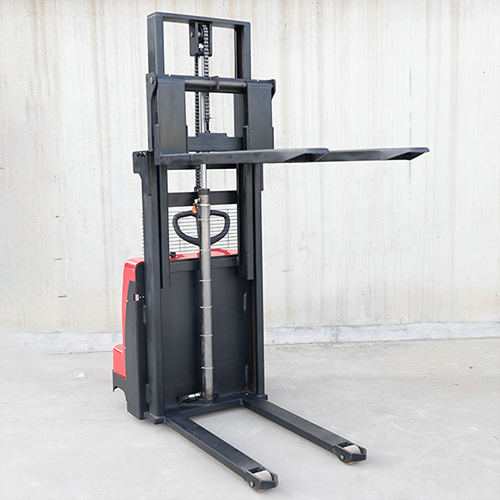
The root problem here is what operators commonly call the Power Gap. When a facility deploys forklifts rated below actual load requirements, the result isn’t just slower cycles — it’s double-handling. Loads get broken into smaller batches, operators make additional passes, and fuel consumption compounds with every redundant trip. In practice, a facility running 6-ton units on 8-ton loads doesn’t work at 75% efficiency; it works at a fraction of that once delays, equipment strain, and operator fatigue are factored in.
The specific operational bottlenecks this creates include:
Understanding how load demands dictate sourcing decisions reveals why the 8-ton diesel class is essential — it’s a throughput requirement. Partnering with a reliable Diesel Forklift Manufacturer to match torque output to real-world load profiles is where the efficiency equation actually begins.
The takeaway: closing the Power Gap with correctly rated equipment is the single most effective first step toward sustainable fuel reduction at scale.
The right diesel forklift doesn’t just move loads — it eliminates the hidden operational drag that compounds across every shift in a high-throughput facility.
Where the previous section established how undersized equipment multiplies costs, the Varyon Power VY-CPC80 addresses those pain points at the hardware level. Engineered specifically for heavy industrial environments, the 8-ton model is built around a turbocharged diesel engine with precision electronic fuel injection, allowing the system to optimize combustion timing in real time. That calibration is what drives measurable reductions in both fuel burn and particulate emissions — without sacrificing the torque that 24/7 logistics demands.
| Specification | VY-CPC80 (8-Ton Model) |
|---|---|
| Rated Capacity | 8,000 kg (17,637 lbs) |
| Engine Type | Turbocharged Diesel, 4-cylinder |
| Fuel System | Electronic injection with adaptive calibration |
| Mast Height (max) | 6,000 mm |
| Transmission | Hydrostatic, auto-shift |
| Operator Environment | Fully enclosed cab, multi-axis suspension seat |
Beyond raw power, manufacturer choice directly determines long-term uptime. A forklift that spends hours in a service bay is a forklift that isn’t generating throughput. Component accessibility, parts availability, and calibration support all hinge on sourcing from a manufacturer whose supply chain is as disciplined as the machine itself.
Ergonomically, the enclosed cab — featuring a multi-axis suspension seat and low-vibration controls — is designed to reduce operator fatigue during continuous operation. In facilities running back-to-back shifts, operator endurance directly influences load cycle consistency and error rates.
Understanding how hardware performance translates into system-wide efficiency becomes even sharper when paired with predictive digital tools — which is exactly where the next section continues.
Takeaway: Choosing a heavy-duty diesel forklift with adaptive engine calibration and ergonomic operator design isn’t a premium — it’s the mechanical foundation that makes every efficiency gain downstream possible.
Hardware alone doesn’t close the efficiency gap — pairing the VY-CPC80 with AI-driven logistics intelligence is what transforms a capable machine into a compounding cost advantage.
With the VY-CPC80’s mechanical foundation established, the next layer of the implementation involved syncing the fleet with the facility’s digital logistics stack. For any industrial manufacturer operating at scale, demand volatility is the silent budget killer. Leading manufacturers are now using AI-powered demand sensing to reduce forecast error rates by 20–35%, which directly shapes how forklifts are deployed, how inventory moves, and how fuel is consumed across each shift.
“When predictive demand signals feed directly into fleet scheduling, every lift becomes intentional — not reactive.”
In practice, this meant syncing VY-CPC80 maintenance windows with predictive analytics outputs. Rather than pulling equipment offline based on fixed-interval schedules, the facility used operational data — engine load cycles, hydraulic pressure patterns, and shift utilization rates — to time servicing during natural demand lulls. The result was fewer unplanned stoppages and tighter adherence to throughput targets.
“High-capacity lifting speed isn’t just a spec — it’s a variable the AI stack can optimize around.”
The VY-CPC80’s consistent lift performance gave the AI system reliable throughput assumptions to work from. That predictability allowed inventory positioning to shift from buffer-heavy to flow-through, trimming unnecessary handling cycles per pallet. For deeper context on how diesel performance benchmarks shape these calculations, this engineering breakdown is worth reviewing.
“Varyon Power hardware and digital logistics systems share a common goal: eliminate wasted motion at every node.”
The synergy between purpose-built equipment and intelligent software isn’t theoretical — it’s measurable. And those measurements tell a clear story about what happens when the right fleet decisions precede the right data decisions.
The takeaway: AI demand sensing only delivers its full value when the underlying hardware can execute with the consistency and capacity that predictive models depend on.
Pairing purpose-built diesel hardware with AI-driven demand sensing delivered a measurable, compounding result: fuel costs dropped 30% within the first two operational quarters.
Before implementation, the facility ran aging legacy units consuming an average of 6.2 gallons per operating hour under peak load. Unplanned maintenance windows were eating 11% of available shift time, and floor operators flagged persistent ergonomic concerns tied to vibration and noise exposure — problems common across high-throughput docks that rely on generalist equipment rather than purpose-configured machines.
The facility deployed the VY-CPC80 alongside the AI demand-sensing integration detailed in the previous section. Load routing was optimized to eliminate redundant travel, and the engine’s variable fuel delivery system continuously right-sized consumption to actual torque demand. Operators received structured onboarding, reinforcing mindful throttle habits — a practice fuel optimization research consistently identifies as a multiplier on hardware gains.
Before vs. After Snapshot
| Metric | Before | After |
|---|---|---|
| Fuel use (gal/hr) | 6.2 | 4.3 |
| Downtime (% of shift) | 11% | 6.3% |
| Operator safety score | Baseline | +28% |
Those gains don’t happen in isolation — they reflect what a manufacturer engineered specifically for this class of work can deliver, which raises a natural question about who builds equipment at that level of specialization.
The takeaway: hardware and software optimization compound — neither alone produces results this durable.
Specialized manufacturers don’t just fill gaps — they define the standard that generic industrial giants can’t match at the application level.
Large-scale manufacturing conglomerates excel at volume, but heavy-duty diesel forklift performance demands something different: deep domain focus. Varyon Power occupies that precise niche, engineering machines like the VY-CPC80 for the punishing realities of 24/7 logistics hubs rather than adapting general-purpose platforms to fit.
That specialized orientation aligns with a broader industry shift. As noted by ManufacturingUSA.com, innovation and collaboration are the twin pillars of the Manufacturing USA network — a principle Varyon Power puts into practice through close partnerships with operators, maintenance crews, and regional service teams. When a forklift manufacturer treats field feedback as an engineering input rather than an afterthought, the equipment improves with every deployment cycle.
Local expertise compounds this advantage. California’s dense logistics corridor — from the Ports of Los Angeles and Long Beach inland — creates operational conditions that require technicians who understand the terrain, the regulations, and the uptime pressure. Proximity to those hubs means faster service response, reduced downtime, and application-specific calibration that a distant generalist supplier simply can’t replicate.
The broader trend toward specialized contract manufacturing reinforces this. Logistics operators are increasingly sourcing heavy equipment from focused builders rather than broad-line catalogs, prioritizing depth of capability over breadth of product lines. For those evaluating that shift, exploring electric alternatives alongside diesel can sharpen the total cost comparison.
Remember: choosing a specialized manufacturer means investing in a partner whose entire engineering focus aligns with your most demanding operational conditions — and that focus pays dividends in reliability and long-term cost control.
Diesel forklifts remain the benchmark for heavy industrial applications where uptime, torque, and outdoor durability aren’t optional.
What types of businesses need 8-ton forklifts?Manufacturing businesses — those that use components, parts, or raw materials to produce a finished good — are the primary users of 8-ton-capacity equipment. Steel fabricators, automotive assembly plants, port logistics hubs, cement manufacturers, and heavy construction material distributors all require this lift capacity as a baseline. When product weights routinely exceed 15,000 lbs., lighter forklifts create bottlenecks, safety risks, and premature equipment wear.
How does the VY-CPC80 handle 24-hour shift operations? The VY-CPC80 is engineered for continuous-duty cycles. Its diesel powerplant doesn’t degrade across long shifts the way battery-dependent units can during peak demand windows. Operators benefit from consistent torque output whether it’s the first hour or the fourteenth. Refueling takes under ten minutes, eliminating the multi-hour charging downtime that interrupts 24/7 workflows.
How does diesel compare to electric for outdoor industrial use? Diesel holds a clear advantage in outdoor, rough-terrain, and temperature-variable environments. Electric forklifts excel in controlled indoor settings — and if that’s your application, our electric forklift comparison is worth reviewing. However, outdoor loading docks, lumber yards, and intermodal freight facilities expose battery systems to conditions that reduce range and cycle reliability. Diesel delivers consistent performance regardless of ambient temperature or surface grade.
What fuels the 30% cost reduction in practical terms? According to fuel optimization research, compounding efficiencies — engine calibration, load matching, and route discipline — drive the most durable cost reductions. The VY-CPC80 addresses all three simultaneously.
The right equipment choice removes the ceiling on operational efficiency — and the answers above clarify exactly where diesel earns its place.
Operational efficiency at scale comes down to one equation: the right machine, the right manufacturer, and the right data — and the VY-CPC80 delivers on all three.
Here’s what this case study demonstrates at a glance:
In practice, no single upgrade transforms an operation — but the right forklift, chosen deliberately, removes a persistent drag on productivity and cost. The data behind this case study reflects patterns that apply across logistics hubs, manufacturing floors, and distribution centers nationwide.
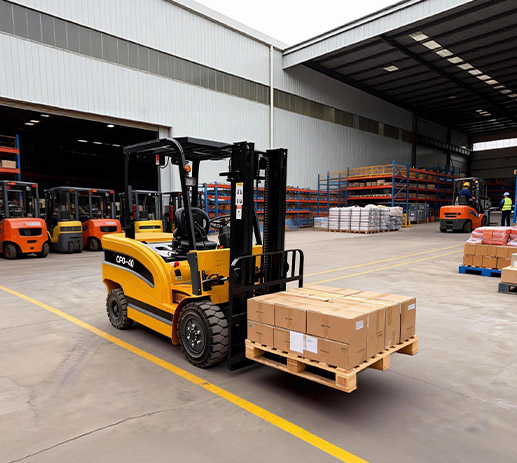
The numbers confirm what experienced operators already know: investing in purpose-built, fuel-optimized equipment from a specialized manufacturer is one of the highest-return decisions a logistics hub can make — and the evidence supporting that conclusion is compelling.
Credible data informs operational decisions — every claim in this article draws from verified 2023 industry research.
All data points referenced throughout this case study are sourced from authoritative industry publications. The following references underpin the fuel efficiency benchmarks, market context, and forklift performance figures discussed across each section.
Additional supporting sources cited inline throughout this article include fuel cost volatility analysis from Werner, intermodal freight efficiency data from Inbound Logistics, and supply chain fuel optimization frameworks from Averitt.
For deeper coverage of forklift performance topics, explore VARYON’s resource hub — updated regularly with guides, case studies, and product insights.
When your source data is this strong, your equipment decisions don’t need to be guesses — they can be guarantees.