Get in touch
* Your personal information is securely protected and will only be used for business communication purposes.

The warehouse floor is changing fast. Diesel exhaust, rising fuel costs, and tightening emissions regulations have pushed facility managers to a clear conclusion: the internal combustion engine’s reign in materials handling is ending. Electric forklifts are no longer a cautious alternative — they’re the primary choice for operations that demand performance, compliance, and long-term cost control.
The numbers back this up decisively. The global electric forklift market is projected to reach $104.7 billion by 2032, growing at a CAGR of 13.4%, according to Allied Market Research. That’s not incremental growth — that’s a fundamental market shift driven by regulatory pressure, OSHA indoor air quality standards, and the measurable total-cost-of-ownership advantages electric equipment delivers.
Electric power isn’t a concession to environmental trends — it’s the smarter engineering choice for high-cycle warehouse environments.
Zero-emission mandates are accelerating across distribution centers, food-grade facilities, and cold-storage warehouses, where IC engine fumes simply aren’t an option. The counterbalance electric forklift sits at the center of this transition, offering the lifting capacity and stability that heavy-duty operations require without the emissions trade-off.
What’s particularly interesting is that the same battery technology optimized for industrial equipment — demanding long runtime and consistent power output — shares roots with advances made in consumer applications like the Electric Golf Cart market. Compact, reliable, high-cycle battery systems proved their durability in leisure applications before scaling up to multi-ton industrial demands.
Heavy-duty solutions like the VY-CPD40 represent exactly this evolution: robust enough for serious loads, clean enough for sensitive environments. Before exploring that machine specifically, the chassis configuration question deserves careful attention.
Once you’ve committed to going electric, the next decision is just as critical: which physical configuration actually fits your operation? The chassis you choose directly determines throughput, aisle accessibility, and load handling capability. Get it wrong, and even the most powerful electric drivetrain can’t compensate.
| Configuration | Best For | Turning Radius | Max Load |
|---|---|---|---|
| Three-wheel electric | Tight aisles, indoor maneuvering | Very tight (~59″) | Up to 3,000 lbs |
| 4-wheel counterbalance | Heavy loads, outdoor/dock use | Moderate (~75″) | 4,000–10,000+ lbs |
In high-density storage environments — think refrigerated facilities, retail distribution centers, or any warehouse where every square foot counts — a three wheel electric forklift earns its place immediately. Its rear-wheel-drive steering design allows a dramatically tighter turning radius, which translates directly into narrower aisle configurations and more usable rack space. In practice, facilities switching from four-wheel counterbalance models to three-wheel units often reclaim significant floor space simply by tightening aisle widths. For operations running multiple shifts across confined interiors, that spatial efficiency compounds into measurable throughput gains over time.
As Logistics Management Magazine notes, “The shift toward electric forklifts is no longer just about sustainability; it is about operational efficiency and superior performance.” Nowhere is that performance gap more visible than in heavy-load applications. 4-wheel counterbalance electric forklifts distribute weight across a wider footprint, delivering the lateral stability essential when lifting loads above 4 tons. Loading docks present a specific challenge — uneven surfaces, ramp transitions, and mixed indoor-outdoor movement demand a platform that doesn’t compromise stability.
This is where configurations like the VY-CPD40 prove their value. Designed for seamless outdoor-to-indoor transitions, it handles the grade changes and surface inconsistencies at dock approaches without sacrificing load security — a common failure point for lighter chassis designs.
Choosing between these two configurations often comes down to a single question: does your bottleneck live in the aisle or at the dock? Answering that honestly sets the stage for the next major decision — and arguably the most debated one in modern fleet management: which battery technology actually powers all of this performance.
With chassis configuration settled, the next critical decision hits closer to the heart of your operation: which battery technology actually keeps your fleet moving when demand peaks. This is where the gap between a good electric forklift investment and a great one becomes very real.
A lead acid battery forklift looks like a straightforward, lower-cost choice on paper. In practice, it carries a significant maintenance overhead that rarely appears in the initial quote. Operators must perform regular watering cycles to replenish electrolyte levels, schedule periodic equalization charges to balance cell voltages, and manage corrosive acid spills that create safety and compliance headaches. Beyond the labor hours, traditional lead-acid systems demand dedicated battery rooms—ventilated spaces with charging infrastructure, swap-out equipment, and often a full spare battery inventory to cover shift rotations.
That infrastructure footprint costs money, occupies valuable square footage, and adds complexity to every shift change.
Lithium-ion technology eliminates most of that overhead entirely. Instead of pulling a forklift off the floor for an 8-hour charge cycle, operators can plug in during lunch breaks, between loads, or at any natural pause in the workflow. This is the opportunity charging model, and it fundamentally rewrites the math on uptime.
Electric forklifts with lithium-ion batteries can reach a full 100% charge in as little as 1 to 2 hours, compared to the 8 hours required by traditional lead-acid systems. (Source: Mitsubishi Logisnext Americas)
That’s not a marginal improvement—it’s a structural shift in how warehouse managers plan shift coverage.
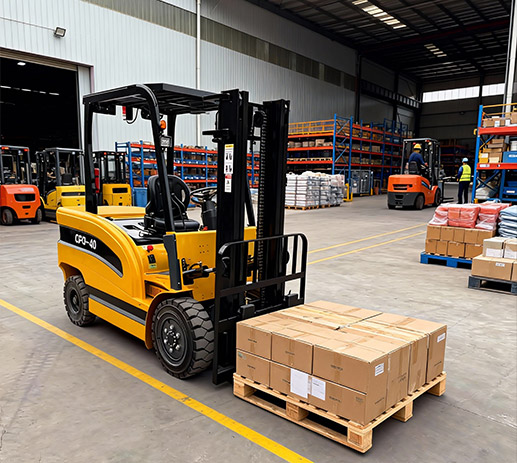
The TCO case for electric extends well beyond charging speed. As Toyota Material Handling notes, electric forklifts carry significantly fewer moving parts than internal combustion engines, which means entire categories of maintenance simply disappear:
These eliminations stack up quickly across a fleet operating multi-shift schedules.
The lithium-ion advantage is now well established across the industry. What’s evolving rapidly is where these high-performance systems are being sourced—and that’s where the next conversation gets particularly compelling for cost-conscious fleet managers.
With battery chemistry and chassis configuration both locked in, the next question savvy procurement teams are asking is: where should high-performance electric forklifts actually come from? The answer, increasingly, is China — and not for the reasons critics once assumed.
The perception of Chinese manufacturing as a budget-only play is genuinely outdated. Over the past decade, leading Chinese manufacturers have invested heavily in R&D, precision engineering, and international certifications. The result is a generation of 3-ton and 4-ton electric forklifts that routinely meet CE, UL, and ISO standards — equipment that performs at par with European-built alternatives at a fraction of the price.
The real competitive edge isn’t just cost. It’s customization. According to the Made-in-China Industry Report, leading Chinese manufacturers now offer full OEM/ODM services, allowing for custom chassis and battery configurations tailored to specific regional safety standards. That means a cold-storage operator in Minnesota can spec a forklift with marine-grade seals and heated battery housings, while a high-rack distribution center in Texas can order extended mast configurations — all from the same factory, without compromise.
“Custom” in the OEM/ODM context isn’t cosmetic. It covers:
This flexibility also extends to commercial models. Businesses exploring electric forklift rental fleets can order standardized unit specs in volume, reducing maintenance complexity across the board.
This is where manufacturers like Varyon Power enter the picture. By operating factory-direct, they eliminate the distributor layers that inflate pricing on big-brand equipment — delivering certified, high-performance machines with responsive after-sales support. For operations that need performance documentation and reliable parts availability, not just a logo on the mast, that distinction matters.
The question then becomes: how does this performance translate on the warehouse floor? That’s exactly what a closer look at the VY-CPD40 in real operational conditions reveals.
When theory meets the loading dock, what actually matters is whether a machine delivers — consistently, safely, and across demanding conditions. The VY-CPD40 series makes a compelling case as a workhorse electric warehouse forklift built for exactly those pressures.
The VY-CPD40 is engineered around a 4-ton lift capacity, designed to bridge the gap between indoor warehouse agility and outdoor loading dock durability. That’s a meaningful range. In practice, this means a single unit can handle palletized manufacturing components inside a facility and then roll straight to an outdoor staging area without a equipment swap. Versatility at this level reduces fleet size requirements — a direct cost advantage that compounds over time.
🎬 [Video: See the VY-CPD40 handling heavy-load transfers across mixed surfaces — embed YouTube video here]
The VY-CPD40’s performance profile fits naturally across several sectors:
Each scenario demands reliability under load cycling — exactly where this platform performs consistently.
Modern electric forklifts aren’t just mechanically capable — they’re increasingly intelligent. The VY-CPD40 incorporates smart monitoring tools that track operational data, flag maintenance needs proactively, and support operator safety protocols. According to INTERNAL COMBUSTION FORKLIFTS OR ELECTRIC FORKLIFTS?, electric models consistently demonstrate lower total maintenance overhead when paired with proper monitoring systems.
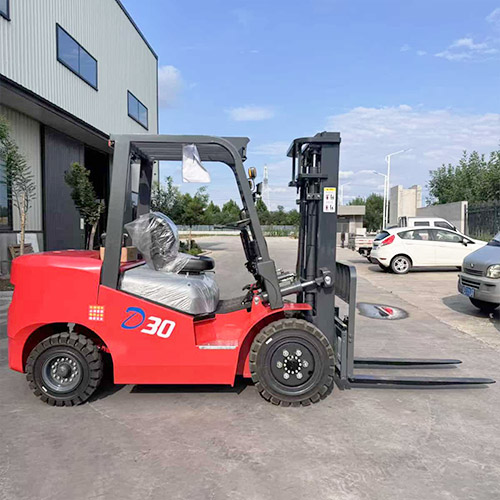
Smart monitoring transforms reactive maintenance into a predictable, manageable operational cost — a shift that purchasing managers and fleet supervisors both appreciate.
Still have questions about how performance translates into day-to-day operations? The next section addresses the most common concerns teams face when evaluating an electric transition.
Transitioning to electric material handling raises practical questions — and getting clear answers before committing to a purchase or rental agreement can save your operation significant time and money. Here are the most common questions procurement managers and warehouse directors ask.
How long does an electric forklift battery last per shift?
Most modern lithium-ion electric forklifts deliver a full 8-hour shift on a single charge, with opportunity charging during breaks extending runtime further. Battery performance varies based on load weight, ramp frequency, and ambient temperature, so always validate specifications against your actual duty cycle.
Can electric forklifts be used outdoors in the rain?
Yes — most electric forklifts carry an IP rating that allows operation in light rain and wet conditions. However, sustained exposure to heavy precipitation or submersion risks are outside recommended parameters. Always verify the specific IP rating of your model before deploying in exposed outdoor environments.
What is the average ROI period when switching from diesel to electric?
According to industry analysis, most operations recover their investment within two to three years, driven by lower fuel costs, reduced maintenance expenses, and fewer unplanned downtime events.
Is an electric forklift rental better than buying for seasonal peaks?
Rental makes financial sense for operations with sharp seasonal demand spikes lasting under six months. For consistent year-round usage, ownership — particularly of a high-capacity unit like the VY-CPD40 Electric Forklift — typically delivers stronger long-term value.
How does electric forklift maintenance compare to simpler electric equipment?
Industrial electric forklifts involve far more complexity than consumer-grade electric vehicles. Hydraulic systems, load sensors, and regenerative braking components all require scheduled inspection by qualified technicians. The right maintenance program is what separates a cost-saving asset from an expensive liability — plan for it before your first unit arrives on the dock.