Get in touch
* Your personal information is securely protected and will only be used for business communication purposes.

An electric counterbalance forklift is often the default answer for indoor pallet handling, but the right truck is still a route-fit decision rather than a category shortcut. Turning room, load weight, battery routine, shift overlap, and floor condition all influence whether the truck feels efficient in daily warehouse use.
This guide explains how to evaluate an electric counterbalance forklift for indoor logistics, rack approach, dock-adjacent transfer, multi-shift planning, and warehouse traffic control. The goal is to help buyers connect the truck class to the real movement pattern before they focus on model size or battery chemistry alone.
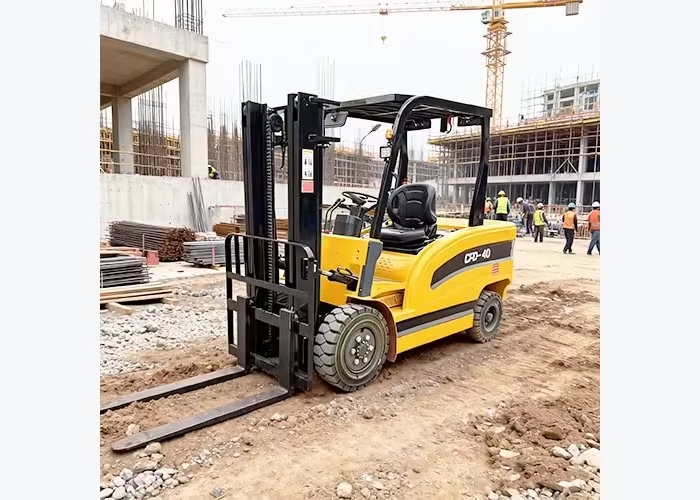
An electric counterbalance forklift should be chosen around the real pickup-to-placement loop rather than around a broad assumption that all indoor routes are similar. This is a practical operating issue, not merely a specification detail. The OSHA electric powered industrial truck guidance provides useful context for the control principles behind this decision. In a real warehouse or yard, the condition should be reviewed with the actual load, route, battery routine, or placement task in mind. The main risk is that buyers may choose a truck that looks suitable on an open floor but feels awkward in the busiest corners. Supervisors and buyers should therefore connect the observation to the real job pattern before assuming a standard configuration will work.
A reliable next step is to map the loaded route, note the tightest turns, and record where the truck enters racking, staging, or dock-adjacent areas. Record what was observed instead of relying on memory, because clear operating details make supplier discussions and internal decisions much faster. The relevant electric forklift category can help translate the requirement into a machine option that fits the route more cleanly. Avoid solving the issue with assumptions or informal workarounds that only look acceptable in a short demonstration. As a decision rule, let the route narrow the truck choice before comparing options. That keeps the buying decision tied to the daily task rather than to a generic machine label.
Counterbalance trucks usually balance versatility and maneuverability well, but the benefit only appears when the route provides sensible turning and reset space. This is a practical operating issue, not merely a specification detail. The OSHA battery charging guidance provides useful context for the control principles behind this decision. In a real warehouse or yard, the condition should be reviewed with the actual load, route, battery routine, or placement task in mind. The main risk is that small clearance misjudgments can turn every pallet move into a sequence of corrections. Supervisors and buyers should therefore connect the observation to the real job pattern before assuming a standard configuration will work.
A reliable next step is to measure the real operating area with pallets, racks, guards, and parked goods in place instead of relying only on layout drawings. Record what was observed instead of relying on memory, because clear operating details make supplier discussions and internal decisions much faster. The relevant VY-CPD20 electric forklift can help translate the requirement into a machine option that fits the route more cleanly. Avoid solving the issue with assumptions or informal workarounds that only look acceptable in a short demonstration. As a decision rule, review turning space as an operating-cost issue, not only a technical measurement. That keeps the buying decision tied to the daily task rather than to a generic machine label.
A battery-powered forklift does not become easier to size simply because the route is indoors. Load weight, load center, and lift height still determine the real requirement. This is a practical operating issue, not merely a specification detail. The OSHA warehouse hazards and solutions provides useful context for the control principles behind this decision. In a real warehouse or yard, the condition should be reviewed with the actual load, route, battery routine, or placement task in mind. The main risk is that teams sometimes buy for the common light pallet and then struggle on the real peak load. Supervisors and buyers should therefore connect the observation to the real job pattern before assuming a standard configuration will work.
A reliable next step is to separate the average load from the heaviest repeatable load and confirm how high that load must be placed. Record what was observed instead of relying on memory, because clear operating details make supplier discussions and internal decisions much faster. The relevant VY-CPD25 electric forklift can help translate the requirement into a machine option that fits the route more cleanly. Avoid solving the issue with assumptions or informal workarounds that only look acceptable in a short demonstration. As a decision rule, size the truck around the repeatable hard case rather than the easiest case. That keeps the buying decision tied to the daily task rather than to a generic machine label.
Electric counterbalance trucks succeed when the battery routine matches the shift pattern, charging window, and intensity of the work. This is a practical operating issue, not merely a specification detail. The OSHA powered industrial truck standard provides useful context for the control principles behind this decision. In a real warehouse or yard, the condition should be reviewed with the actual load, route, battery routine, or placement task in mind. The main risk is that a good truck choice can still underperform if the battery routine is vague. Supervisors and buyers should therefore connect the observation to the real job pattern before assuming a standard configuration will work.
A reliable next step is to review whether the site expects overnight charging, break charging, or multi-shift handover and confirm who is responsible for connection and inspection. Record what was observed instead of relying on memory, because clear operating details make supplier discussions and internal decisions much faster. The relevant VY-CPD30 electric forklift truck can help translate the requirement into a machine option that fits the route more cleanly. Avoid solving the issue with assumptions or informal workarounds that only look acceptable in a short demonstration. As a decision rule, treat charging discipline as part of the truck specification. That keeps the buying decision tied to the daily task rather than to a generic machine label.
Even within warehouses, floor joints, dock plates, thresholds, and wet crossover points can change how predictable the truck feels under load. This is a practical operating issue, not merely a specification detail. The CCOHS battery charging safety provides useful context for the control principles behind this decision. In a real warehouse or yard, the condition should be reviewed with the actual load, route, battery routine, or placement task in mind. The main risk is that buyers may assume the whole building behaves like the smoothest aisle near the office. Supervisors and buyers should therefore connect the observation to the real job pattern before assuming a standard configuration will work.
A reliable next step is to walk the full route and identify rough joints, slippery areas, and repeated transitions between zones. Record what was observed instead of relying on memory, because clear operating details make supplier discussions and internal decisions much faster. The relevant VY-CPD35 electric forklift can help translate the requirement into a machine option that fits the route more cleanly. Avoid solving the issue with assumptions or informal workarounds that only look acceptable in a short demonstration. As a decision rule, review the route’s worst surface before final approval. That keeps the buying decision tied to the daily task rather than to a generic machine label.
A counterbalance forklift should make final placement stable and repeatable, especially where pallet overhang, rack guards, or shared traffic narrow the approach. This is a practical operating issue, not merely a specification detail. The HSE workplace transport guidance provides useful context for the control principles behind this decision. In a real warehouse or yard, the condition should be reviewed with the actual load, route, battery routine, or placement task in mind. The main risk is that the truck may be blamed for slow work when the route or placement pattern is the bigger issue. Supervisors and buyers should therefore connect the observation to the real job pattern before assuming a standard configuration will work.
A reliable next step is to observe the last meters of approach, not only the long travel between zones, and record where operators need repeated corrections. Record what was observed instead of relying on memory, because clear operating details make supplier discussions and internal decisions much faster. The relevant VY-CPD40 electric forklift can help translate the requirement into a machine option that fits the route more cleanly. Avoid solving the issue with assumptions or informal workarounds that only look acceptable in a short demonstration. As a decision rule, separate rack-approach problems from general travel problems. That keeps the buying decision tied to the daily task rather than to a generic machine label.
A truck used across several teams needs a simpler, more disciplined energy routine than a truck serving one stable day shift. This is a practical operating issue, not merely a specification detail. The NIOSH forklift safety guidance provides useful context for the control principles behind this decision. In a real warehouse or yard, the condition should be reviewed with the actual load, route, battery routine, or placement task in mind. The main risk is that a battery plan that works on paper can fail when several trucks queue at once. Supervisors and buyers should therefore connect the observation to the real job pattern before assuming a standard configuration will work.
A reliable next step is to map handover times, charging windows, and return-to-service expectations for each truck group. Record what was observed instead of relying on memory, because clear operating details make supplier discussions and internal decisions much faster. The relevant warehousing and logistics solutions can help translate the requirement into a machine option that fits the route more cleanly. Avoid solving the issue with assumptions or informal workarounds that only look acceptable in a short demonstration. As a decision rule, size the energy routine around the busiest repeatable overlap. That keeps the buying decision tied to the daily task rather than to a generic machine label.
Electric counterbalance forklifts are often bought larger than necessary because buyers want a comfort margin without checking what that does to turning and energy use. This is a practical operating issue, not merely a specification detail. The Wikipedia electric battery overview provides useful context for the control principles behind this decision. In a real warehouse or yard, the condition should be reviewed with the actual load, route, battery routine, or placement task in mind. The main risk is that oversizing can quietly reduce maneuvering efficiency in indoor work. Supervisors and buyers should therefore connect the observation to the real job pattern before assuming a standard configuration will work.
A reliable next step is to compare the actual load and route needs against the smallest practical truck that still handles the repeatable hard case safely. Record what was observed instead of relying on memory, because clear operating details make supplier discussions and internal decisions much faster. The relevant contact VARYON for fleet planning can help translate the requirement into a machine option that fits the route more cleanly. Avoid solving the issue with assumptions or informal workarounds that only look acceptable in a short demonstration. As a decision rule, approve the truck that fits the route cleanly instead of the one that simply looks more powerful. That keeps the buying decision tied to the daily task rather than to a generic machine label.
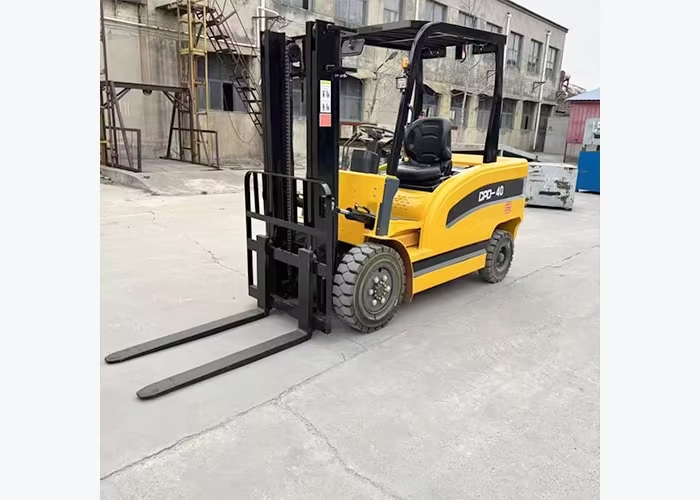
Electric forklifts benefit from clean evidence-driven maintenance rather than reactive repair once performance complaints appear mid-shift. This is a practical operating issue, not merely a specification detail. The OSHA electric powered industrial truck guidance provides useful context for the control principles behind this decision. In a real warehouse or yard, the condition should be reviewed with the actual load, route, battery routine, or placement task in mind. The main risk is that teams may blame the battery for issues that a basic inspection would have caught earlier. Supervisors and buyers should therefore connect the observation to the real job pattern before assuming a standard configuration will work.
A reliable next step is to set a daily check routine for tires, connectors, brakes, warning indicators, and charge completion before the truck enters the route. Record what was observed instead of relying on memory, because clear operating details make supplier discussions and internal decisions much faster. The relevant electric forklift category can help translate the requirement into a machine option that fits the route more cleanly. Avoid solving the issue with assumptions or informal workarounds that only look acceptable in a short demonstration. As a decision rule, support the equipment choice with a repeatable release check. That keeps the buying decision tied to the daily task rather than to a generic machine label.
Suppliers can recommend the right electric counterbalance forklift much faster when the request includes route details, load range, shift pattern, and battery expectations together. This is a practical operating issue, not merely a specification detail. The OSHA battery charging guidance provides useful context for the control principles behind this decision. In a real warehouse or yard, the condition should be reviewed with the actual load, route, battery routine, or placement task in mind. The main risk is that generic requests often produce comparable-looking quotes that were built on different assumptions. Supervisors and buyers should therefore connect the observation to the real job pattern before assuming a standard configuration will work.
A reliable next step is to send aisle width, load weight, lift height, shift count, battery preference, and charging windows with the inquiry. Record what was observed instead of relying on memory, because clear operating details make supplier discussions and internal decisions much faster. The relevant VY-CPD20 electric forklift can help translate the requirement into a machine option that fits the route more cleanly. Avoid solving the issue with assumptions or informal workarounds that only look acceptable in a short demonstration. As a decision rule, make the operating pattern visible before comparing models. That keeps the buying decision tied to the daily task rather than to a generic machine label.
What is the main advantage of an electric counterbalance forklift indoors? It usually combines good maneuverability, practical capacity, and cleaner indoor operation when the route and battery plan are matched properly.
Why is battery planning part of the truck decision? Because uptime depends on charging routine, shift overlap, and return-to-service discipline, not only on the truck model itself.
Can an indoor electric forklift still have route-fit problems? Yes. Tight turns, poor floor transitions, queueing near docks, and awkward rack approach can all reduce efficiency even indoors.
Watch a related electric forklift video here: https://www.youtube.com/watch?v=4aTZziuRmW8.

The right electric counterbalance forklift is chosen by route fit, repeatable load demand, and battery routine together.
That approach helps buyers avoid the common mistake of choosing by category label alone while the real warehouse constraints remain undefined.
For a sharper recommendation, send VARYON the load range, route width, turning limits, shift plan, and charging windows that shape the daily work.