Get in touch
* Your personal information is securely protected and will only be used for business communication purposes.

3 Wheel vs 4 Wheel Electric Forklift Guide for Warehouse Layout Planning is written for warehouse planners and buyers who already know they want an electric forklift but still need to decide which wheel configuration fits the building. Many teams start with battery type or lifting capacity and only later realize that aisle geometry, turning rhythm, ramp transitions, and pallet stability will decide whether the truck feels easy to run every day. Three-wheel and four-wheel electric forklifts can both be correct choices, but they solve layout pressure in different ways.
If the warehouse has narrow approach zones, frequent cross-aisle turns, or dense staging near dock doors, maneuverability quickly becomes more valuable than a broad feature list. On the other hand, if the site handles heavier pallets, mixed floor conditions, longer indoor travel, or more demanding outdoor transfer at the threshold, extra stability may matter more. Buyers comparing the VY-CPD15 electric forklift, VY-CPD25 electric forklift, VY-CPD30 electric forklift, and VY-CPD35 electric forklift should map the truck to the route first and the brochure second.
A three-wheel electric forklift is usually selected because it turns more tightly and feels more agile in confined warehouse geometry. That can reduce approach time at the rack face, make dock-end repositioning easier, and help operators cleanly correct a move without backing up as much. A four-wheel electric forklift is usually selected because it offers a more planted feel, especially when the site wants extra confidence with longer loads, uneven floor joints, or repeated travel at slightly higher working intensity.
Neither layout is universally better. The better layout is the one that allows the truck to finish the route with less correction, less hesitation, and less operator fatigue. Guidance from OSHA powered industrial trucks guidance, OSHA 1910.178 standard, and NIOSH forklift safety guidance is useful because it anchors the decision in route control, visibility, and safe handling rather than treating the wheel count as a style preference.
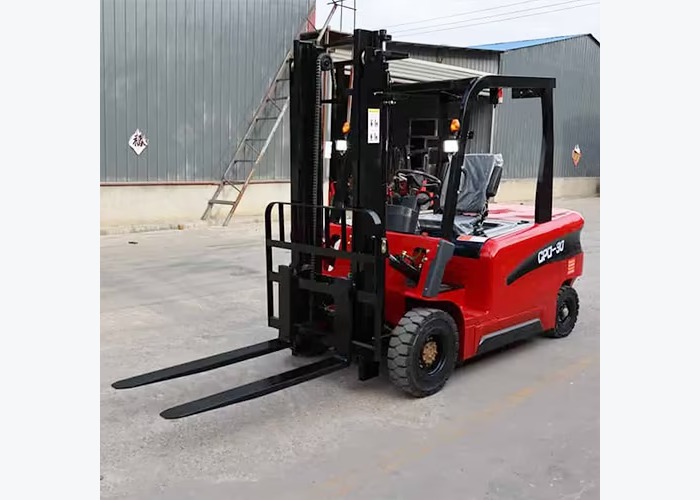
Three-wheel electric forklifts usually make sense in tight indoor lanes, compact receiving zones, and fast-turn environments where the operator must keep changing direction without losing flow. The smaller turning envelope often helps in older warehouses that were not designed around larger trucks. If the building relies on frequent rack-facing corrections, short shuttle travel, or tight cross-aisle entries, the maneuverability gain can be visible within the first day of operation.
That maneuverability advantage is especially valuable when labor time matters more than maximum travel speed. A truck that lines up faster and wastes less motion at the rack can improve real throughput even if the paper capacity difference between candidates looks small. For planners working inside dense storage, the question is not which truck is theoretically more capable. It is which truck makes the tightest part of the building feel less punishing.
Four-wheel electric forklifts usually become attractive when the warehouse handles heavier or more awkward pallets, longer routes, or more varied floor conditions. They can feel calmer under load, particularly when operators are moving from dock approach to staging and then into wider storage areas. Some teams simply prefer that planted feeling because it reduces the need for constant correction and makes training easier for mixed-experience operators.
If the site has threshold plates, minor outdoor crossings, or floor transitions that unsettle a lighter-feeling truck, the extra composure of a four-wheel unit can matter more than the tighter turn of a three-wheel design. This is why layout planning should include the dock face, charger approach, waiting zones, and any route section that forces the operator to travel with load before entering the main aisle.
Many warehouses claim they have ‘narrow aisles’ without identifying where the real bottleneck sits. A useful comparison documents the narrowest turn, the rack-end obstruction, the pallet overhang, and the space needed for approach correction. Once those constraints are written down, it becomes much easier to see when a three-wheel truck is providing a genuine operational advantage and when a four-wheel truck still fits comfortably enough to justify its other benefits.
The worst-point method is important because one difficult turn can slow the whole shift. If operators have to pause or reset every time they reach a specific zone, throughput falls even when the rest of the warehouse is open. That kind of friction is exactly where wheel configuration becomes a planning decision rather than a product preference.
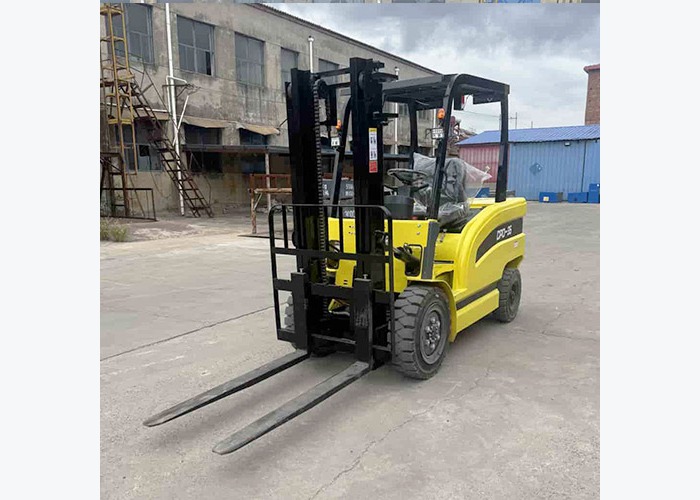
Wheel count should also be discussed alongside the load itself. Stable, well-centered pallets in an orderly warehouse create a different handling environment than long or inconsistent loads arriving from suppliers with uneven pallet quality. If the building frequently handles taller loads, fragile packaging, or product that shifts easily, the more planted character of a four-wheel truck can support cleaner movement. If the site primarily handles predictable pallets with aggressive aisle constraints, the three-wheel truck may still be the better operational choice.
This is one reason planners should review the highest real lift, the most awkward pallet footprint, and the frequency of load re-centering. A truck that feels agile but forces the operator to slow dramatically for stability may not produce the expected throughput gain. Conversely, a truck that feels stable but loses time at every turn may be overbuilt for the route.
Electric forklift selection is not only about geometry. Charging windows, battery service habit, and shift structure still influence the best choice. Resources such as OSHA battery charging and changing and CCOHS battery charging safety are useful reminders that charging practice, battery care, and ventilation planning belong in the same conversation as layout design. A highly maneuverable truck is still a poor fit if its charging pattern does not align with the site’s break structure or labor rhythm.
In practice, buyers should decide the route first and then ask whether the battery plan supports that route cleanly. If the truck needs to cover high-density picking support during peak hours, the battery strategy must be as practical as the turning radius. This is where the 3.0T electric forklift range range summary and broader warehousing and logistics solutions planning page can help align model choice with warehouse schedule.
Operator comfort matters more than many procurement teams admit. A configuration that feels intuitive tends to produce cleaner daily execution, especially in facilities with varied staffing or seasonal workload changes. If the operator group is already used to compact indoor handling, a three-wheel truck may feel natural quickly. If the team values a more planted chassis feel during mixed tasks, a four-wheel truck may shorten the learning curve even when the turning radius is larger.
Training should also consider visibility at common approach angles, not just basic travel. The truck that seems easiest during a short demo may become frustrating once the operator repeats rack entry, pallet extraction, and dock repositioning dozens of times. A realistic route trial often reveals that one configuration simply matches the building better.
If the warehouse is dense, turn-heavy, and operator time is being lost to approach correction, a three-wheel electric forklift usually deserves serious priority. The maneuverability benefit is not abstract. It can directly reduce wasted motion, protect aisle flow, and improve confidence in compact rack zones. That matters most in buildings where space is expensive and every meter of travel has already been compressed.
A three-wheel configuration can also be a strong fit when the site is trying to increase throughput without changing building structure. If the truck fits the tight zones better, the layout can work harder before the site is forced into broader redesign.
If the route includes heavier pallets, more varied surfaces, and a meaningful need for stable handling confidence, a four-wheel truck may be the smarter long-term choice. The modest loss in turning tightness can be offset by cleaner travel under load and fewer moments of operator hesitation. That is particularly true when the site expects growth into slightly tougher handling demands over the next year.
Buyers should be honest about expansion plans. A warehouse that is adding higher-volume receiving, denser dock staging, or broader pallet mix may benefit from choosing the truck that will still feel composed after the workload rises, not just the truck that works well during today’s quiet shift.
The best comparison is a route trial done with the real pallet, the real aisle, and the real operator rhythm. Ask each candidate to enter the tightest bay, reverse into the common staging point, approach a dock face, and complete the same lift-and-travel cycle several times. Observe how often the operator needs a correction, how comfortably the truck carries the load through transitions, and whether the route feels rushed or controlled. That short test often reveals more than a long spec sheet discussion.
Teams should also record what happens near the end of the test rather than only at the start. Early impressions are often shaped by fresh concentration. Repeated turns, pallet alignment, and travel over floor transitions are what determine whether the truck will feel easy to run through a full shift. A useful trial therefore measures repeatability, not only first-pass maneuverability.
Warehouse planners should also ask how the route is likely to change over the next year. If more SKUs, denser storage, or faster dock turns are already on the roadmap, the forklift decision should support that growth rather than only the current aisle pressure. A configuration that is barely acceptable today may become frustrating very quickly once throughput rises. It is often better to choose the truck that fits the next operating stage cleanly instead of making a short-term compromise that forces another equipment conversation too soon.
That future-looking review does not require guesswork. It only requires honest discussion about pallet mix, lane congestion, and whether the operator team is already working around current space limits. When those factors are visible, the right wheel configuration usually becomes much easier to defend.
Is a three-wheel electric forklift always better for narrow aisles? Not always. It is usually better at tight turning, but the route still has to support load stability, charging access, and clean operator travel.
Does a four-wheel truck automatically mean higher capacity? No. Capacity depends on model and configuration, but four-wheel designs are often chosen because they feel more planted in varied warehouse conditions.
Should I make the decision with a simple aisle-width measurement? No. Measure rack approach, pallet overhang, turn points, floor transitions, and route frequency together.
Watch a related electric forklift video here: https://www.youtube.com/watch?v=VUave7SMx5U.

Choose three-wheel electric forklifts when the warehouse wins or loses on maneuverability. Choose four-wheel electric forklifts when the route asks for more planted handling under mixed or heavier indoor work. The right answer comes from the building’s hardest turn, the real pallet behavior, and the charging rhythm your team can support.
If you want a layout-specific recommendation, send aisle widths, turn points, pallet dimensions, floor notes, and shift structure to contact VARYON for layout advice. That gives the VARYON team enough detail to recommend the electric forklift configuration that fits the route instead of guessing from capacity alone.