Get in touch
* Your personal information is securely protected and will only be used for business communication purposes.

A diesel counterbalance forklift is often the default answer when a site needs outdoor lifting power, stable rear-weight balance, and enough flexibility to move pallets, bundles, and irregular goods across open yards or mixed loading areas. That familiarity can make selection look easier than it really is. Buyers sometimes assume that once the truck is described as a counterbalance model, the application details have already been solved. In reality, the counterbalance layout only creates the platform. The final fit still depends on load center, mast height, tire package, route condition, attachment planning, and how often the truck handles awkward or forward-projecting loads.
This guide is written for procurement teams, warehouse supervisors, dealers, and project managers who need a practical way to compare diesel counterbalance forklift options without reducing the decision to nominal capacity alone. The aim is to connect stability, mast choice, load shape, travel surface, and operator rhythm so the truck can be specified around the real job. When those details are clear, a diesel counterbalance forklift becomes easier to judge as a working machine rather than as a generic equipment label.
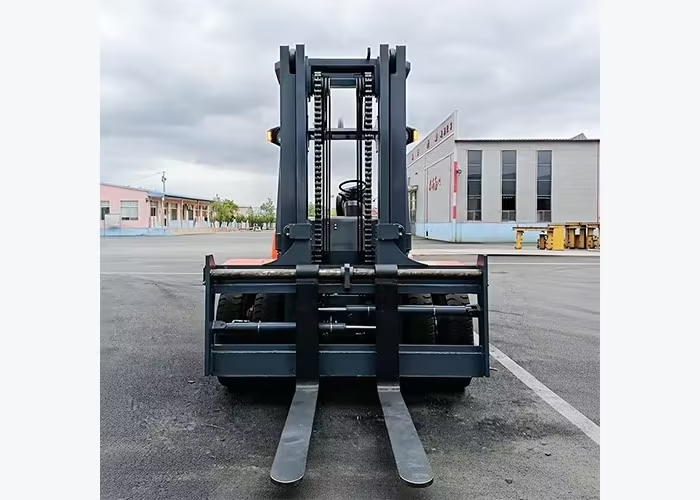
A diesel counterbalance forklift is selected successfully when the buyer studies where the load sits on the forks and how far that weight projects forward instead of trusting the headline tonnage in isolation. This is a practical operating issue, not merely a specification detail. The OSHA powered industrial truck guidance provides useful context for the control principles behind this decision. In a real warehouse or yard, the condition should be reviewed with the actual load, route, battery routine, or placement task in mind. The main risk is that buyers may approve a truck that looks correctly rated but feels strained once the load sits farther forward than expected. Supervisors and buyers should therefore connect the observation to the real job pattern before assuming a standard configuration will work.
A reliable next step is to record the heaviest repeatable pallet, fork length, load center, and any routine overhang before narrowing the truck class. Record what was observed instead of relying on memory, because clear operating details make supplier discussions and internal decisions much faster. The relevant diesel forklift category can help translate the requirement into a machine option that fits the route more cleanly. Avoid solving the issue with assumptions or informal workarounds that only look acceptable in a short demonstration. As a decision rule, treat load position and residual capacity as the first filter before comparing optional features. That keeps the buying decision tied to the daily task rather than to a generic machine label.
The rear counterweight gives a diesel counterbalance forklift its basic working character, yet the truck still depends on disciplined setup around mast, tire, fork, and route conditions. This is a practical operating issue, not merely a specification detail. The OSHA powered industrial truck standard provides useful context for the control principles behind this decision. In a real warehouse or yard, the condition should be reviewed with the actual load, route, battery routine, or placement task in mind. The main risk is that teams may overestimate stability simply because the truck belongs to a familiar counterbalance category. Supervisors and buyers should therefore connect the observation to the real job pattern before assuming a standard configuration will work.
A reliable next step is to review how the truck approaches ramps, pallet stacks, trailer edges, and uneven staging zones with the real load on board. Record what was observed instead of relying on memory, because clear operating details make supplier discussions and internal decisions much faster. The relevant VY-CPC40 diesel forklift can help translate the requirement into a machine option that fits the route more cleanly. Avoid solving the issue with assumptions or informal workarounds that only look acceptable in a short demonstration. As a decision rule, use the counterbalance layout as a design advantage, not as a reason to skip route-specific review. That keeps the buying decision tied to the daily task rather than to a generic machine label.
A diesel counterbalance forklift often serves both open-yard handling and occasional placement into racks, sheds, or covered loading points, which makes mast selection more important than buyers expect. This is a practical operating issue, not merely a specification detail. The OSHA forklift load-composition guidance provides useful context for the control principles behind this decision. In a real warehouse or yard, the condition should be reviewed with the actual load, route, battery routine, or placement task in mind. The main risk is that a taller mast can solve one storage problem while quietly reducing visibility or adding complexity elsewhere on the route. Supervisors and buyers should therefore connect the observation to the real job pattern before assuming a standard configuration will work.
A reliable next step is to check top placement height, collapsed height limits, and whether the operator needs better forward visibility in dense loading areas. Record what was observed instead of relying on memory, because clear operating details make supplier discussions and internal decisions much faster. The relevant VY-CPC60 diesel forklift can help translate the requirement into a machine option that fits the route more cleanly. Avoid solving the issue with assumptions or informal workarounds that only look acceptable in a short demonstration. As a decision rule, choose mast geometry around the actual placement task rather than around the largest catalog figure. That keeps the buying decision tied to the daily task rather than to a generic machine label.
Counterbalance forklifts are frequently chosen for outdoor work, but route quality still changes whether a diesel truck feels planted, efficient, and easy to control. This is a practical operating issue, not merely a specification detail. The OSHA mast and hydraulic lift overview provides useful context for the control principles behind this decision. In a real warehouse or yard, the condition should be reviewed with the actual load, route, battery routine, or placement task in mind. The main risk is that buyers often choose tires for the cleanest zone even though the truck’s daily difficulty comes from the roughest outdoor patch. Supervisors and buyers should therefore connect the observation to the real job pattern before assuming a standard configuration will work.
A reliable next step is to walk the full route and identify the roughest concrete, block paving, threshold, ramp, or wet section the truck crosses under load. Record what was observed instead of relying on memory, because clear operating details make supplier discussions and internal decisions much faster. The relevant VY-CPC80 diesel forklift can help translate the requirement into a machine option that fits the route more cleanly. Avoid solving the issue with assumptions or informal workarounds that only look acceptable in a short demonstration. As a decision rule, base the tire decision on the hardest repeatable surface instead of on the best-looking floor. That keeps the buying decision tied to the daily task rather than to a generic machine label.
A side shifter, fork positioner, clamp, or special fork package can make a diesel counterbalance forklift more useful, but each front-end change alters the real working setup. This is a practical operating issue, not merely a specification detail. The NIOSH forklift safety guidance provides useful context for the control principles behind this decision. In a real warehouse or yard, the condition should be reviewed with the actual load, route, battery routine, or placement task in mind. The main risk is that the quoted truck may be evaluated like a bare machine even though the site intends to run a heavier front-end package every day. Supervisors and buyers should therefore connect the observation to the real job pattern before assuming a standard configuration will work.
A reliable next step is to ask for rated capacity with the exact attachment installed and confirm whether extra hydraulic functions or hose protection are required. Record what was observed instead of relying on memory, because clear operating details make supplier discussions and internal decisions much faster. The relevant VY-CPC100 diesel forklift can help translate the requirement into a machine option that fits the route more cleanly. Avoid solving the issue with assumptions or informal workarounds that only look acceptable in a short demonstration. As a decision rule, treat the attachment-equipped truck as the real purchase unit rather than as a future add-on. That keeps the buying decision tied to the daily task rather than to a generic machine label.
A diesel counterbalance forklift that spends long periods outside does more than lift; it travels, reverses, queues, and re-approaches loads across the whole shift. This is a practical operating issue, not merely a specification detail. The CCOHS forklift safety guidance provides useful context for the control principles behind this decision. In a real warehouse or yard, the condition should be reviewed with the actual load, route, battery routine, or placement task in mind. The main risk is that buyers often focus on engine and tonnage while overlooking the operator environment that drives long-shift consistency. Supervisors and buyers should therefore connect the observation to the real job pattern before assuming a standard configuration will work.
A reliable next step is to note the average route length, reversing frequency, and how much of the shift is travel time versus placement time. Record what was observed instead of relying on memory, because clear operating details make supplier discussions and internal decisions much faster. The relevant products overview can help translate the requirement into a machine option that fits the route more cleanly. Avoid solving the issue with assumptions or informal workarounds that only look acceptable in a short demonstration. As a decision rule, compare the truck around route comfort and control, not only around static lifting ability. That keeps the buying decision tied to the daily task rather than to a generic machine label.
Once a diesel counterbalance forklift is assigned to heavy outdoor work, engine cooling and maintenance access become productivity issues rather than workshop details. This is a practical operating issue, not merely a specification detail. The HSE lift-truck training guidance provides useful context for the control principles behind this decision. In a real warehouse or yard, the condition should be reviewed with the actual load, route, battery routine, or placement task in mind. The main risk is that a truck may perform well in a short demo but become inconvenient when maintenance access is poor or heat load rises. Supervisors and buyers should therefore connect the observation to the real job pattern before assuming a standard configuration will work.
A reliable next step is to check radiator access, filter service points, hood opening, and the site’s likely dust and heat conditions before finalizing the model. Record what was observed instead of relying on memory, because clear operating details make supplier discussions and internal decisions much faster. The relevant factory material handling solutions can help translate the requirement into a machine option that fits the route more cleanly. Avoid solving the issue with assumptions or informal workarounds that only look acceptable in a short demonstration. As a decision rule, include service practicality in the buying review instead of leaving it for after commissioning. That keeps the buying decision tied to the daily task rather than to a generic machine label.
Larger diesel counterbalance forklifts can create delivery and receiving challenges that are easy to miss during quotation review. This is a practical operating issue, not merely a specification detail. The Wikipedia overview of forklift trucks provides useful context for the control principles behind this decision. In a real warehouse or yard, the condition should be reviewed with the actual load, route, battery routine, or placement task in mind. The main risk is that teams sometimes complete a machine selection and then discover that delivery assumptions were never tested against the site. Supervisors and buyers should therefore connect the observation to the real job pattern before assuming a standard configuration will work.
A reliable next step is to confirm transport method, unloading capacity, receiving space, and any site constraints around final handover. Record what was observed instead of relying on memory, because clear operating details make supplier discussions and internal decisions much faster. The relevant contact the VARYON team can help translate the requirement into a machine option that fits the route more cleanly. Avoid solving the issue with assumptions or informal workarounds that only look acceptable in a short demonstration. As a decision rule, treat shipping and receiving conditions as part of the equipment decision rather than as an admin task after approval. That keeps the buying decision tied to the daily task rather than to a generic machine label.
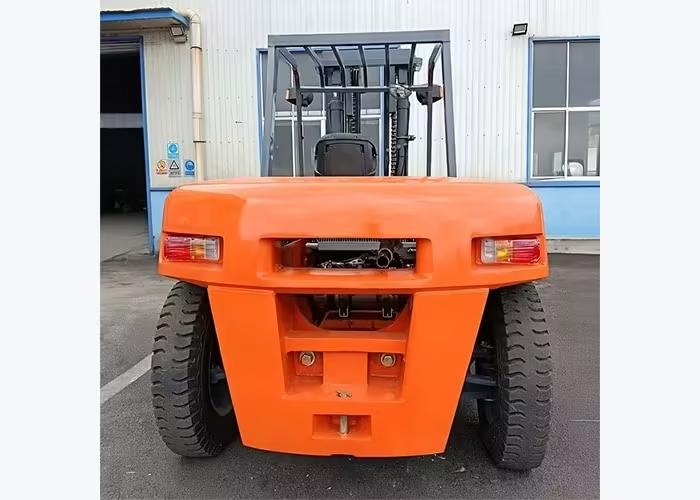
Moving into a broader diesel counterbalance forklift class is worthwhile when the route genuinely demands more stable outdoor handling, heavier loads, or wider work coverage. This is a practical operating issue, not merely a specification detail. The OSHA powered industrial truck guidance provides useful context for the control principles behind this decision. In a real warehouse or yard, the condition should be reviewed with the actual load, route, battery routine, or placement task in mind. The main risk is that an oversized truck can raise cost and reduce maneuvering efficiency without fixing the real handling bottleneck. Supervisors and buyers should therefore connect the observation to the real job pattern before assuming a standard configuration will work.
A reliable next step is to map where the current machine struggles and identify whether the root issue is capacity, surface, mast reach, attachment need, or route discipline. Record what was observed instead of relying on memory, because clear operating details make supplier discussions and internal decisions much faster. The relevant diesel forklift category can help translate the requirement into a machine option that fits the route more cleanly. Avoid solving the issue with assumptions or informal workarounds that only look acceptable in a short demonstration. As a decision rule, upgrade the truck class only when the route clearly benefits from the broader counterbalance package. That keeps the buying decision tied to the daily task rather than to a generic machine label.
Suppliers can recommend a diesel counterbalance forklift much more accurately when the request includes route, load, and placement details instead of only a price target. This is a practical operating issue, not merely a specification detail. The OSHA powered industrial truck standard provides useful context for the control principles behind this decision. In a real warehouse or yard, the condition should be reviewed with the actual load, route, battery routine, or placement task in mind. The main risk is that generic quote requests often produce recommendations that are hard to compare because each supplier fills missing assumptions differently. Supervisors and buyers should therefore connect the observation to the real job pattern before assuming a standard configuration will work.
A reliable next step is to send pallet dimensions, load center, travel surface notes, lift height, attachment needs, and yard photos with the inquiry. Record what was observed instead of relying on memory, because clear operating details make supplier discussions and internal decisions much faster. The relevant VY-CPC40 diesel forklift can help translate the requirement into a machine option that fits the route more cleanly. Avoid solving the issue with assumptions or informal workarounds that only look acceptable in a short demonstration. As a decision rule, build the inquiry around the route so the quoted truck fits the job instead of a guess. That keeps the buying decision tied to the daily task rather than to a generic machine label.
What does counterbalance mean on a diesel forklift? It means the truck uses rear counterweight to balance the load on the forks, allowing it to lift without front support legs, but the final stability still depends on load center, mast, tires, and route conditions.
Why is mast choice so important on a diesel counterbalance forklift? Because mast height and collapsed height affect both placement capability and daily visibility, especially when the truck moves between yard work and covered loading points.
Does a counterbalance layout remove the need to review outdoor surfaces carefully? No. Mixed surfaces, thresholds, and damp yard sections still decide how confidently the truck travels and handles load under real conditions.
Watch a related diesel forklift video here: https://www.youtube.com/watch?v=jxSRUlbpBa8.

A diesel counterbalance forklift delivers the best value when buyers connect stability, mast choice, tire setup, attachments, and route condition as one working package instead of as separate options.
The strongest decision usually comes from understanding the repeatable load, the roughest surface, and the exact placement requirement before finalizing the truck class. When those details are clear, a diesel counterbalance forklift can provide stable outdoor handling without drifting into overspecification or hidden configuration risk.
For a more accurate recommendation, send VARYON your load dimensions, route photos, lift height, tire preference, and attachment list before requesting the final diesel counterbalance forklift quotation.