Get in touch
* Your personal information is securely protected and will only be used for business communication purposes.

Diesel Forklift Fuel Consumption Guide for Outdoor Fleets and Mixed Loads is for operations teams that need to estimate what a diesel forklift really costs once the truck leaves the quotation sheet and starts working outdoors. Buyers usually ask for engine power, rated capacity, and mast options first, but fuel use becomes the quiet line item that keeps showing up in every shift report. If the route includes rough yard pavement, loading ramps, repeated travel between buildings, and mixed pallet weights, real fuel consumption can move far away from the assumption made during procurement.
A practical fuel plan starts with duty cycle rather than brochure language. A truck that looks efficient on a short demonstration route may burn noticeably more fuel when it idles during truck loading, climbs gradients, runs attachments, or travels long outdoor loops. That is why selection should connect the route, the pallet, the shift structure, and the service habit. Buyers comparing the VY-CPC25 diesel forklift, the heavier VY-CPC40 diesel forklift, or a larger yard option such as VY-CPC60 diesel forklift should evaluate the cost of work completed, not only liters consumed per hour in isolation.
Most fuel questions are framed too narrowly. Teams often ask, ‘How much fuel does a diesel forklift use per hour?’ The better question is, ‘How much fuel does this forklift use while completing our actual route and load pattern?’ Hourly burn is affected by operator waiting time, travel distance, surface resistance, turning frequency, lift height, cold starts, and whether the load center stretches the truck near the top of its comfortable working range. Outdoor forklift duty is rarely smooth enough for a single static number to stay useful for long.
Safety and route discipline also influence the answer. Guidance from OSHA powered industrial trucks guidance, OSHA 1910.178 standard, and NIOSH forklift safety guidance consistently points back to route planning, operator behavior, and equipment condition because those factors shape both safety and machine efficiency. A truck that stops and restarts unnecessarily, carries unstable loads, or waits too long at staging points will often burn extra fuel for reasons that never appear in the original machine specification.
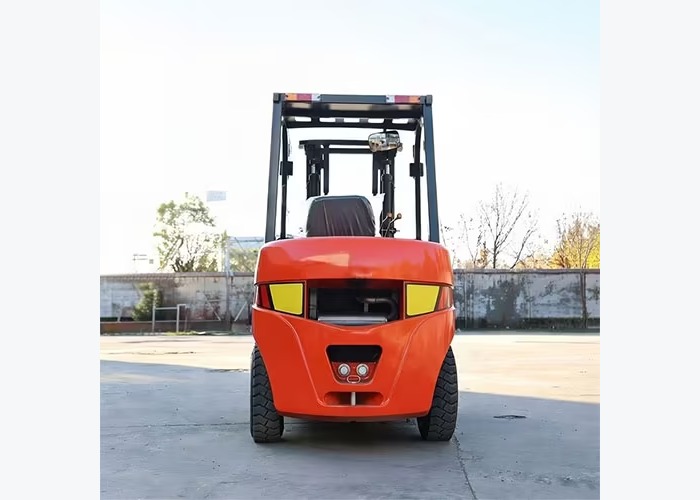
Load weight is the most obvious driver, but it is not the only one. A consistent pallet that stays well inside the truck’s working comfort zone is easier on fuel than a mixed stream of awkward loads that force slower handling, extra mast correction, and repeated braking. Surface condition matters almost as much. Gravel, broken concrete, ramp transitions, wet yards, and potholes increase rolling resistance and make the operator work the machine harder to keep travel predictable.
Travel pattern is another major variable. Short shuttle work with frequent stops can be less efficient than a longer route with smoother movement because acceleration, braking, and idling each consume time and fuel differently. A site that uses one truck for dock work, outdoor storage transfer, and truck loading in the same shift creates a mixed-duty profile. That profile should be treated as a separate planning case rather than averaged into a vague monthly estimate.
Many outdoor fleets underestimate how much fuel disappears while the truck is not productively moving freight. Engines stay running during paperwork delays, trailer positioning, load checks, conversations, and staging waits. On busy sites, those short pauses add up quickly. A forklift that appears to work hard all day may actually spend a meaningful share of the shift idling. That does not only increase fuel cost. It also increases engine hours, which shortens service intervals and raises wear exposure.
When supervisors want tighter cost control, the first question should be how long the truck spends waiting with the engine on. Field observation often shows that route congestion, trailer readiness, or poor staging causes more waste than the choice between two neighboring truck sizes. If the site improves queue discipline and staging visibility, fuel cost can fall without changing the machine itself. That is one reason a route review should happen before a fleet blames the engine alone.
Using too little truck for the task raises fuel use because the operator has to work closer to the equipment’s limit, travel more cautiously, and often make more trips. Using too much truck can also be inefficient because the machine carries its own extra mass and may be less agile in confined loading zones. The practical goal is to choose a truck that handles the real pallet comfortably, not one that only clears the capacity requirement on paper.
This is where internal planning pages such as the diesel forklift category and the 3.0T diesel forklift range range overview become useful. They help the buyer map load classes and outdoor use cases before narrowing to a model. The right forklift is not the biggest truck the budget can support. It is the truck that completes the route with stable handling, acceptable travel speed, and enough reserve capacity to avoid constant strain.
Outdoor applications create a rougher energy picture than indoor warehouse work because the route itself becomes part of the machine load. Dust, mud, moisture, slope transitions, and uneven tire contact all affect how smoothly the truck can travel. A yard with regular cross-traffic and multiple loading faces will also create more interruptions than a simple point-to-point route. If procurement estimates are built on ideal movement assumptions, actual fuel cost usually arrives higher than planned.
That is why buyers should document the ugliest stretch of the route, not just the average one. If one section forces lower speed, more throttle, or repeated corrections, it may set the true cost baseline for the whole shift. Practical site planning also means checking whether forklifts are traveling farther than necessary because inventory layout or trailer sequencing has drifted away from the original design.
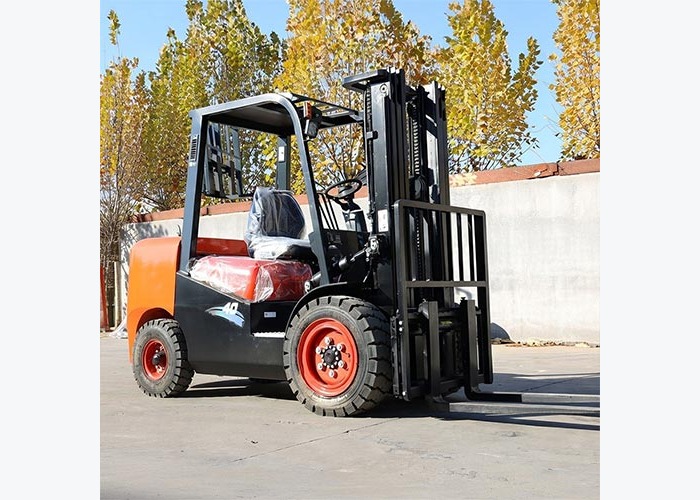
Fuel consumption is not just a driving issue. Engine condition, air filtration, cooling performance, tire condition, brake drag, mast lubrication, and hydraulic health all affect how efficiently the truck converts fuel into useful work. Outdoor fleets in dusty yards or agricultural settings are especially exposed because contamination and vibration increase the speed at which performance slips. A truck that feels merely ‘a little rougher’ can end up costing noticeably more to run over a quarter.
Maintenance guidance from CCOHS forklift truck safety and HSE lift-truck training guidance is helpful here because it reinforces that daily checks are not only about safety compliance. They also protect predictable operating cost. Tire pressure or tire condition, chain drag, dirty filters, and neglected leaks all create small inefficiencies that compound across a fleet. When teams say one truck ‘uses more fuel than the others,’ the answer is often found in inspection discipline before it is found in engine replacement.
A useful pre-purchase estimate starts with the planned pallet weight, average lift height, travel distance per cycle, and the number of cycles in the busiest hour. Then add the route surface, seasonal weather, expected idle time, and any attachment loads. That gives a far better estimate than asking for a universal burn number. If the site can segment work into receiving, yard transfer, line feeding, and trailer loading, it can also separate high-efficiency periods from waste-heavy ones.
For multi-shift sites, fuel planning should be done at the route level and then rolled into the weekly budget. This makes it easier to see whether the cost problem is a machine issue or a scheduling issue. If one shift burns significantly more fuel with the same truck, the operation should compare idle time, route congestion, and operator rhythm before deciding that the equipment itself is wrong.
Some buyers try to reduce fuel cost by moving down in size. That only works when the smaller truck still handles the route and pallet without losing productivity. In some yards, a more capable machine saves money because it reduces double handling, avoids overloaded travel, and keeps cycles cleaner. If the truck is always close to its working limit, the site pays for that decision through slower travel, more strain, and more frequent interruptions.
A heavier truck should not be chosen casually, but neither should it be dismissed because of theoretical fuel burn alone. When the route includes outdoor storage blocks, longer travel, and heavy pallets, the cost of under-specifying capacity can exceed the cost of a somewhat larger engine. The answer depends on the work completed per shift, not just the fuel receipt.
Fast improvements usually come from better staging, less idling, and route cleanup rather than dramatic hardware changes. Clear trailer sequencing, defined waiting zones, better pallet grouping, and fewer empty returns all reduce waste. Teams should also review whether the truck is frequently traveling without a productive load because storage logic and dispatch communication are not aligned. Those changes are operational, but they can produce measurable savings without pausing the fleet.
Internal resources such as factory material handling solutions and products overview can help frame those adjustments against the broader site workflow. If the operation still cannot predict cost after cleaning up the route, it may be time to review whether a different capacity, tire setup, or model class would fit better. The right equipment decision becomes much easier once avoidable waste is removed from the process.
Outdoor fleets should also treat seasonality as a cost variable. A route that feels efficient in dry weather may slow down sharply during rain, winter moisture, or dusty harvest periods because traction and visibility change. Operators may spend more time correcting travel, warming the machine, or waiting for safer loading conditions. That does not mean the forklift is underperforming. It means the site should budget for the environment the truck actually works in, not the easiest week of the year.
Seasonal review is especially important for businesses that combine yard work, agricultural handling, and factory support. If one part of the year brings longer travel or rougher surface conditions, planners should separate that demand when they estimate monthly operating cost. A diesel forklift that looks inexpensive during a light season can create budget pressure during the busiest one if the route assumptions were too optimistic.
Does fuel consumption always rise sharply with heavier loads? It rises, but not always in a simple straight line. Surface condition, waiting time, and route interruptions can change the result as much as pallet weight in real operations.
Can two similar diesel forklifts burn different amounts of fuel on the same site? Yes. Tire condition, maintenance quality, operator habits, and assignment differences can create a noticeable spread even among similar trucks.
Should I compare diesel fuel cost only by liters per hour? No. Compare cost per completed route or per productive shift window, because pure hourly numbers ignore idling and throughput.
Watch a related diesel forklift video here: https://www.youtube.com/watch?v=zOuX33gc2do.

Treat diesel forklift fuel consumption as a route-and-workflow problem first, then a machine problem second. Estimate the truck against the real pallet, the roughest route section, the expected idle time, and the service discipline available on site. When buyers document those factors clearly and then match them to the correct VARYON model, they usually get a more accurate budget and a more reliable outdoor fleet.
If you want a more precise recommendation, send pallet weight, route surface notes, slope points, shift length, and daily trip count to contact the VARYON team. A machine recommendation built around those details will be far more useful than a generic hourly fuel claim.