Get in touch
* Your personal information is securely protected and will only be used for business communication purposes.

Diesel Forklift Price Guide for Capacity, Mast, and Attachment Planning is written for buyers who need a practical way to compare one diesel forklift quotation against another without falling into the trap of looking only at the headline number. The real question is never simply what a truck costs on paper. The real question is what configuration is required for the route, the load, the mast height, the tire type, and the attachment mix that the site will actually use every day.
That is why a useful quote review connects the category option, such as the diesel forklift category, to the exact working case. A compact truck like the VY-CPC25 diesel forklift may be right for moderate pallet weights and straightforward yard travel. A larger option such as the VY-CPC50 diesel forklift or VY-CPC80 diesel forklift may be more appropriate once the route includes heavier goods, bigger attachments, or longer outdoor shifts. Price only becomes meaningful when it is tied to the real work.
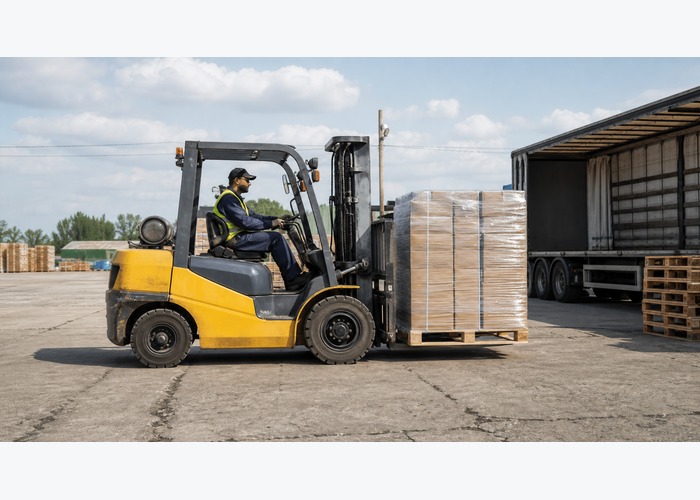
Many buyers expect a forklift price to behave like a catalog price for a simple commodity. In practice, the quotation is a bundle of choices that includes capacity, mast structure, engine package, tire specification, lift height, carriage options, attachment interfaces, seat and lighting choices, and freight assumptions. A lower starting figure may only reflect a lighter configuration or a shorter list of included items rather than a truly lower total purchase cost.
A structured review should therefore separate base truck cost from configuration cost. Guidance from OSHA powered industrial trucks guidance and OSHA 1910.178 standard is useful here because it reminds buyers that the truck has to match the application safely before it can be considered economical. If the machine later needs a different mast, different tire setup, or extra hydraulic function, the apparently cheaper quote may become the more expensive path.
Capacity changes price because it changes the scale of the machine itself. A buyer comparing a lighter truck such as the VY-CPC25 diesel forklift with a mid-range option like the VY-CPC35 diesel forklift is not just paying for an extra number on a specification sheet. The larger truck typically carries a heavier chassis, stronger mast, different counterweight balance, and a broader operating envelope that supports harder outdoor work.
The key mistake is ordering more truck than the route requires simply to feel safe, or ordering less truck than the route demands in order to cut the initial price. Either mismatch becomes expensive. An oversized machine may be harder to maneuver and cost more to ship and maintain. An undersized one may create slower cycles, attachment limits, and avoidable strain whenever the workload reaches the busiest shift window.
Mast specification is one of the fastest ways for the quote to move. Higher lift requirements, lower collapsed heights, special free-lift needs, and tighter overhead clearances all add complexity. The mast is not a decorative option. It determines whether the truck can reach the storage point while still clearing container doors, factory entrances, or rack-beam limits.
That matters because buyers often discover mast constraints late in the process. A route that includes trailer unloading, yard transfer, and occasional indoor stacking can push the truck in two directions at once. The site wants enough lift height for storage but also a collapsed mast that still behaves well around doors and covered loading areas. Once those needs are clear, the price difference between mast options makes much more sense.
Attachments are often discussed as accessories, but in many operations they are part of the core purchase decision. Side shifters, fork positioners, special fork lengths, paper roll handling, bale handling, and extra hydraulic functions all influence purchase cost because they change both the equipment package and the way the operator uses the truck on the job.
A buyer should not reject an attachment simply because it raises the quote. The real test is whether it removes wasted motion, reduces product damage, or supports a load type that the standard carriage would handle poorly. If the site routinely loses time aligning loads or reworking awkward pallets, an attachment may be cheaper than repeated inefficiency. What matters is cost against completed work, not cost in isolation.
Outdoor routes make tire choice part of the price conversation. A smooth indoor assumption does not apply when the truck will spend time on mixed concrete, yard blocks, threshold plates, and loading areas that stay damp or dusty. Advice from NIOSH forklift safety guidance, CCOHS forklift truck safety, and HSE lift-truck training guidance consistently points back to route condition because tire suitability influences stability, operator confidence, and daily wear.
This means buyers should describe the worst surface on the route, not only the cleanest one. If the truck must leave the ideal floor and work in a rougher yard, the right tire package may increase the quotation but protect both uptime and handling quality. A cheaper configuration that struggles on the actual surface can cost more later through tire wear, slower movement, and avoidable maintenance.
A diesel forklift quote also reflects the engine and the supporting systems around it. Cooling capacity, filtration, fuel system quality, and service access influence how the truck behaves in dust, heat, and long outdoor operating cycles. Buyers sometimes treat those details as secondary because they do not immediately change the look of the machine, but they can strongly affect long-term reliability.
That is why a quote comparison should include the environment the truck will face. A yard with dust, stop-start work, and repeated high-load lifting is more demanding than a light receiving bay. If one configuration is clearly built for that harder duty, the higher purchase number may be rational. The question is not which quote is lower today. It is which truck stays productive with less unplanned cost over the next several seasons.
International buyers often compare supplier quotations that are not actually built on the same delivery basis. One price may include stronger export packing, documentation, or clearer shipping assumptions, while another may leave those items less defined. If that difference is not surfaced early, the comparison becomes misleading and the purchase team believes it is choosing between equivalent offers when it is not.
Internal planning pages such as products overview and factory material handling solutions help frame that broader workflow because the truck is only one part of the procurement decision. The buyer should ask what is included in the shipment package, what commissioning or setup is expected on arrival, and which optional items would still be added later. Clean scope control is one of the easiest ways to prevent a low-looking quote from expanding unexpectedly.
Price matters, but support quality decides whether the purchase stays economical after delivery. A forklift that is hard to service, slow to source parts for, or poorly documented can create long interruptions that erase the benefit of a lower initial number. Buyers should therefore ask how wear parts, service documents, and troubleshooting support are handled before final approval.
This does not mean paying any premium automatically makes sense. It means support should be part of the comparison grid. If one quote includes clearer parts logic, easier service access, or better technical response, that may protect uptime in ways the invoice alone cannot show. Budget discipline is strongest when procurement treats support as a cost-control tool rather than a vague post-sale promise.
The more clearly a buyer explains the application, the easier it is to get a quote that is both accurate and defensible. Suppliers respond better when the request includes pallet weight, load center, route surface, lift height, attachment needs, shift duration, and the toughest part of the daily cycle. That operating picture allows the quote to be built around actual duty rather than generic category assumptions.
It also improves negotiation because the discussion shifts from guesswork to fit. Instead of arguing abstractly about price, the buyer can ask whether a lighter mast, different attachment, or alternative tire package would still satisfy the route. That kind of negotiation is more productive than simply demanding a lower number without changing the underlying scope.
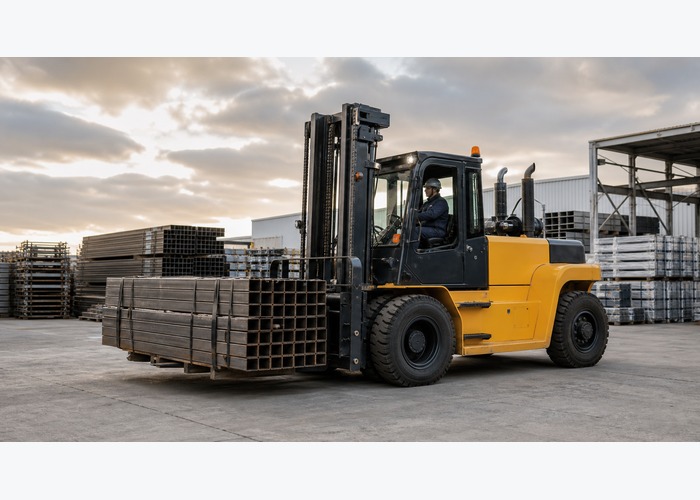
A higher quote can be the right choice when it removes an obvious mismatch between the truck and the job. If the site needs more lift reserve, better outdoor suitability, cleaner attachment support, or stronger long-shift durability, then the higher number may reflect an honest configuration instead of padding. Procurement should be cautious about rejecting the higher quote before checking what problem it is solving.
At the same time, the buyer should not accept every upgrade on faith. The correct approach is to tie each cost increase to a working reason. If the supplier cannot explain why the change helps the route, the option may be unnecessary. But if the explanation connects directly to load handling, yard stability, or service life, the higher number may be the cheaper decision across the full ownership period.
A fair comparison starts by standardizing the specification sheet line by line. Review capacity, mast, tire type, attachment package, hydraulic functions, lights, seat, safety options, shipping scope, and support terms. Then compare what remains different. That process sounds basic, but it prevents teams from spending days debating prices that were never based on the same truck in the first place.
A disciplined comparison also makes the final supplier conversation easier. Once the site knows whether it needs a truck closer to the VY-CPC35 diesel forklift, VY-CPC50 diesel forklift, or VY-CPC80 diesel forklift working range, the quote can be discussed as a fit problem instead of a guess. That is usually how the strongest forklift purchases are made: narrow the real need first, then optimize the configuration inside that boundary.
Why do two diesel forklift quotes differ so much? They often reflect different capacity, mast, tire, attachment, freight, or support assumptions rather than pure margin differences.
Should I always choose the cheapest capacity that meets the nominal load? No. If the route, load center, or attachment pushes the truck near its limit, a slightly larger machine can be the safer and more economical choice.
Can attachments justify a higher forklift price? Yes. If they reduce load damage, alignment time, or awkward handling, they may cut operating waste more than they add purchase cost.
Watch a related diesel forklift video here: https://www.youtube.com/watch?v=PQR5_ba6pAI.
Use a diesel forklift price guide as a way to control specification accuracy, not just as a way to chase the lowest headline number. Capacity, mast, attachment, tire, and freight choices all shape the final cost, and each one should be tied back to the route the truck must actually handle.
If you want a more precise quotation review, send pallet weight, lift height, surface notes, attachment needs, and shift pattern to contact the VARYON team. That gives the VARYON team enough detail to recommend the configuration that fits the job before the quote is finalized.