Get in touch
* Your personal information is securely protected and will only be used for business communication purposes.

Can Electric Forklift Be Used Outdoors? Surface, Weather, and Tire Guide is for operations teams that want the lower-noise, lower-fume benefits of electric forklifts but still need to move pallets across loading aprons, outdoor transfer lanes, and short yard sections. The short answer is yes, electric forklifts can work outdoors. The better answer is that they work well outdoors only when the surface, weather exposure, tires, battery routine, and travel pattern are matched to the machine rather than assumed.
That distinction matters because outdoor use means very different things from site to site. One warehouse only needs a brief paved crossing between dock doors. Another expects an electric truck to spend long periods on open ground, in mixed weather, and on less forgiving surfaces. Buyers looking at the VY-CPD15 electric forklift, VY-CPD25 electric forklift, VY-CPD30 electric forklift, or VY-CPD35 electric forklift should therefore define the actual outdoor duty before deciding whether an electric forklift is the right fit.
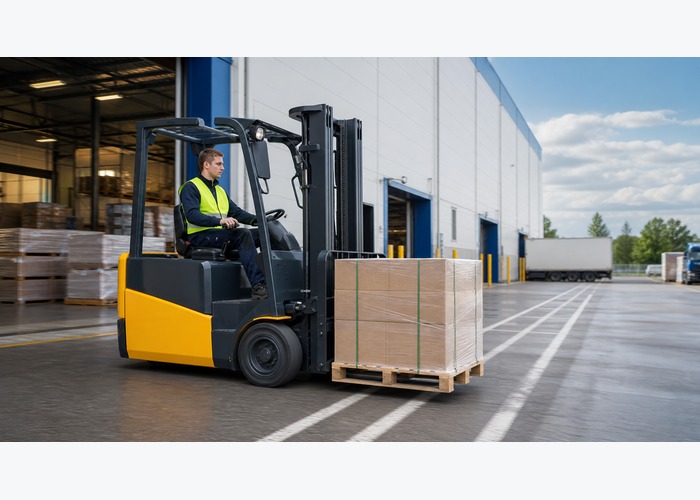
Many teams say they need outdoor use when what they really need is controlled transfer across a paved and managed loading area. That is very different from expecting the truck to run like a diesel machine through long open-yard duty. Electric forklifts are often excellent at short transfer work if the route is stable, level, and predictable. Problems start when the site treats a limited outdoor case as though it were a rugged all-conditions assignment.
A practical review therefore begins with time and distance. Count how often the truck leaves the building, how far it travels outside, how smooth the surface is, and how much of the shift is spent exposed to weather. Once that is visible, the buyer can decide whether the job is truly an outdoor application or mostly an indoor workflow with an outdoor segment attached to it.
Surface condition is often the real dividing line between good and bad outdoor electric forklift performance. Clean, level pavement is a very different environment from broken concrete, pooled water, loose debris, or rough yard stone. Guidance from OSHA powered industrial trucks guidance, OSHA 1910.178 standard, and NIOSH forklift safety guidance keeps pointing back to route discipline because the truck can only handle safely what the surface allows.
If the route is smooth and the load stays stable, an electric forklift can move comfortably between indoor and outdoor zones. If the truck has to absorb constant vibration, potholes, or abrupt transitions, then tire wear, operator comfort, and load control all suffer. In that case the site is not really testing battery technology. It is testing whether the route itself is suitable for the truck class being considered.
Tires are one of the simplest but most important reasons two electric forklifts behave differently outside. Cushion-style assumptions that work well on finished warehouse floors do not automatically translate to exposed aprons or rougher transfer lanes. The buyer should ask what tire package the truck will actually use and whether that package matches the route texture, turning pattern, and weather exposure.
That is why buyers often compare indoor-focused trucks with more application-flexible options before they decide. Resources like the electric forklift category and the broader warehousing and logistics solutions planning page are useful because they encourage the discussion to move beyond battery chemistry and toward real route behavior. A good outdoor electric setup begins with contact patch and traction, not just with the power source.
Weather changes the answer quickly. Dry transfers under a covered apron are relatively easy to manage. Frequent rain exposure, standing water, windblown debris, and temperature swings require more caution. The right question is not whether an electric forklift can ever go outside. The right question is what outdoor conditions the site expects it to handle repeatedly without creating unnecessary risk or downtime.
Advice from CCOHS forklift truck safety, HSE lift-truck training guidance, and HSE workplace transport guidance is helpful because it frames the issue around visibility, route control, and operating discipline. Weather affects braking feel, traction, and the operator’s ability to judge the surface. Once exposure increases, the site needs clearer limits on where the truck can go, when it should slow down, and whether the outdoor task should be shortened or reassigned in poor conditions.
Outdoor use does not erase the normal battery planning discipline that electric equipment requires. In fact, transfer work can make charging habits more important because the truck may spend more time on travel and less time staged near the charger. If the site expects the forklift to cover both indoor handling and outdoor movement, the charging schedule has to support that blended duty without creating mid-shift bottlenecks.
That is why battery guidance from OSHA battery charging and changing and CCOHS battery charging safety belongs in the planning conversation. A truck can be perfectly suitable for outdoor transfer and still become inconvenient if the energy routine is poorly structured. The answer is not always a different truck. Sometimes it is a cleaner charging window, a shorter transfer loop, or a better handoff between departments sharing the same equipment.
The most difficult part of outdoor use is often not the open yard. It is the threshold where the truck crosses from one surface to another. Dock plates, drainage grooves, door lips, expansion joints, and apron slope changes can unsettle the truck more than a simple straight run across pavement. If the truck can move through those transitions smoothly with load, the outdoor application is usually well defined.
That is why buyers should observe the exact path at the door, not just the outdoor area beyond it. A route may look simple from a distance and still create repeated jolts or steering corrections at the transition point. Those details affect load security, operator confidence, and the amount of speed reduction needed on every cycle. In many sites, fixing the threshold condition improves outdoor electric performance more than changing the truck does.
Short transfer loops with stable pallet loads are usually the most natural outdoor use case for electric forklifts. Longer distances, awkward loads, and repeated exposure to uncontrolled surfaces make the decision harder. An electric truck may still work, but the site should be honest about whether the application is drifting toward something that would be better handled by a different configuration or a different equipment class.
The reason is simple: every application has a natural comfort zone. If the truck is constantly being asked to travel farther, carry more unstable goods, or operate on conditions it was not selected for, the operation pays through slower cycles and more cautious driving. That is not a failure of electric technology. It is a warning that the truck and the route are no longer well matched.
Outdoor work magnifies the impact of operator judgment. Speed choice, turning discipline, fork height, and route awareness matter more once the truck leaves the smoother and more predictable warehouse floor. That is why the site should not treat a brief outdoor segment as trivial. It still deserves a clear operating routine, especially when the surface can change with weather or vehicle traffic.
Good outdoor electric performance often comes from modest behavioral discipline: slower threshold entry, lower travel height, cleaner staging, and better lane separation. Those habits protect both the truck and the product. When teams say an electric forklift feels inconsistent outdoors, the cause is often a combination of surface variance and operator rhythm rather than a simple machine limitation.
Electric forklifts are typically a good fit when the outdoor segment is paved, controlled, and connected directly to an indoor handling workflow. Warehouse-to-truck transfer, dock-to-staging movement, short apron travel, and protected loading zones often work well when the route is planned properly. In those cases the operation benefits from low indoor emissions while still covering the necessary outdoor motion.
Sites that use the VY-CPD25 electric forklift or VY-CPD30 electric forklift class of truck for balanced indoor handling often find that a well-managed apron route is not a problem at all. The key is that the application remains defined. Once the operation knows the truck is moving across a controlled surface for a known purpose, equipment choice and operator rules become much easier to set.
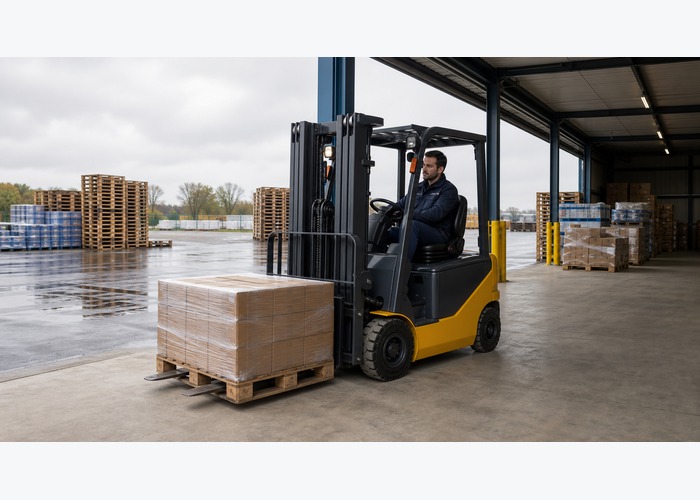
Outdoor use becomes questionable when the truck is expected to spend long periods in open weather, cross poor surfaces repeatedly, or behave like a rugged yard machine. If the route includes broken ground, frequent puddling, longer unprotected travel, or heavy exposure to debris, the site should pause before assuming an electric forklift is still the most sensible answer for that segment of work.
That does not automatically mean moving away from electric equipment altogether. It may mean separating tasks more clearly, keeping the electric truck on the controlled route, or assigning the roughest outdoor movement elsewhere. The important step is to recognize when the application has changed instead of trying to force one truck to cover every surface equally well.
The best pre-purchase test is operationally simple. Walk the path with the supervisor, identify the outdoor distance, inspect the thresholds, note the worst surface section, and define the wet-weather rule. Then run a loaded trial that includes the actual transfer motion rather than a showroom-style demonstration. A short realistic test usually answers more than a long theoretical discussion.
If the trial works well, the buyer can move forward with more confidence. If it exposes route problems, that is still useful because the site learns whether it should change the surface, adjust the traffic pattern, or refine the equipment specification. Either way, the decision becomes clearer. For a route-specific recommendation, the VARYON team can review those details through contact VARYON for application advice before the order is locked.
Can an electric forklift work on outdoor pavement? Yes. Controlled paved transfer routes are often a strong fit if the surface, tires, and weather limits are clearly defined.
Is rain the only outdoor risk? No. Thresholds, broken concrete, debris, standing water, and longer travel distance can affect performance just as much.
Should outdoor use automatically push me to diesel? Not always. If the route is short, paved, and predictable, an electric forklift may still be the better operating choice.
Watch a related electric forklift video here: https://www.youtube.com/watch?v=ItM625higQI.

Electric forklifts can absolutely be used outdoors when the outdoor segment is defined properly. Surface quality, tire choice, transition points, weather exposure, and charging rhythm all decide whether the truck stays efficient and safe on that route.
If you want a more precise recommendation, send your outdoor distance, surface photos, threshold notes, pallet weight, and shift pattern to contact VARYON for application advice. That makes it much easier to judge whether the electric forklift should stay on the transfer route, be reconfigured, or be paired with a different handling plan.