Get in touch
* Your personal information is securely protected and will only be used for business communication purposes.

Lead Acid vs Lithium Battery Guide for Electric Forklift Fleets is for warehouse managers, procurement teams, and fleet owners comparing energy choices for real electric forklift work. The lead acid versus lithium decision is not a trend question. It is a workflow question. The right battery type depends on shift design, charger access, maintenance discipline, ventilation, spare-equipment strategy, and how much downtime the operation can tolerate without quietly damaging throughput.
Buyers often start with sticker price, but energy systems should be compared on usable runtime, charging windows, labor input, maintenance exposure, battery-room requirements, and how the truck fits the busiest week of the year. A compact fleet running VY-CPD15 electric forklift in one shift may justify a different battery plan than a mixed fleet using VY-CPD25 electric forklift and VY-CPD40 electric forklift across long operating hours. The correct answer is tied to the site, not to marketing language.
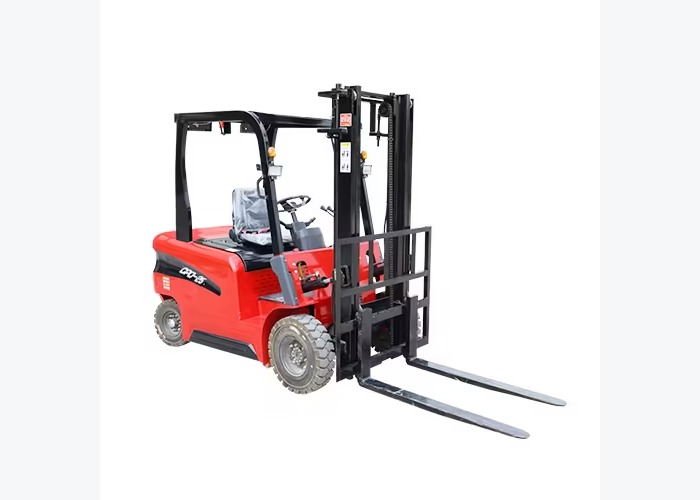
Lead acid batteries have been used in industrial fleets for decades because the operating model is well understood. They work, but they depend on disciplined charging routines, watering where applicable, cooling periods, and enough spare capacity in the fleet to cover downtime. Lithium systems change that workflow. They usually reduce maintenance, shorten charging windows, and support opportunity charging more effectively, but they also change acquisition cost, charger planning, and management expectations.
The best comparison is not abstract chemistry. It is what happens during a real week when trucks are needed for receiving, staging, replenishment, and outbound loading. If the site depends on continuous readiness with limited spare trucks, lithium often earns attention because it reduces handling steps and can simplify uptime planning. If the site has stable single-shift use and an established charging discipline, lead acid may remain commercially reasonable.
The most useful question is how hard the electric forklifts actually work. A single-shift operation with long overnight charging windows can tolerate a very different battery routine than a two-shift or mixed-shift warehouse that needs equipment available throughout the day. When teams jump straight to battery price, they miss the bigger cost drivers: changeover labor, idle time, spare battery inventory, charger queue delays, and service interruptions.
Document operating hours by truck, busiest charging window, longest uninterrupted work block, and whether the site can pause a truck without creating congestion. If you are planning around VY-CPD20 electric forklift or VY-CPD35 electric forklift, measure not just the truck count but the number of hours when all trucks must be simultaneously available. That is where total cost of ownership becomes more useful than simple acquisition cost.
Battery choice affects layout. Lead acid fleets often need a more structured charging and battery-care routine, and larger operations may also need battery-changing procedures or spare units to preserve uptime. Lithium fleets usually reduce those handling steps, but they still require charger location planning, power availability, cable management, and operator discipline around short charging windows. Guidance from OSHA battery charging and changing is helpful because charging safety is part of the equipment plan, not a separate afterthought.
If chargers are badly placed, the theoretical benefits of either system disappear into travel time and congestion. This is why a warehouse comparing energy strategies should map traffic, lunch windows, shift overlap, and the safest place for charging activity. A charger that blocks one aisle or consumes the wrong break period can quietly erase the benefit promised by the battery brochure.
Lead acid batteries demand consistent care. Even when a site has strong routines, that care still consumes time and management attention. Lithium systems typically reduce watering and routine battery maintenance, which is one reason procurement teams discuss them as a lower-touch option. That does not mean lithium is maintenance free. It means the maintenance burden shifts toward charger health, operating discipline, and a cleaner electrical support plan.
For operations struggling to sustain preventive routines, labor simplicity matters. If supervisors already spend too much time policing charging behavior, lead acid may create hidden cost through the way it consumes attention. If the team is disciplined, well staffed, and has stable overnight charging, lead acid can remain a practical choice. Battery fit is not only technical. It is operational and cultural.
Opportunity charging is often the turning point in the comparison. Lithium usually supports short top-up windows more comfortably, which can help mixed-shift sites stay productive without as many spare assets. That matters when receiving peaks and outbound peaks overlap. A truck that can recover useful runtime during breaks gives planners more flexibility than a truck that needs a long uninterrupted charging cycle.
However, operations should test whether those breaks really exist. A warehouse may talk about charging during lunch, yet the lunch period may also be when replenishment, dock resets, or trailer staging are most active. The battery plan must survive the actual workflow. Internal resources like warehouse logistics solutions and products overview become relevant here because energy planning only works when it supports the broader warehouse layout and material flow.
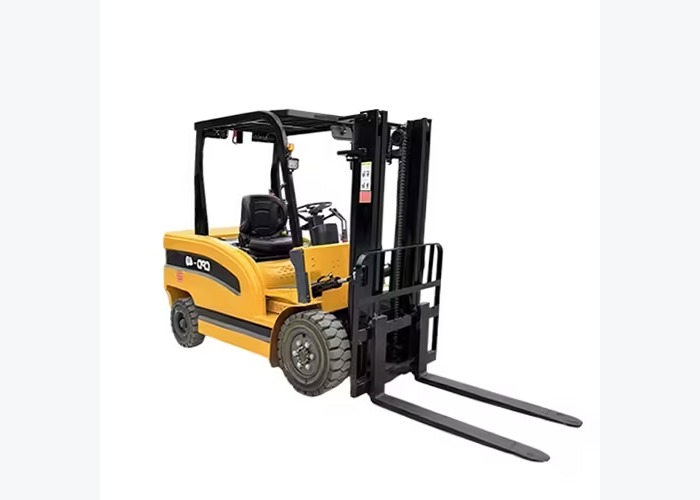
Electric forklift fleets feel cleaner than internal combustion fleets, but they still need disciplined safety habits. Charging areas need clear traffic rules, cable management, equipment inspection, and supervisor ownership. Reference material from OSHA powered industrial trucks, OSHA 1910.178 standard, and HSE electric lift trucks guidance is useful because it reinforces that powered industrial truck safety includes battery handling behavior, not just driving behavior.
Supervisors should ask whether operators know where to park, when to plug in, how to spot damaged connectors, and what to report when charging performance changes. Small charging problems become big uptime problems when nobody owns them. A fleet decision is only successful when the operating routine is clear enough that different shifts behave the same way.
Once these questions are answered, the lead acid versus lithium discussion becomes much clearer. Buyers can then compare offers for VY-CPD15 electric forklift, VY-CPD25 electric forklift, and VY-CPD40 electric forklift on the basis of operating fit rather than on a generic assumption that one chemistry is always superior.
A serious battery comparison should include acquisition cost, charger cost, battery room or charging-zone requirements, maintenance labor, spare-equipment needs, lost operating time, and supervision effort. Too many comparisons stop at truck price and then claim to be financial decisions. If the operation needs one extra truck or one extra battery just to maintain availability, that cost belongs in the energy model.
Procurement teams should build the comparison around a one-year and three-year operating view. The one-year view shows immediate budget pressure. The three-year view shows whether downtime, battery handling labor, or maintenance routines are quietly driving the real cost of ownership. When both views are visible, the battery choice stops being emotional and becomes a planning exercise.
Battery strategy is not just a finance topic. It changes supervisor behavior. A lead acid fleet usually requires stricter daily discipline around charging sequence, battery condition, and whether trucks are returned to the correct place at the right time. Lithium often reduces those handling steps, but it still requires managers to own charger etiquette, monitor opportunity charging behavior, and make sure operators do not assume every short plug-in session guarantees full readiness.
If the supervision model is weak, the most efficient battery on paper may still be used badly in practice. That is why a battery choice should be discussed with the people who manage shift turnover, charging space, and exception handling, not only with the team signing the purchase order.
Battery strategy also changes when the warehouse has cold storage doors, seasonal throughput spikes, or trucks that sit idle and then return to heavy use. These patterns matter because they affect charging behavior, runtime confidence, and how quickly operators notice a problem. Sites with inconsistent operating rhythm should not assume that the easiest spreadsheet answer will remain the easiest field answer.
That is why managers should review not just average daily hours but the months when demand is least predictable. If trucks are heavily used during one period and lightly used during another, the battery plan should be evaluated against both cases. Energy systems fail planning assumptions fastest when the business stops behaving like the average month.
Some warehouses do not need one universal battery answer. A mixed fleet can be reasonable when one part of the operation runs short predictable shifts while another part needs long coverage and flexible charging. In that case, the business may choose one battery strategy for lighter or secondary trucks and another for the core fleet. The goal is not uniformity for its own sake. The goal is operational fit.
However, a mixed strategy should only be adopted when the team can clearly manage the different charger routines, operator instructions, and maintenance expectations. If the warehouse already struggles with consistency, simplifying the fleet may be worth more than any theoretical savings from mixing battery types.
Is lithium always the cheaper long-term answer? Not automatically. Lithium often reduces labor and downtime pressure, but the financial result still depends on truck utilization, charging windows, and whether the site would otherwise need spare batteries or spare trucks. A low-utilization site with strong overnight charging may see a different outcome than a dense mixed-shift warehouse.
Can a lead acid fleet still be modern and productive? Yes, if the workflow matches the battery routine. Lead acid becomes a poor choice mainly when the operating model keeps fighting the battery’s charging and maintenance needs. When the site has stable hours, space, and discipline, it can still perform well.
Should battery strategy be chosen before the truck model? The two decisions should be made together. Runtime expectations, truck capacity, charger access, and warehouse layout all interact. That is why good suppliers ask about operating rhythm before promising a battery recommendation.
Lead acid can still be a sound option when the site runs a predictable schedule, has enough charging time, and maintains battery care reliably. Budget-sensitive buyers sometimes prefer it when they can clearly support the operating routine and when the business does not need aggressive opportunity charging. The key is honesty. If the site struggles with discipline today, a lower initial price may not stay lower in practice.
Lithium usually becomes compelling when uptime flexibility, labor reduction, and simplified charging behavior matter more than minimizing initial spend. Mixed-shift warehouses, fast-moving replenishment sites, and operations with limited space for battery handling often see the strongest practical benefit. It is not magic, but it is often easier to operate cleanly when the workflow is demanding.
Watch a related battery comparison video here: https://www.youtube.com/watch?v=IRlFffyYi4g.

The right electric forklift battery strategy is the one that supports your busiest operating window with the least friction. Compare lead acid and lithium on workflow, charging access, labor, and uptime, then review the numbers. When those practical constraints are visible, the total cost discussion becomes more honest and the fleet recommendation becomes much easier to defend.
If your team is evaluating new electric forklifts, send VARYON the expected shift pattern, charger constraints, and truck counts instead of asking for a battery type in isolation. That produces a better recommendation and keeps the final equipment choice aligned with the way the warehouse actually works.