Get in touch
* Your personal information is securely protected and will only be used for business communication purposes.

Walkie Stacker vs Pallet Jack Guide for Small Warehouse Workflows is written for small warehouses, workshops, backroom operations, and light industrial sites that move more pallets than a simple hand tool can comfortably handle but do not automatically need a full counterbalance forklift. Teams often compare a pallet jack with a walkie stacker only after product damage, operator fatigue, or stacking delays make the current workflow too painful to ignore. That delay is expensive because the wrong tool quietly slows every day.
A pallet jack and a walkie stacker can both move pallets, but they solve very different operational problems. A pallet jack is mainly a horizontal transport tool for low lift work. A walkie stacker adds vertical placement, better control around repeated lifting, and a more realistic path to rack access in small spaces. If your team is reviewing walkie-type electric stacker CDD-15, walkie-type electric stacker CDD-20, or the stand-on alternatives such as stand-on electric stacker CZD-15, the useful comparison starts with lift task, aisle width, and daily repetition.
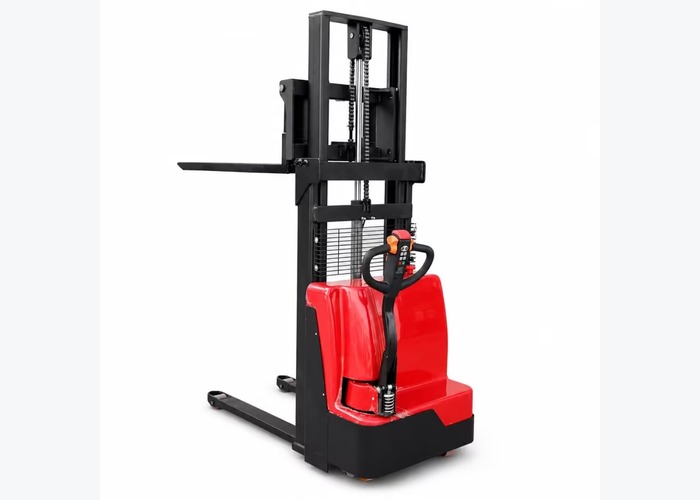
A pallet jack is simple, low-cost, compact, and easy to deploy for floor-level pallet movement. For receiving areas, short-distance transfers, trailer staging, and low-lift horizontal movement, it remains a practical tool. That is why many small warehouses start there. The problem is not that a pallet jack is weak. The problem is that managers often ask it to do work it was never designed to do, especially when racks, repeated lifting, and tighter throughput targets enter the picture.
When the workflow is mostly ground-level and travel distances are short, a pallet jack can still be the right answer. The decision changes when pallets must be elevated, staged accurately, or handled repeatedly by the same operator across a full shift. At that point, the hidden cost of manual effort starts to outweigh the lower purchase price.
A walkie stacker is valuable when the site needs controlled vertical lift without stepping up to a larger forklift. That makes it relevant for compact warehouses, mezzanine-adjacent storage, production support areas, and retail-backroom style operations with low or mid-height racking. It can reduce the repeated pushing, pulling, and manual lifting that make simple pallet tools feel cheap at purchase but costly in daily labor.
The comparison should focus on how often pallets must be positioned at height, how tight the aisle really is, and whether the operator can work safely around other people and equipment. If the site frequently lifts pallets into rack positions, a pallet jack is not competing with a walkie stacker on equal terms. It is being stretched beyond its useful role.
The cleanest dividing line is lift height. If the job only needs low lift and short transfer, a pallet jack may remain sufficient. If the job requires placing pallets into storage, feeding production lines at height, or aligning loads repeatedly for safer retrieval, a walkie stacker becomes much more practical. This is where stand-on electric stacker CZD-20 and the other stacker configurations matter, because the right lift solution depends on both the rack and the operator path.
Managers should document the highest real placement point, pallet weight, aisle width, and how many lift cycles happen in the busiest hour. A low-volume site may tolerate slower manual handling. A fast-moving site usually cannot. Once lift cycles become frequent, the equipment decision is no longer about convenience. It becomes a throughput and ergonomics decision.
Manual handling cost rarely appears in the first conversation, yet it shapes long-term performance. Pushing, pulling, repositioning, and stabilizing pallets with a basic jack is manageable in small doses. Over hundreds of movements, it becomes a fatigue and injury-risk issue. Guidance from CCOHS manual materials handling and HSE workplace transport safety is useful because it links material handling choices with ergonomics and route design rather than treating equipment cost in isolation.
Fatigue also reduces accuracy. When operators are tired, pallets are set down roughly, approaches become less controlled, and product or rack contact becomes more common. A walkie stacker can reduce those small losses by making the task mechanically easier and more repeatable. That matters in food, parts, packaging, and general warehouse workflows where consistency is more valuable than speed alone.
Some buyers assume a forklift is the automatic upgrade from a pallet jack. In small warehouses, that jump is often unnecessary. A walkie stacker may fit the aisle better, cost less to own, and still solve the real problem. The correct question is not which machine looks stronger. It is which machine supports the storage layout with the least wasted movement.
When the site is trying to gain storage density without rebuilding the whole layout, a stacker can be a more efficient next step. Internal pages such as warehouse logistics solutions and factory material handling solutions are useful reference points because they connect the article comparison to broader warehouse applications and product choices already on the site.
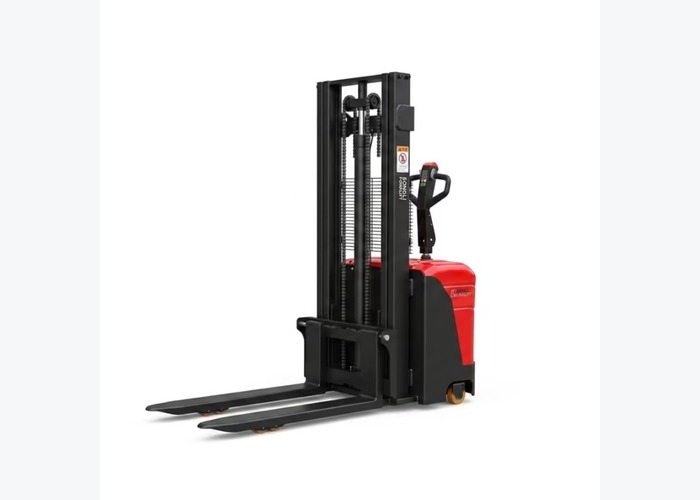
Pallet jacks often win on purchase price and lose on repeated labor cost. Walkie stackers cost more upfront, but they can return value through safer vertical placement, lower manual effort, better rack use, and fewer workarounds. The right comparison is not equipment price versus equipment price. It is total workflow cost versus total workflow cost.
If the team spends extra time searching for floor staging space because pallets cannot be lifted into racks, the cheap tool is no longer cheap. If two operators are needed where one walkie stacker could do the work more safely, the savings disappear even faster. Compare the number of daily pallet touches, not only the equipment invoice.
Once these questions are answered, the comparison becomes much more obvious. Some teams will find that a pallet jack remains ideal for a narrow set of ground-level moves. Others will see immediately that the job is really asking for a walkie stacker or even a stand-on stacker for higher repetition and longer travel.
A pallet jack is still the better choice when the work is simple, ground-level, and short distance. If pallets only need to be moved between adjacent points, stacking is not part of the job, and the number of daily touches is modest, a jack remains cost-effective and easy to manage. The mistake is not buying a pallet jack. The mistake is refusing to admit when the job has outgrown one.
Managers should be willing to draw that line clearly. If one department needs only short transfers while another department needs repeated lifting, the site may need both tools rather than one universal answer. Matching each tool to the right task usually creates a cleaner workflow than forcing all departments into the same equipment decision.
A walkie stacker is not always the final answer. Once travel distance increases, cycle count rises, or the operator spends too much time walking with the load, a stand-on stacker may become more practical. That is why the comparison should not stop at pallet jack versus walkie stacker. Some operations should compare walkie and stand-on stackers at the same time to avoid solving today’s issue while creating tomorrow’s bottleneck.
If the site already expects growth, compare the working rhythm against stand-on electric stacker CZD-15 and similar models before finalizing the purchase. A small increase in budget can sometimes prevent a second equipment decision only a few months later. The best buy is often the tool that still fits after throughput improves, not merely the tool that survives the current week.
Before buying equipment, review whether the current layout is forcing unnecessary moves. Sometimes a clearer staging zone, better rack labeling, or a small traffic adjustment reduces the pressure enough that a simpler tool remains viable. In other cases, the review proves that storage density and lift frequency are the real problems, which strengthens the case for a stacker. Equipment should be selected alongside layout thinking rather than separately from it.
This is another reason the route should be measured rather than guessed. Once aisle widths, turning points, and lift locations are visible, the right equipment choice becomes easier to justify to both operations and finance teams. It also becomes easier to explain why a pallet jack that worked two years ago may no longer fit the current warehouse.
Can a pallet jack replace a stacker if we only stack a few pallets each day? It depends on how critical those lifts are. If the stacking events are infrequent and low-risk, a pallet jack may remain workable alongside another lifting method. If those lifts control receiving, replenishment, or storage capacity, relying on a tool not designed for the task usually becomes a false economy.
Will a walkie stacker be harder to use than a pallet jack? It introduces more controls, but it also removes much of the awkward manual effort that makes pallet handling inconsistent. With proper familiarization, many teams find the stacker easier to use well because the machine does more of the precise lifting and positioning work.
Should we skip straight to a forklift? Only when the route, lift height, and throughput clearly require it. Many small warehouses solve their real bottleneck with a stacker because it offers vertical handling without the footprint and cost jump of a larger forklift.
A practical way to reduce risk is to document one week of pallet movement before ordering anything. Count how many pallets stay at floor level, how many need to be elevated, how many times operators reposition the same load, and where congestion builds up. Those observations usually show whether the site is really a pallet-jack workflow with occasional exceptions or a stacker workflow hiding inside a low-cost routine.
If the team can borrow or demonstrate a stacker in the actual route, watch where the operator gains confidence and where the machine still feels constrained. That short field test often reveals more than a long theoretical discussion because it shows whether the aisle, rack, and travel pattern support the change.
The first mistake is choosing a pallet jack because it is familiar even though the work now includes stacking. The second is buying a larger forklift when the real pain point is compact-aisle vertical placement. The third is ignoring operator fatigue until damage, delays, or near misses force a reactive purchase. Each of those mistakes comes from defining the tool by price instead of by task.
Another common error is comparing equipment without measuring the route. A stacker that looks ideal in a catalog may still be wrong if the aisle width, floor condition, or daily travel pattern was never documented. That is why teams should always connect the equipment quote to actual workflow notes before making the decision.
Watch a related stacker video here: https://www.youtube.com/watch?v=ENA41reRkT4.

Choose a pallet jack when the work is primarily short-distance, floor-level movement. Choose a walkie stacker when the workflow includes regular lifting, tighter storage use, and enough repetition that operator effort becomes a measurable cost. For small warehouses, that distinction is often the fastest way to improve productivity without overbuying equipment.
If your site is somewhere between those two cases, send the pallet weights, lift height, aisle width, and daily cycle count to VARYON. A recommendation based on the real workflow will produce a safer and more economical result than defaulting to whichever tool seems more familiar.