Get in touch
* Your personal information is securely protected and will only be used for business communication purposes.

Rough Terrain Diesel Forklift Guide for Farms, Yards, and Construction Access is written for buyers and operations teams that move pallets outdoors, across compacted soil, gravel, broken concrete, loading ramps, farm lanes, and construction staging zones. A standard warehouse specification can look acceptable on paper and still fail in the field once tire bite, mast stability, turning space, and repeated shock loads enter the picture. Rough terrain selection starts with the route, not the brochure headline.
The best outdoor truck is not simply the largest machine in the quotation set. It is the machine that can carry the real pallet, keep traction during travel, protect visibility, and still remain serviceable when dust, weather, and longer travel distances start wearing components down. If you are comparing VY-CPC20 diesel forklift, VY-CPC30 diesel forklift, or a heavier unit such as VY-CPC60 diesel forklift, the useful decision is to match the truck to the ugliest part of the route rather than the easiest stretch of the day.
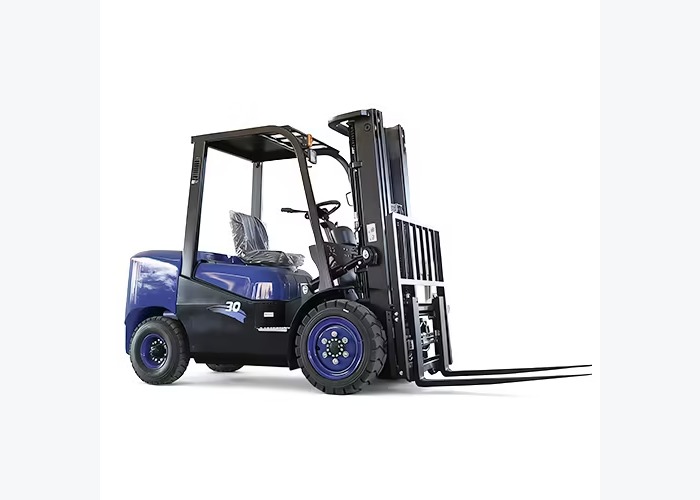
Outdoor applications add three pressures that indoor buyers often underestimate. First, the tire and drivetrain have to protect traction over inconsistent surfaces. Second, mast and chassis stability become more important because the load is affected by dips, potholes, ramp transitions, and soft edges. Third, maintenance exposure rises because dust, mud, water, and vibration accelerate wear on filters, brakes, chains, seals, hoses, and electrical connections. That is why guidance from OSHA powered industrial trucks and the OSHA 1910.178 standard standard matters: equipment selection and safe operation are inseparable.
In practice, a farm, lumber yard, block yard, stone yard, or construction supplier is deciding whether the forklift can keep a stable center of gravity while the route itself keeps changing. Even when the rated capacity looks generous, loss of traction, poor visibility, or repeated bottoming on uneven access can make the truck feel undersized. Buyers who document route condition, slope, loading pattern, and pallet geometry before requesting a quote usually avoid the most expensive mismatch.
The first question is not engine power. The first question is what the ground does to the machine during a normal shift. Hard packed dirt, loose gravel, broken concrete, dock transitions, and wet areas each change traction and ride behavior. If the truck will travel loaded across mixed surfaces, ask whether the tire construction, tread, and clearance actually support the route. A machine optimized for clean warehouse floors may remain drivable outdoors, but it will not necessarily remain productive or comfortable.
A rough terrain plan should record the longest loaded route, the steepest grade, the roughest surface, and the tightest approach. Use that route map while comparing VY-CPC35 diesel forklift with larger diesel forklifts or with the broader products overview. When a supplier knows whether the route is a farm track, a yard with broken concrete joints, or a construction laydown area, the recommendation can include tire type, mast height, fork length, and any capacity allowance for attachments rather than guessing from pallet weight alone.
Outdoor buyers often ask for a truck by capacity alone: three ton, five ton, six ton. That is only half of the decision. The real question is the load center, the pallet footprint, the lift height, the attachment, and the amount of travel over uneven ground. A load that is technically within rated capacity on flat concrete may behave very differently once the truck crosses a ramp joint or turns over loose aggregate. As the center of gravity shifts forward, the operational safety margin shrinks.
If the application includes bagged feed, stone packs, timber bundles, agricultural inputs, or mixed construction loads, ask the supplier to confirm capacity at the actual lift height and attachment condition. That is where articles like the site’s forklift selection guide become useful as an internal handoff document. Purchasing, operations, and maintenance should all review the same load assumptions so the equipment order reflects reality instead of a simplified spec sheet.
Rough terrain diesel forklifts earn their keep by remaining predictable under long hours, stop-start loading cycles, and dirty air. That makes cooling airflow, filter service access, fuel quality discipline, and brake feel more important than they seem during a short demonstration. Fine dust and repeated shock loads can quietly reduce uptime if daily checks are rushed. Reference material from NIOSH forklift safety guidance and CCOHS forklift truck safety reinforces a simple point: inspection is valuable only when it leads to a clear operate, report, or repair decision.
Ask who will service the unit during the busiest month of the year. A truck that is theoretically capable but difficult to support will become costly once a hose, brake component, or mast wear item needs attention during a harvest push or a construction delivery peak. That is why buyers comparing VY-CPC60 diesel forklift and VY-CPC80 diesel forklift should also ask about parts response, access to maintenance points, and whether local teams can keep filters, tires, and consumables ready before the busiest season arrives.
Outdoor work increases visibility risk because the route is less controlled than a warehouse aisle. Operators may approach trailers, sheds, temporary storage, field edges, or crowded staging zones with pedestrians and light vehicles moving nearby. Mast height, load backrest height, and carriage visibility all affect how confidently the operator can place loads without creeping through every approach. A faster truck is not necessarily a better truck if visibility forces constant hesitation.
Before finalizing the order, define the highest real stacking point, the lowest overhead clearance, and whether the application needs a side shifter or other attachment. Those small details often determine whether the recommendation should stay near VY-CPC30 diesel forklift and VY-CPC35 diesel forklift or move to a heavier configuration. Good outdoor performance comes from balanced specification, not one oversized number.
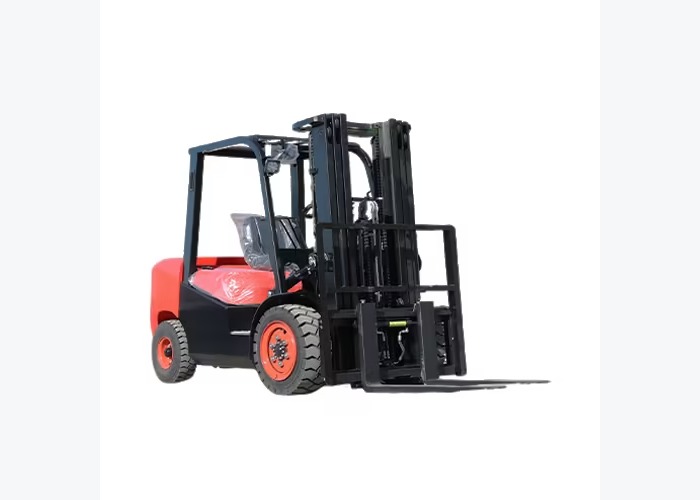
Rough terrain routes punish operators through vibration, repeated reversals, steering correction, and longer travel distances. If the seat, steering feel, visibility, and control layout are poor, operators compensate with lower speed, more fatigue, and more small positioning errors. That affects throughput and product damage long before it shows up in a maintenance report. Training guidance from HSE lift-truck training guidance is helpful because it links safe operation to real route conditions rather than generic classroom points.
A truck that keeps the operator calm over a full shift is usually the truck that keeps the load more stable as well. Ask supervisors what slows operators down today. Is it blind approaches, washboard ground, awkward ramps, tire slip near the loading point, or limited visibility when traveling with tall pallets? Those answers should shape the diesel forklift recommendation just as much as rated capacity.
When these items are documented, a supplier can recommend a machine with fewer assumptions. It also makes it easier to compare a smaller truck against a heavier one on facts instead of on sales language. This is the right stage to involve factory material handling solutions or speak directly through contact the VARYON team if the route has unusual conditions, mixed attachments, or upcoming growth plans.
Many outdoor buyers already own a conventional diesel forklift and try to stretch it into harsher work because the truck is available. That usually works just well enough to delay a better decision and badly enough to create ongoing friction. If the machine spins on wet ground, bottoms out at route transitions, or forces operators to creep across every uneven section, the issue is not driver skill. The issue is that the specification is misaligned with the route.
That mismatch shows up in tire wear, operator complaints, damaged pallets, slower travel, and more maintenance interruptions. It also changes how supervisors schedule work because the truck can no longer be trusted to perform consistently in the roughest zone. Once that pattern appears, the site should stop treating the problem as an isolated repair issue and treat it as an equipment-fit issue.
Do I need four-wheel drive for every outdoor route? Not always. The correct answer depends on surface consistency, tire grip, slope, and how often the truck leaves prepared ground. A route that stays on compacted, well-maintained yard surfaces may not need the same drivetrain emphasis as a route that regularly crosses loose aggregate or softer farm access. Buyers should evaluate the real surface mix instead of assuming every outdoor site has the same traction demand.
Should I oversize the truck to be safe? Not automatically. Oversizing can increase cost, footprint, and operating awkwardness if the truck becomes harder to place in tighter areas. The better approach is to specify enough capacity and stability margin for the heaviest real load while keeping visibility, maneuverability, and serviceability aligned with the route. Safe selection is about balance, not just more tonnage.
Outdoor fleets often evolve quickly. A site may begin with standard pallets and later add longer loads, bagged goods, blocks, bundled materials, or side-shift requirements to speed placement. Buyers should decide early whether the first machine must support those future tasks. Attachments can improve productivity, but they also affect residual capacity, visibility, and maintenance needs, so they should be specified deliberately instead of added late as a surprise.
A good quotation discussion should cover fork length, side shifter need, mast type, and whether the site may add heavier or less stable loads within the next year. Future-proofing does not always mean buying the biggest truck. It means leaving enough specification margin that the truck remains useful as the product mix or site layout shifts.
After delivery, the machine should be reviewed in real outdoor conditions before it becomes routine equipment. That means running a loaded test over the roughest route, confirming tire behavior on slopes and transitions, checking visibility around the tallest common pallet, and making sure operators understand the correct travel speed and parking rules. A commissioning note written during the first week is far more valuable than a vague memory months later.
The first-week review should also capture small surprises. Did operators slow down at one blind corner? Did one ground transition create excessive bounce? Did the mast choice feel too tall or too short for the normal load? These are not minor details. They are exactly the observations that improve the next equipment decision and help maintenance teams prioritize support around the truck’s real working pattern.
The most common error is ordering a truck that matches capacity but not traction, clearance, or route shock. Another is overlooking maintenance exposure and assuming a warehouse preventive rhythm will still work in a dusty yard. Some teams also under-estimate the effect of poor pallet quality and damaged ground on a diesel forklift’s stability margin. These issues rarely show up during a quick demonstration, but they shape daily productivity after the machine arrives.
Another mistake is using the average route to choose the truck instead of the route that causes the most stress. If the forklift must occasionally cross soft edges, long gravel stretches, or uneven transitions with a loaded mast, that route should govern the specification. The correct order is simple: define the worst operating condition, confirm the true load center, then compare trucks.
Watch a related outdoor forklift demonstration here: https://www.youtube.com/watch?v=QuVlrsjAs48.

The right rough terrain diesel forklift is the one that keeps traction, stability, visibility, and serviceability aligned with the real route. For farms, yards, and construction access, that usually means documenting terrain first, then confirming capacity, mast choice, and support expectations before the purchase order is signed. When the route is the starting point, the truck specification becomes easier to defend and easier to operate safely.
If your team is comparing several diesel forklifts for mixed outdoor work, send the route notes, load details, and service expectations with the inquiry. That gives VARYON enough context to recommend the most suitable configuration instead of the most generic one, and it reduces the risk of buying a truck that looks capable but struggles where the work actually happens.