Get in touch
* Your personal information is securely protected and will only be used for business communication purposes.

Heavy industry doesn’t slow down — and in 2024, it’s moving more weight than ever before. Global supply chains are handling increasingly dense cargo units, with warehouses and distribution centers regularly managing loads that push conventional equipment to its absolute limits.
The average heavy-duty industrial shift doesn’t wait for an 8-hour battery charge cycle.
That single operational reality sits at the heart of the ongoing diesel forklift vs electric fhttps://qilumachinery.com/product-category/lawn-mower/orklift debate. As logistics operations scale upward — think steel coils, prefabricated construction panels, and industrial machinery components regularly exceeding 10 tons — the question isn’t simply which technology is cleaner or quieter. It’s which technology can actually keep pace with the demands of a 24/7 production floor.
According to Forklift Action, diesel forklifts remain the backbone of heavy industry due to their “refuel and go” capability, eliminating the 8–12 hour charging downtime that halts electric alternatives mid-operation. In practice, that translates to a measurable competitive advantage for facilities that cannot afford operational gaps.
Modern diesel equipment has also evolved well beyond its legacy reputation. Purpose-built machines like the Varyon VY-CPC30 represent a new generation of heavy-duty lifters — engineered for high-density storage and relentless daily cycles without compromise.
But raw uptime is only part of the story. To truly understand why diesel continues to hold its ground, you have to look under the hood — specifically, at the physics of torque.
Understanding why a heavy duty diesel forklift consistently outperforms alternatives in demanding environments starts with one word: torque. Raw, low-RPM torque is what separates a machine that handles 10-ton loads with confidence from one that struggles and stalls. The physics here aren’t complicated — but their operational implications are enormous.
Diesel engines generate peak torque at remarkably low RPMs, often between 1,200 and 1,600 RPM. This means the engine delivers maximum pulling and lifting force before it even approaches its power band. In practice, when a forklift operator picks up a dense steel coil or stacks a fully loaded lumber bundle, the engine doesn’t labor — it loads up and pushes through. According to OSHA, diesel forklifts can exceed lift capacities of 10 tons, a benchmark that reflects exactly this torque characteristic working at the mechanical level.
What typically happens with electric motors under prolonged, high-intensity use is a gradual decline in efficiency due to heat buildup in the windings and battery cells. Diesel engines, by contrast, are engineered for thermal stability across extended shifts. Heavy-duty cooling systems manage heat dissipation effectively, allowing consistent power output whether the machine has been running for 20 minutes or eight hours. This isn’t a minor advantage — in multi-shift warehouses and steel yards, it’s the difference between predictable throughput and unexpected slowdowns.
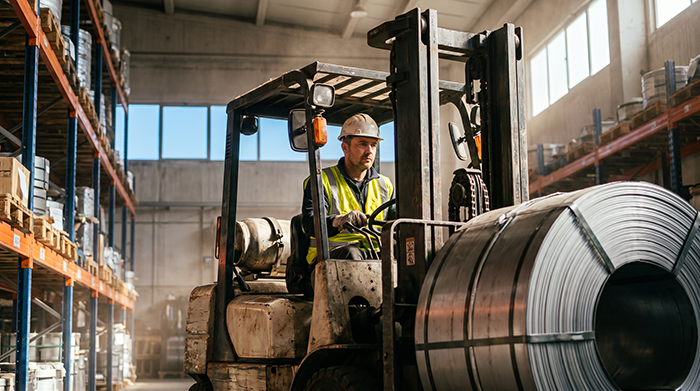
The drivetrain is the unsung hero of diesel forklift performance. Heavy-duty torque converter transmissions multiply engine torque further during acceleration and load pickup, smoothing power delivery across varying terrain. On steep loading dock ramps, outdoor gravel yards, or uneven warehouse floors, that torque multiplication keeps the machine moving where electric motors — which lose efficiency as voltage sags under load — can falter.
A common pattern in outdoor timber and construction yards is that steeper gradients simply eliminate electric alternatives from consideration. Diesel’s mechanical resilience on rough terrain isn’t just convenient — it’s often mission-critical.
When you factor in refueling logistics, shift schedules, and infrastructure demands, the operational calculus becomes even more revealing — which is exactly what we’ll break down next.
For a procurement manager running a two- or three-shift operation, uptime isn’t just a metric — it’s the entire business case. And when you map diesel forklift power against electric alternatives through the lens of real operational demands, the comparison shifts significantly in diesel’s favor.
The most immediate advantage is straightforward: a diesel forklift is back in service after roughly 5 minutes at the fuel tank. Traditional lead-acid electric fleets, by contrast, require 8–12 hours of charging downtime between shifts. For multi-shift facilities, that either means doubling your electric fleet size — a significant capital outlay — or accepting gaps in operational coverage. Neither option is attractive.
The hidden costs run deeper, too. Lead-acid batteries demand regular watering, equalization charges, and dedicated ventilated charging areas. That maintenance burden quietly drains technician hours and floor space that could otherwise be productive.
Outdoor yards — lumber storage, steel distribution, port operations — introduce conditions that compound the electric disadvantage. Cold temperatures measurably reduce battery capacity and range, while wet environments raise safety concerns around high-voltage systems. Diesel engines, by contrast, are engineered to perform consistently across temperature extremes and harsh terrain.
Infrastructure costs also tell a compelling story. Installing high-voltage charging stations requires electrical upgrades, permitting, and ongoing utility costs. A diesel fuel tank, by comparison, carries a fraction of that upfront investment and integrates easily into existing yard layouts.
| Metric | Diesel | Electric (Lead-Acid) |
|---|---|---|
| Refuel/Recharge Time | ~5 minutes | 8–12 hours |
| Cold Weather Performance | Consistent | Degraded capacity |
| Infrastructure Cost | Low | High (electrical upgrades) |
| Battery Maintenance | None | Regular watering + equalization |
| Multi-Shift Ready | Yes | Requires duplicate fleet |
That said, electric technology is evolving rapidly — and the environmental profile of diesel is a legitimate consideration for any responsible fleet manager. That’s exactly where the conversation around modern engine standards becomes essential.
The idea that diesel-powered material handling equipment is inherently dirty is one of the most persistent misconceptions in the industry — and it’s simply no longer accurate. Modern diesel technology has undergone a fundamental transformation, and the emissions profile of today’s machines bears almost no resemblance to the legacy equipment still operating in older facilities.
Modern Stage V diesel engines reduce particulate matter emissions by over 90% compared to models built just a decade ago, according to data from the European Commission. That’s not incremental improvement — that’s a generational leap.
Two key technologies are driving this shift:
“Tier 4 Final and Stage V standards represent the most aggressive emissions benchmarks ever applied to off-road diesel equipment — and today’s forklifts meet them routinely.”
Together, these systems allow modern diesel forklifts to comply with international environmental standards across North American Tier 4 Final and European Stage V frameworks. For operations managing cross-border logistics or working within environmentally sensitive zones, this compliance isn’t optional — it’s a baseline requirement.
The clean-diesel story, however, is only one dimension of how the industry has evolved. The broader question is how diesel engines integrate with the full range of warehouse and yard equipment — and that’s exactly where the next conversation leads.
No diesel forklift operates in isolation. The real competitive advantage in industrial forklift procurement comes from building a cohesive fleet ecosystem — one where every machine type reinforces the others, and where the transition from outdoor yard to indoor warehouse is seamless.
The handoff between outdoor diesel power and indoor precision handling is where many operations lose efficiency. Diesel forklifts dominate the yard, loading docks, and heavy staging areas — but experienced reach truck and cherry picker operators are increasingly critical to bridging that gap between environments. Industry job data confirms growing demand for operators fluent in both worlds.
A unified equipment strategy eliminates the vendor fragmentation that quietly inflates total operating costs. Sourcing electric stackers and pallet trucks alongside your diesel fleet from a single supplier — rather than juggling multiple after-sales relationships — reduces parts complexity and streamlines service scheduling. A single-source approach also standardizes operator training across machine types.
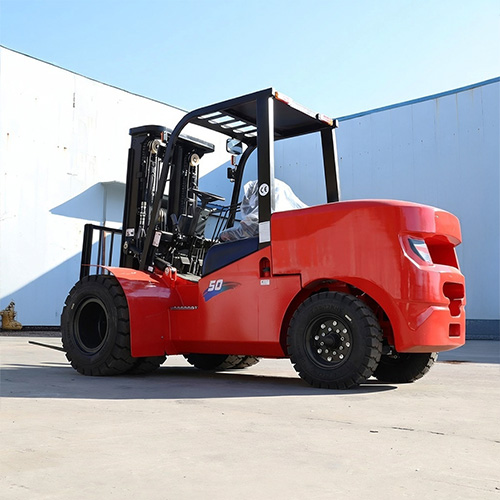
Scenario-based customization transforms a standard diesel forklift into an industry-specific tool. Timber operations benefit from rotating clamps and log forks, shipping yards rely on container handlers and spreader bars, while construction sites demand jib booms and pole attachments. A unified fleet framework — such as the VY series — simplifies this considerably, since compatible attachment systems and global parts networks apply across the entire range.
A fleet is only as strong as its weakest machine — which is exactly why visualizing how these diesel units actually perform under load matters so much.
[Video Embed Placeholder: Heavy-Duty Diesel Forklift Operation Demo — YouTube]
Watching a high-capacity diesel forklift work tells you more than any spec sheet can. As next-gen heavy-duty models are increasingly showcased for their mast stability during high-capacity lifts, the visual evidence is compelling. When viewing a demo, focus on two things: how smoothly the mast extends under full load without lateral sway, and the consistent, low-frequency growl of the engine — a direct signal of sustained torque delivery rather than peak-and-drop power.
That stability isn’t cosmetic. It’s the physical expression of the high-torque engineering covered earlier in this article — diesel’s ability to maintain controlled force across the full lift cycle. Whether you’re evaluating diesel or exploring the broader equipment range for mixed-fleet procurement, seeing the machine perform under real conditions remains the most honest benchmark. The footage makes the torque advantage tangible in a way that raw numbers alone simply can’t — a fitting lead-in to making your final asset decision.
Diesel forklifts have earned their dominance — and they continue to hold it through three non-negotiable pillars: raw torque, maximum uptime, and modern emissions compliance. When outdoor terrain is unpredictable, loads are heavy, and shift schedules leave no room for charging breaks, diesel remains the most dependable solution available to industrial operations worldwide.
For global B2B buyers, procurement complexity is just as costly as the wrong equipment choice. That’s why working with a partner who offers integrated equipment and accessories under one roof consistently saves time, reduces vendor friction, and delivers better long-term ROI. From initial spec matching to after-sale support, one-stop procurement matters.
When should you choose diesel over electric? In practice, the answer centers on intensity of use, infrastructure limitations, and load requirements. If your operation involves capacities above 5 tons, outdoor or uneven surfaces, or facilities without reliable charging infrastructure, diesel wins decisively. However, for indoor, lower-capacity environments with emissions restrictions, exploring compact electric alternatives may be the smarter path.
The market reflects this staying power: the global diesel forklift segment is projected to maintain a steady CAGR of 4.5% through 2030, confirming that heavy industry isn’t shifting away anytime soon.
Final Verdict: Diesel forklifts remain the benchmark for heavy-duty industrial logistics — delivering torque, reliability, and operational freedom that no alternative fully replicates at scale.
Ready to configure the right diesel forklift for your operation? Connect with Varyon’s technical team for expert procurement guidance tailored to your specs.