Get in touch
* Your personal information is securely protected and will only be used for business communication purposes.

A pallet stacker is a compact material handling truck used to move and raise palletized loads in spaces where a full forklift may be unnecessary, too large, or too expensive for the daily task. Buyers often encounter the term when planning backroom storage, small warehouses, replenishment routes, or short-distance pallet placement. The difficulty is that pallet stacker can describe several machine types, and those types are not equally suited to every route.
The right way to understand a pallet stacker is to look at the job it is built to do. A stacker is not simply a smaller forklift and not just a pallet jack that lifts higher. It is a machine category designed around controlled pallet movement, tighter aisles, and defined placement tasks. This guide explains the main stacker types, where they fit, and the operational limits that buyers should review before choosing one.
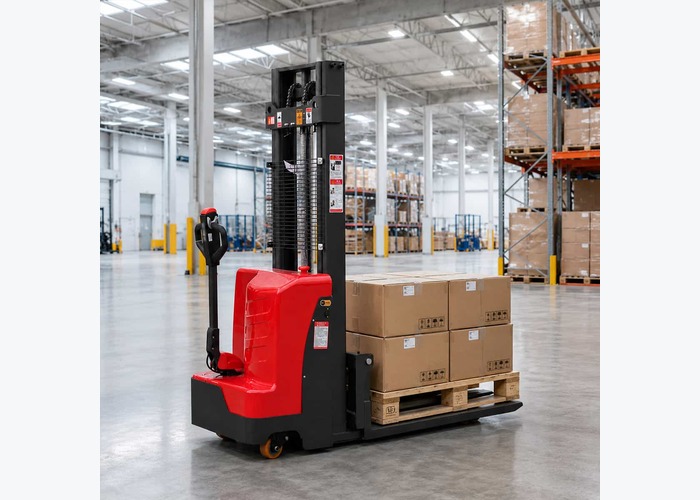
The pallet stacker category is designed around moving palletized loads through a defined route and raising them for storage or transfer in more compact environments. This is a practical operating issue, not merely a specification detail. The OSHA powered industrial truck guidance helps frame why the condition matters in real use, especially when buyers try to judge the machine only by catalog shorthand. In a working warehouse or yard, the topic should be reviewed with the actual load, route, and operator routine in mind. The main risk is that buyers can overestimate a stacker’s range if they assume every load-handling machine covers the same route equally well. Supervisors and buyers should therefore connect the observation to the real job pattern before assuming a standard configuration will work.
A reliable next step is to start by identifying whether the warehouse needs controlled placement in a limited zone or broad mixed-duty travel. Record what was observed instead of relying on memory, because clear operating details make supplier discussions and internal decisions much faster. The relevant stacker category can help translate the requirement into a machine option that fits the route more cleanly. Avoid solving the issue with assumptions or informal workarounds that only look acceptable in a short demonstration. As a decision rule, choose a stacker when the workflow is compact and predictable rather than broadly varied. That keeps the buying decision tied to the daily task rather than to a generic machine label.
A pallet jack mainly moves loads at low height, while a pallet stacker is intended to raise pallets for shelving, staging, or controlled storage work. This is a practical operating issue, not merely a specification detail. The CCOHS manual materials handling guidance helps frame why the condition matters in real use, especially when buyers try to judge the machine only by catalog shorthand. In a working warehouse or yard, the topic should be reviewed with the actual load, route, and operator routine in mind. The main risk is that buying a pallet jack for a job that needs repeatable lift height often creates extra manual repositioning and inefficiency. Supervisors and buyers should therefore connect the observation to the real job pattern before assuming a standard configuration will work.
A reliable next step is to compare the real lift requirement with the travel requirement before choosing between the two machine types. Record what was observed instead of relying on memory, because clear operating details make supplier discussions and internal decisions much faster. The relevant walkie stacker CDD-15 can help translate the requirement into a machine option that fits the route more cleanly. Avoid solving the issue with assumptions or informal workarounds that only look acceptable in a short demonstration. As a decision rule, use a stacker when lifting is part of the daily task rather than an occasional exception. That keeps the buying decision tied to the daily task rather than to a generic machine label.
A pallet stacker usually suits tighter, shorter, and more controlled warehouse work than a counterbalanced forklift. This is a practical operating issue, not merely a specification detail. The HSE workplace transport guidance helps frame why the condition matters in real use, especially when buyers try to judge the machine only by catalog shorthand. In a working warehouse or yard, the topic should be reviewed with the actual load, route, and operator routine in mind. The main risk is that a stacker can be the right tool in its comfort zone but a poor fit when the route becomes broad or rough. Supervisors and buyers should therefore connect the observation to the real job pattern before assuming a standard configuration will work.
A reliable next step is to review aisle width, travel distance, surface condition, and load variety before treating a stacker as a forklift substitute. Record what was observed instead of relying on memory, because clear operating details make supplier discussions and internal decisions much faster. The relevant walkie stacker CDD-20 can help translate the requirement into a machine option that fits the route more cleanly. Avoid solving the issue with assumptions or informal workarounds that only look acceptable in a short demonstration. As a decision rule, match stackers to compact warehouse duties instead of asking them to replace every forklift task. That keeps the buying decision tied to the daily task rather than to a generic machine label.
Walkie stackers are often chosen for shorter distances and closer operator control, while stand-on types can support longer and higher-cycle movement patterns. This is a practical operating issue, not merely a specification detail. The NIOSH forklift safety guidance helps frame why the condition matters in real use, especially when buyers try to judge the machine only by catalog shorthand. In a working warehouse or yard, the topic should be reviewed with the actual load, route, and operator routine in mind. The main risk is that choosing by appearance instead of workflow can lead to a truck that feels slow in practice or larger than the route needs. Supervisors and buyers should therefore connect the observation to the real job pattern before assuming a standard configuration will work.
A reliable next step is to decide how much of the shift involves repeated travel versus simple lift-and-place work. Record what was observed instead of relying on memory, because clear operating details make supplier discussions and internal decisions much faster. The relevant stand-on stacker CZD-15 can help translate the requirement into a machine option that fits the route more cleanly. Avoid solving the issue with assumptions or informal workarounds that only look acceptable in a short demonstration. As a decision rule, let travel pattern and operator rhythm guide the type selection. That keeps the buying decision tied to the daily task rather than to a generic machine label.
A stacker may look appropriate at floor level and still be the wrong choice if pallet condition, load center, or required storage height is not reviewed carefully. This is a practical operating issue, not merely a specification detail. The Wikipedia pallet jack overview helps frame why the condition matters in real use, especially when buyers try to judge the machine only by catalog shorthand. In a working warehouse or yard, the topic should be reviewed with the actual load, route, and operator routine in mind. The main risk is that unstable pallets and poorly defined load limits create handling problems that are easy to underestimate in compact warehouses. Supervisors and buyers should therefore connect the observation to the real job pattern before assuming a standard configuration will work.
A reliable next step is to check the actual pallet size, load weight, lift height, and pallet condition before finalizing the model. Record what was observed instead of relying on memory, because clear operating details make supplier discussions and internal decisions much faster. The relevant stand-on stacker CZD-20 can help translate the requirement into a machine option that fits the route more cleanly. Avoid solving the issue with assumptions or informal workarounds that only look acceptable in a short demonstration. As a decision rule, review lift and load together instead of treating height as an isolated number. That keeps the buying decision tied to the daily task rather than to a generic machine label.
Facilities often select a pallet stacker because it fits narrower or more congested spaces where a larger truck would reduce storage density or movement comfort. This is a practical operating issue, not merely a specification detail. The Wikipedia forklift overview helps frame why the condition matters in real use, especially when buyers try to judge the machine only by catalog shorthand. In a working warehouse or yard, the topic should be reviewed with the actual load, route, and operator routine in mind. The main risk is that warehouse drawings alone can hide columns, guard rails, and other pinch points that affect usability. Supervisors and buyers should therefore connect the observation to the real job pattern before assuming a standard configuration will work.
A reliable next step is to measure the narrowest real working aisle and the turning pattern at the rack face. Record what was observed instead of relying on memory, because clear operating details make supplier discussions and internal decisions much faster. The relevant warehousing and logistics solutions can help translate the requirement into a machine option that fits the route more cleanly. Avoid solving the issue with assumptions or informal workarounds that only look acceptable in a short demonstration. As a decision rule, use real operating clearances when judging whether a stacker is the right space-saving tool. That keeps the buying decision tied to the daily task rather than to a generic machine label.
The farther the route extends or the rougher the floor becomes, the more important it is to review whether a stacker still matches the job. This is a practical operating issue, not merely a specification detail. The OSHA daily forklift checklist helps frame why the condition matters in real use, especially when buyers try to judge the machine only by catalog shorthand. In a working warehouse or yard, the topic should be reviewed with the actual load, route, and operator routine in mind. The main risk is that buyers who ignore route condition may approve a truck that is technically capable but operationally tiring and inefficient. Supervisors and buyers should therefore connect the observation to the real job pattern before assuming a standard configuration will work.
A reliable next step is to map thresholds, dock plates, long travel loops, and any outdoor crossover before assuming the stacker fits the full route. Record what was observed instead of relying on memory, because clear operating details make supplier discussions and internal decisions much faster. The relevant VARYON products overview can help translate the requirement into a machine option that fits the route more cleanly. Avoid solving the issue with assumptions or informal workarounds that only look acceptable in a short demonstration. As a decision rule, keep stackers on the routes they are designed to support and escalate to broader equipment when the path changes. That keeps the buying decision tied to the daily task rather than to a generic machine label.
Electric stackers depend on a charging routine and battery care plan that match the daily cycle, especially in growing warehouse teams. This is a practical operating issue, not merely a specification detail. The CCOHS forklift truck safety helps frame why the condition matters in real use, especially when buyers try to judge the machine only by catalog shorthand. In a working warehouse or yard, the topic should be reviewed with the actual load, route, and operator routine in mind. The main risk is that a compact truck can still create downtime if the charging plan is too loose or too optimistic. Supervisors and buyers should therefore connect the observation to the real job pattern before assuming a standard configuration will work.
A reliable next step is to confirm shift pattern, charging windows, and whether the stacker will be shared across operators or departments. Record what was observed instead of relying on memory, because clear operating details make supplier discussions and internal decisions much faster. The relevant contact VARYON for stacker planning can help translate the requirement into a machine option that fits the route more cleanly. Avoid solving the issue with assumptions or informal workarounds that only look acceptable in a short demonstration. As a decision rule, treat charging routine as part of the equipment fit rather than a side detail. That keeps the buying decision tied to the daily task rather than to a generic machine label.
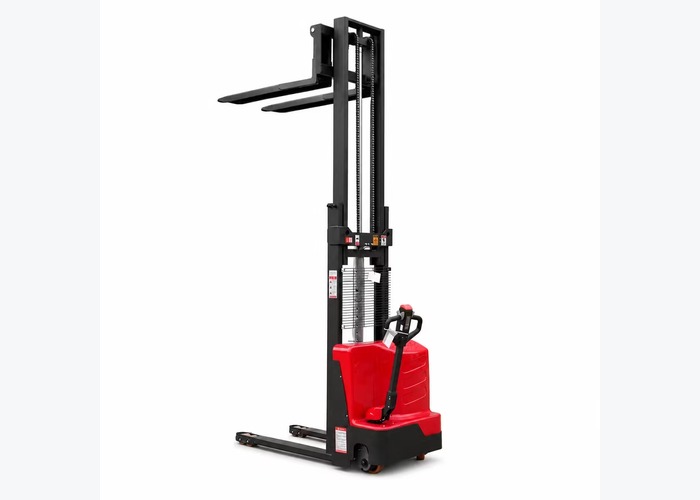
Many warehouses benefit from reviewing where the machine starts, how far it travels, what it lifts, and where the pallet is finally placed before choosing a stacker type. This is a practical operating issue, not merely a specification detail. The OSHA powered industrial truck guidance helps frame why the condition matters in real use, especially when buyers try to judge the machine only by catalog shorthand. In a working warehouse or yard, the topic should be reviewed with the actual load, route, and operator routine in mind. The main risk is that a machine can look correct in one part of the building but weak across the full shift if zones are blended carelessly. Supervisors and buyers should therefore connect the observation to the real job pattern before assuming a standard configuration will work.
A reliable next step is to draw the route by zone and separate compact storage work from broader transfer work. Record what was observed instead of relying on memory, because clear operating details make supplier discussions and internal decisions much faster. The relevant stacker category can help translate the requirement into a machine option that fits the route more cleanly. Avoid solving the issue with assumptions or informal workarounds that only look acceptable in a short demonstration. As a decision rule, let the route map reveal whether the business needs a walkie stacker, a stand-on stacker, or a different truck class. That keeps the buying decision tied to the daily task rather than to a generic machine label.
Suppliers can recommend stackers more accurately when they receive pallet size, lift height, aisle width, travel distance, and shift expectations instead of a simple request for a cheap stacker. This is a practical operating issue, not merely a specification detail. The CCOHS manual materials handling guidance helps frame why the condition matters in real use, especially when buyers try to judge the machine only by catalog shorthand. In a working warehouse or yard, the topic should be reviewed with the actual load, route, and operator routine in mind. The main risk is that short requests often produce generic offers that are hard to compare because they assume different applications. Supervisors and buyers should therefore connect the observation to the real job pattern before assuming a standard configuration will work.
A reliable next step is to send route dimensions, pallet details, and daily workload with the inquiry. Record what was observed instead of relying on memory, because clear operating details make supplier discussions and internal decisions much faster. The relevant walkie stacker CDD-15 can help translate the requirement into a machine option that fits the route more cleanly. Avoid solving the issue with assumptions or informal workarounds that only look acceptable in a short demonstration. As a decision rule, ask for a recommendation tied to your warehouse route instead of a one-size-fits-all quote. That keeps the buying decision tied to the daily task rather than to a generic machine label.
What is a pallet stacker used for? It is used for controlled pallet movement and lifting in compact warehouse or backroom environments where storage placement is part of the daily workflow.
Is a pallet stacker the same as a forklift? No. A stacker is usually better suited to tighter, shorter, and more defined warehouse routes, while forklifts are often chosen for broader mixed-duty handling.
When should I choose a stand-on stacker instead of a walkie stacker? A stand-on type usually makes more sense when travel distance and cycle frequency increase beyond what is comfortable for a simple walk-behind routine.
Watch a related stacker video here: https://www.youtube.com/watch?v=e7OYPN3CxP0.

A pallet stacker is best understood as a compact lift-and-place truck for controlled warehouse routes, not as a universal replacement for every forklift or pallet jack task.
The right selection comes from reviewing the actual route, pallet weight, lift height, aisle width, travel distance, and charging routine together. That is what separates a useful stacker from a machine that only looks suitable on the quote sheet.
If you want help narrowing the options, send VARYON your aisle width, pallet size, lift height, travel distance, and expected shift pattern so the recommendation matches the real warehouse job.